


Silver Double Albert Chain
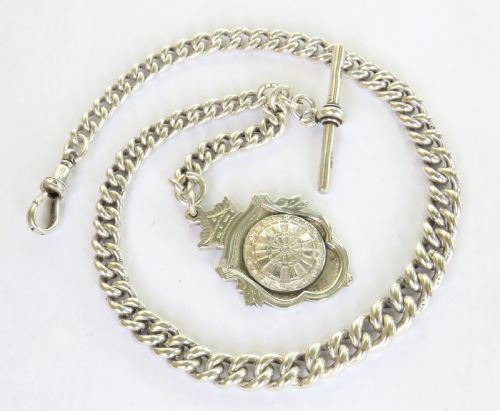
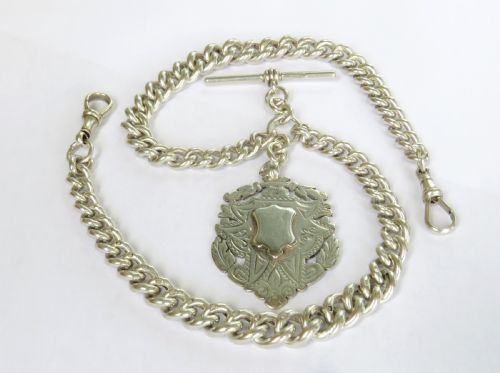
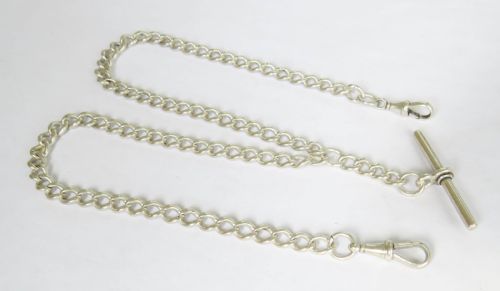
A silver double albert chain secures a pocket watch across the waistcoat with two distinct strands, bringing heavy Victorian engineering straight into modern wear as a bold necklace.
Silver Double Albert Chain
A silver double albert chain forms a substantial loop of metal designed originally to span a waistcoat pocket while securing a timepiece at one end and a fob at the other. Most examples encountered here belong to the Victorian, Edwardian, and Art Deco periods, spanning the late nineteenth century through to the 1930s.
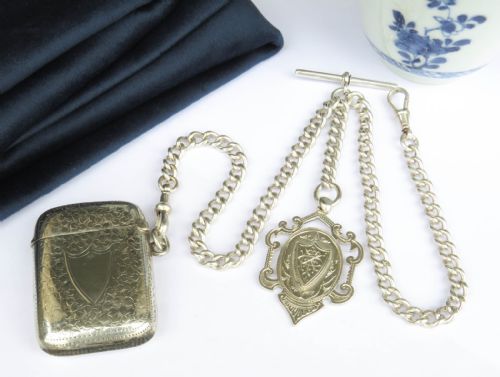
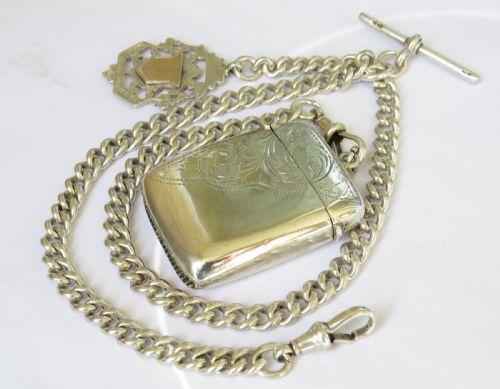
Evidence shows forms ranging from standard pocket watch chains to heavier chronograph pairings accompanied by vestas, sovereign holders, or coins. The overall aesthetic shifts from ornate nineteenth-century weight to cleaner twentieth-century lines.
Materials and Construction
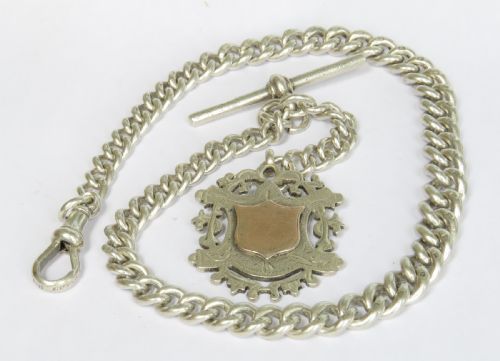
Silversmiths constructed these pieces primarily from sterling silver and standard silver, frequently incorporating rose gold accents or enamel details upon associated fobs and medallions. Links are commonly formed as uniform curbs, joining together to create substantial weights that often exceed forty grams.
Workshops utilised mechanical stamping and hand assembly to link individual components securely, attaching dog clips and T-bars with stout jump rings designed to withstand daily tension. Hallmarks stamped onto individual links provide direct evidence of assay offices and manufacturing dates.
Several heavy chains survive paired with Boer War and World War coins turned into fobs, proving that grandfathers liked to carry small fortunes.
Evaluating Quality and Substance
Substance and physical weight separate heavier utility pieces from lighter variants, with some surviving chains scaling over eighty grams of solid silver. The presence of matching hallmarks across every single link and drop component indicates a higher degree of original integrity.
Quality also rests in the complexity of associated attachments, such as integrated vestas, sovereign holders, or multiple fobs, which elevate the piece from a simple cord to a complete ensemble.
The Silver Double Albert Chain Glossary
- Albert chain
- A watch chain named after Prince Albert, designed to secure a pocket watch to a garment.
- Double albert
- A chain configuration featuring two parallel strands meeting at a central T-bar, allowing a watch and a fob to hang simultaneously.
- T-bar
- The small horizontal metal bar attached to the centre of the chain that slips through a waistcoat buttonhole.
- Dog clip
- The spring-loaded swivel clasp at the end of the chain used for fastening to a pocket watch or pendant.
- Vesta case
- A small pocket container designed to hold matches, frequently suspended from watch chains as a fob.
Silver Double Albert Chain: Frequently Asked Questions
How do I wear a silver double albert chain?
Many wearers detach the watch and fasten the two dog clips together to form a heavy choker or necklace around the neck.
Alternatively, the central T-bar can anchor through a lapel buttonhole while the strands drape across the chest.
What are the common fobs found with these chains?
Surviving chains frequently retain coin fobs, enamel medallions, sovereign holders, or match safe vestas.
These additions often commemorate historical events such as the Boer War or the First World War.
How can I date my silver watch chain?
Dating relies heavily upon the stamped hallmarks found on individual links and the T-bar, which indicate the assay office and year.
Stylistic cues such as heavy Victorian curb links or streamlined Art Deco shaping also point toward specific decades.