



Victorian Silver Sugar Spoon
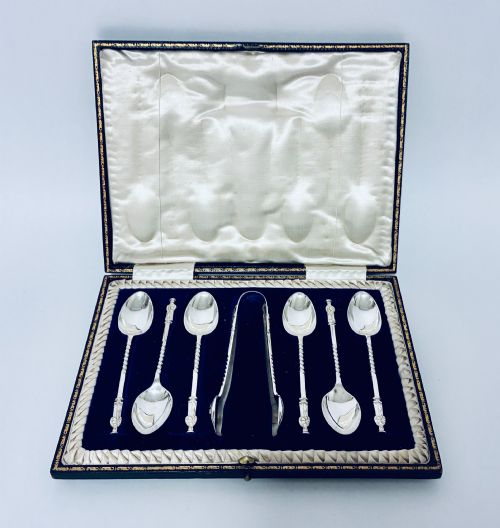
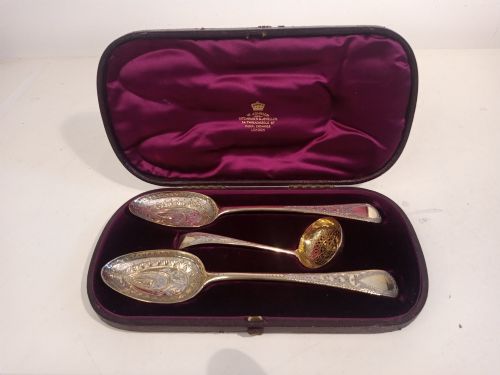
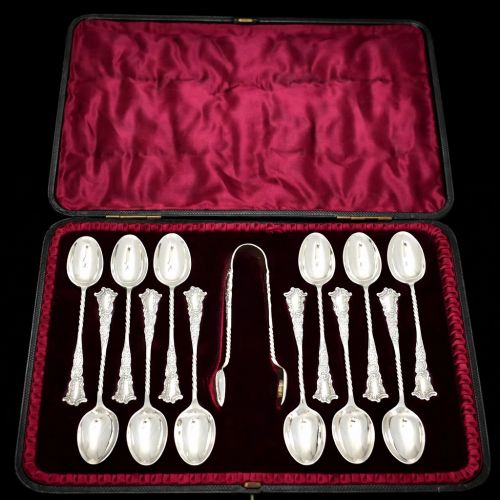
When you search for a victorian silver sugar spoon, you are looking at small utensils designed for the tea table that often arrive paired with tongs or bowls in fitted cases.
Victorian Silver Sugar Spoon
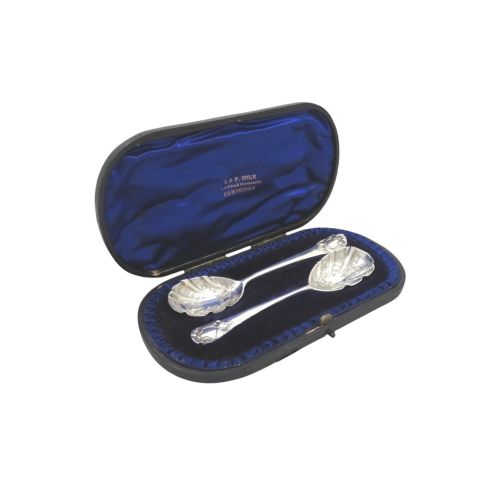
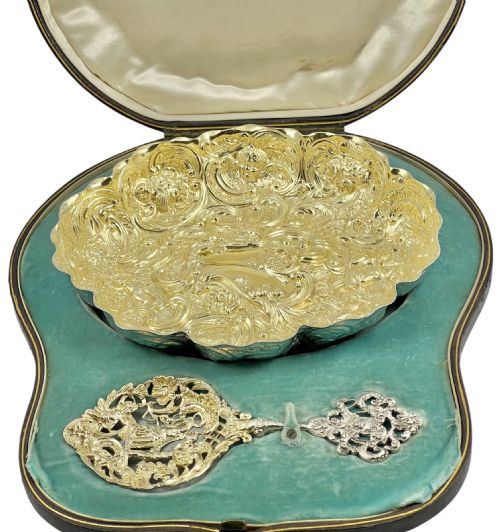
The material record spans solid sterling silver and silver plate, occasionally accompanied by silver-gilt finishes. Many examples survive inside fitted cases lined with silk, velvet, or leatherette, paired with matching tea spoons or fruit serving sets.
How they were made
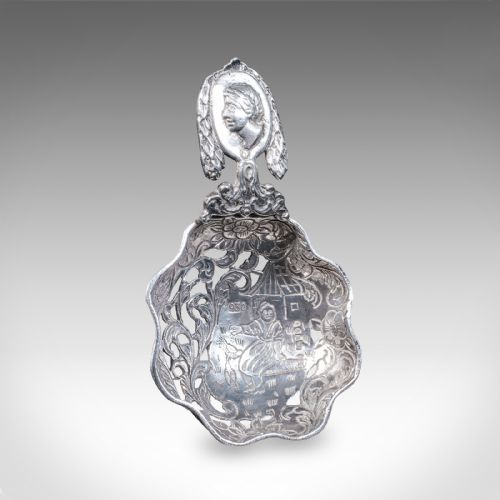
Silversmiths utilised sterling silver and silver-gilt, shaping bowls through piercing and casting techniques. Handles frequently display cast figural terminals, shell designs, or vine motifs applied with detailed hand work.
Fitted presentation cases combine timber frames with outer coverings of leatherette, lined internally with velvet or silk to protect the metalwork. Hallmarks stamped directly into the silver record the assay office, year of assay, and maker.
Diana the Huntress occasionally appears cast at the handle terminal, keeping watch over your afternoon tea table.
What varies in quality
The distinction between standard production and exceptional output lies in the depth of the casting and the crispness of the pierced bowl patterns. Heavier gauge silver provides a more substantial feel in the hand compared to lighter stamped alternatives.
The presence of original fitted cases lined with silk or velvet alters the integrity of a set. Maker attribution also influences standing, particularly pieces bearing the marks of specialised silversmiths active in London, Birmingham, and regional assay towns.
John Walton·Robert Stebbings·Chawner & Co·Taylor & Perry·A B Savory & Sons·Martin Hall & Co·Francis Higgins·Robert Pringle & Sons
The Victorian Silver Sugar Spoon Glossary
- Sifter spoon
- A utensil featuring a bowl pierced with holes or slots designed to sprinkle sugar over fruit or desserts. These often accompany sugar bowls in cased sets.
- Sugar shovel
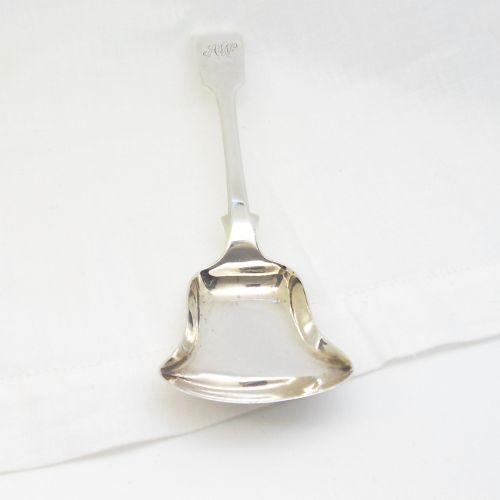
- A short, broad utensil shaped like a miniature spade, used for transferring loose sugar from a bowl to a cup. Examples appear with provincial hallmarks such as Newcastle.
- Silver-gilt
- Sterling silver that has been coated with a thin layer of gold, producing a warm yellow finish. This treatment was frequently applied to the interior bowls of spoons and cased presentation sets.
- Hallmark
- A series of official marks stamped into precious metal indicating the maker, standard of purity, assay office, and year of manufacture. British pieces display town marks and date letters.
- Apostle spoon
- A spoon featuring the figure of an apostle cast at the terminal of the handle. These occur individually or in matched sets alongside tongs.
Victorian Silver Sugar Spoon: Frequently Asked Questions
How do I read silver hallmarks?
British hallmarks typically consist of a standard mark indicating sterling purity, a leopard head or other symbol for the assay office, and a date letter corresponding to the year of manufacture. Maker marks show the initials of the silversmith or firm responsible.
Checking these stamps allows collectors to date pieces accurately to specific towns such as London, Birmingham, Chester, or Newcastle.
Were these spoons sold in sets?
Many spoons were produced as part of larger matched ensembles or fitted cased sets. These frequently combined sugar sifter spoons with tea spoons, butter knives, berry spoons, or sugar tongs.
Complete cased sets often feature fitted interiors lined with silk, velvet, or leatherette, designed to hold each matching utensil securely in place.
What is the difference between silver and silver plate?
Solid sterling silver meets a regulated standard of purity containing a high percentage of pure silver throughout the entire object. Silver plate consists of a base metal coated with a thin layer of silver.
While solid silver bears official hallmarks for assay offices, plated items typically display alternative maker marks or manufacturing numbers.