


Victorian Silver Serveware
Victorian silver serveware brings formal dining history to the table through functional silver plated and sterling serving pieces made to last.
Victorian Silver Serveware
Victorian silver serveware comprises specialised dining pieces designed for nineteenth-century entertaining, ranging from butter dishes and toast racks to spoon warmers and gravy boats. When you search for victorian silver serveware, you meet objects conceived for specific culinary rituals that have largely disappeared from modern dining.
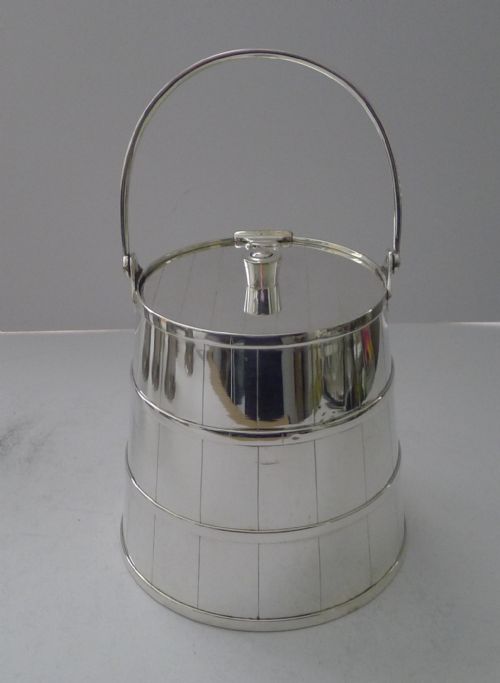
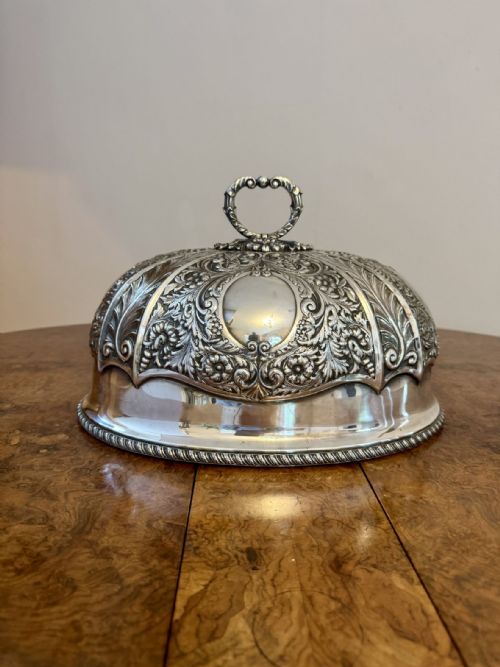
The most common forms on this page include silver plated biscuit barrels, revolving breakfast dishes, meat covers, and egg warmers. These pieces originate primarily from the Victorian and Edwardian periods, reflecting an era of elaborate domestic hospitality.
Materials and construction
Most items rely on silver plate or electroplated nickel silver over a base metal, frequently combined with cut glass liners, polished oak, or mother-of-pearl handles. Makers also utilised sterling silver for select flatware and servers, such as pastry trowels and ladles.
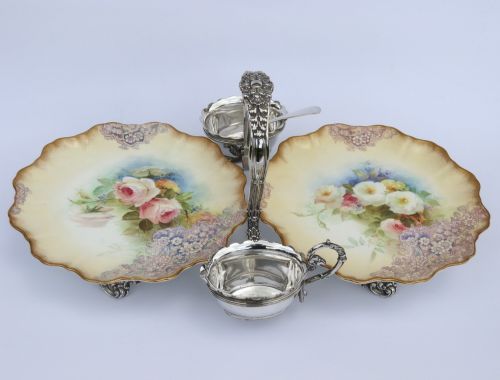
Specialised items integrate ceramics and glass, such as hand-painted Doulton Burslem plates paired with silver plated strawberry sets. Craftsmanship involved precise metal shaping, gilding, and the deployment of complex mechanical elements like revolving lids and folding biscuit boxes.
Listings feature diverse serving forms spanning the nineteenth century, uniting silver plate, sterling silver, cut glass, and ceramics.
Separating standard production from finer work
Quality in these serving pieces rests upon the crispness of applied cast ornamentation and the integrity of the silver plating over the underlying base metal. Superior items exhibit heavier gauge metals that resist bending and retain heat effectively in utilitarian forms like gravy warmers and meat covers.
The integration of secondary materials defines the upper tier, seen in undamaged cut glass liners, original servers, and high-maker attribution. Pieces retaining functional mechanical parts, such as smoothly operating revolving breakfast dishes or folding biscuit boxes, demonstrate higher manufacturing standards.
Walker and Hall·Martin Hall and Co·Mappin and Webb·Padley Parkin and Staniforth·Elkington·Durand·Roberts and Belk
The Victorian Silver Serveware Glossary
- EPNS
- Electroplated Nickel Silver. This designates a base metal core coated with a thin layer of silver through an electrical process.
- Biscuit Barrel
- A container for dry biscuits or crackers. These often feature hinged or folding lids to keep contents fresh on the sideboard.
- Spoon Warmer
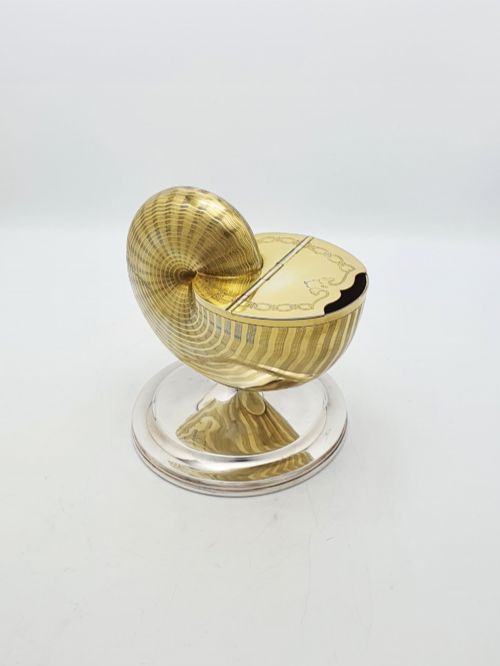
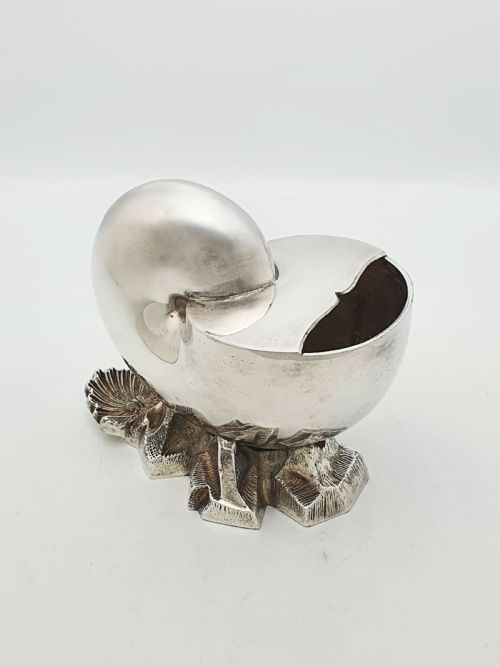
- A vessel designed to hold hot water for warming spoons before serving soft foods. They frequently take imaginative shell or novelty forms.
- Toast Rack
- A table accessory with vertical dividers designed to hold slices of toast upright. This prevents condensation from making the bread soggy.
- Entree Dish
- A lidded serving dish intended for principal courses at dinner. Pairs of these dishes often fit into specialised warming stands.
Victorian Silver Serveware: Frequently Asked Questions
What was a spoon warmer used for?
A spoon warmer held hot water to warm silver spoons before serving items like soup or gravy. This prevented cold utensils from cooling down the food.
Victorian dining etiquette dictated that certain serving spoons reached the table at the correct temperature. These vessels often took decorative forms, including nautilus shells and urns.
What is a revolving breakfast dish?
A revolving breakfast dish is a covered serving container featuring a lid that rolls back underneath the body on a pivot. This allowed diners to help themselves easily at the sideboard.
These pieces often included an interior water pan to keep hot dishes warm throughout breakfast service. They represent some of the most mechanically complex silver plated serveware from the period.
Are glass liners original?
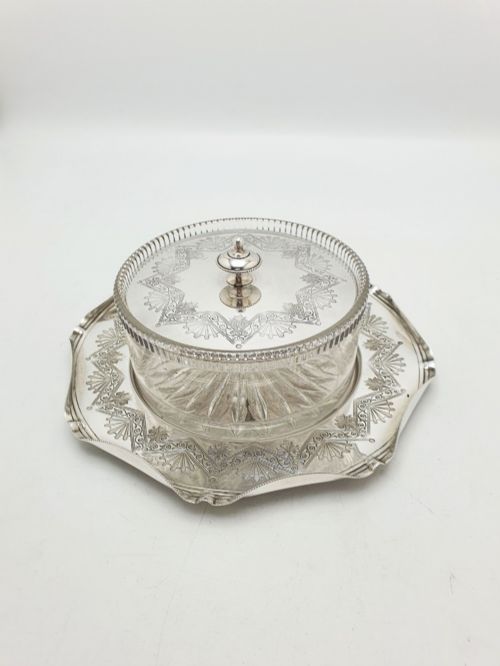
Original glass liners fit snugly into the contours of butter dishes, cheese covers, and jam jars. They often feature cut or moulded patterns appropriate to the Victorian period.
Finding a piece with its original glass liner intact significantly enhances its historical completeness. Replacements are common due to the fragility of glass over generations of use.