

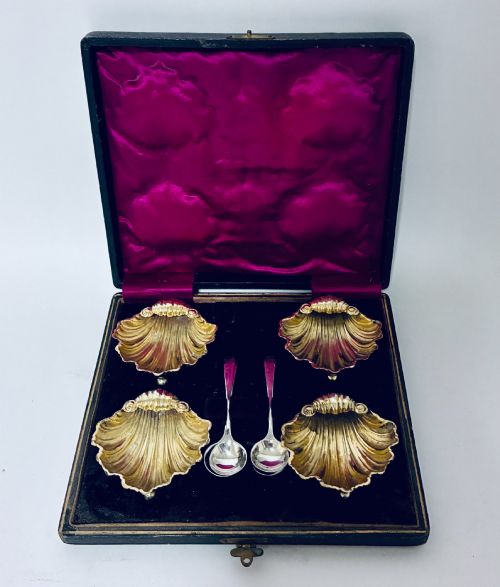
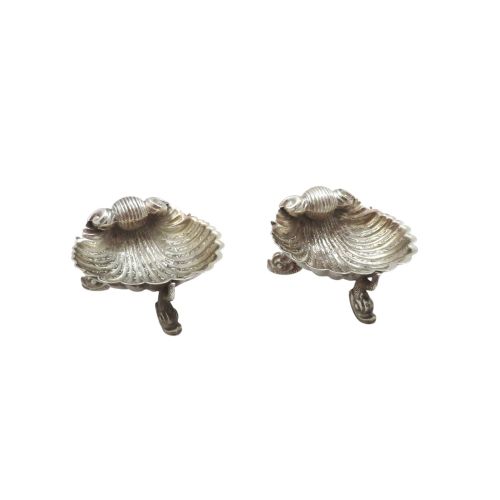
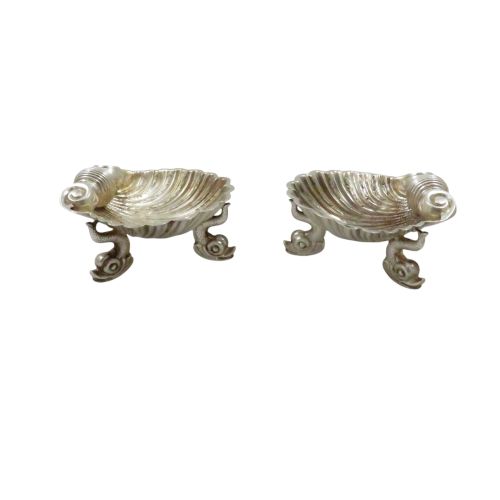
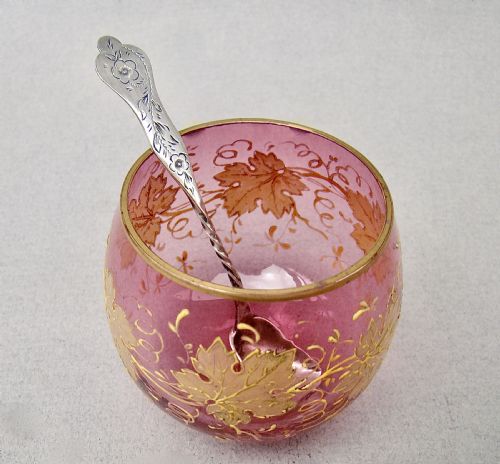
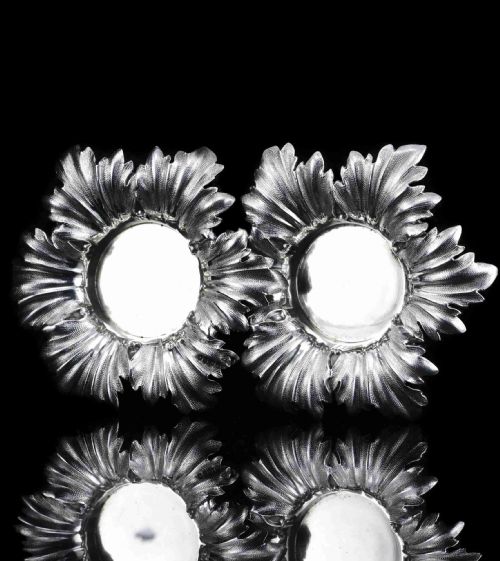


Victorian Silver Salt Dish
These Victorian silver salt dish examples bring nineteenth-century dining tables to life with sterling metal, glass liners, and sculptural forms.
Victorian Silver Salt Dish
A Victorian silver salt dish serves small quantities of salt at the formal dining table, taking forms from simple open bowls to elaborate shell designs.
Makers shaped these functional tableware pieces in sterling silver, often pairing them with contrasting cobalt or cranberry glass liners.
The selection ranges from single small dishes to matched pairs and larger sets, reflecting the changing tastes of nineteenth-century households.
How they were made
Silversmiths utilised sterling silver and silver plating, working the metal through casting, chasing, and mounting techniques.
Many open designs incorporate removable glass liners in cobalt blue or cranberry hues, while others utilise natural materials such as carved horn.
Interior surfaces often received a thin coating of gold leaf, known as gilt, to protect the silver from corrosive salt.
Victorian Silver Salt Dish Retail Price Guide 2026
Typical asking prices for victorian silver salt dish among the pieces listed under this phrase on Sellingantiques today, from the lower quarter to the upper quarter. They describe what is for sale here now, not the wider market.
Materials span sterling silver, silver plate, cobalt glass, cranberry glass, cut glass, gold leaf, and carved horn.
What varies in quality
The weight and substance of the silver determine the foundational quality of each piece, distinguishing solid metal vessels from lighter alternatives.
Crispness in decorative details, such as foliate chasing or cast shell and dolphin motifs, separates standard production from finer work.
Survival of original matching components, including coloured glass liners and fitted presentation cases, elevates the integrity of the set.
Barnards·Thomas Smily·Vale Brothers and Sermon·Stephen Smith
The Victorian Silver Salt Dish Glossary
- Salt Cellar
- An open vessel used to hold loose salt on the dining table before the invention of the spring-loaded shaker. These dishes were often paired with small condiment spoons.
- Cobalt Glass
- A deep blue glass used frequently for the removable liners of nineteenth-century table salts. It provides a striking visual contrast against polished sterling silver.
- Gilt
- A thin application of gold applied to the interior surfaces of silver tableware. This layer prevents the salt from tarnishing or corroding the underlying metal.
- Chasing
- A metalsmithing technique where designs are hammered into the front surface of the silver without removing metal. This method creates textured motifs like foliate patterns.
- Sterling Silver
- An alloy consisting of pure silver and other metals for durability. It forms the primary material for the majority of these nineteenth-century tablewares.
Victorian Silver Salt Dish: Frequently Asked Questions
How were salt dishes used?
Diners used these small open vessels to take individual portions of salt using the tip of a knife or a tiny condiment spoon.
They sat upon the dining table near each place setting or were shared between guests.
Are glass liners original?
Original glass liners fit snugly into the silver framework and match the manufacturing period of the outer vessel.
Cobalt and cranberry varieties provide historical authenticity to nineteenth-century examples.
How do I clean silver salt dishes?
Gentle washing with warm water and mild soap removes daily residue without harming the metal or the gilt interior.
Harsh abrasive pastes should be avoided to preserve fine chasing and antique finishes.
Why do some salts have gilt interiors?
Salt is highly corrosive and reacts chemically with untreated silver over extended periods of contact.
A gold wash applied to the inside protected the metal from pitting and discolouration.