
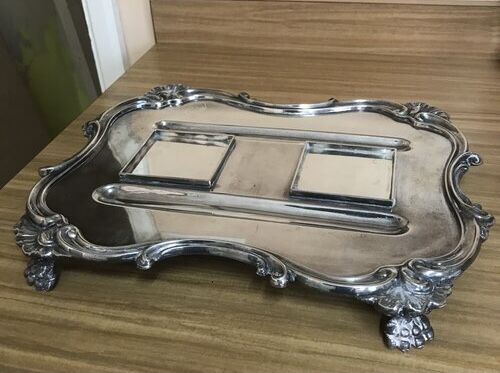


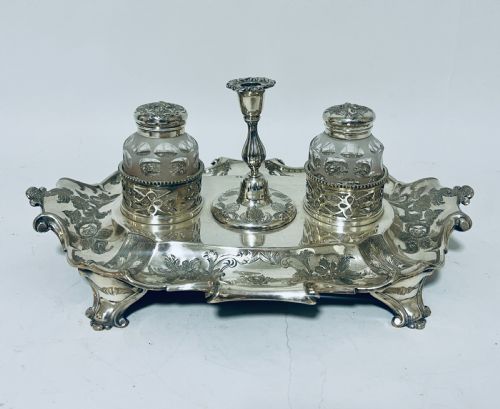


Victorian Silver Plated Inkstand
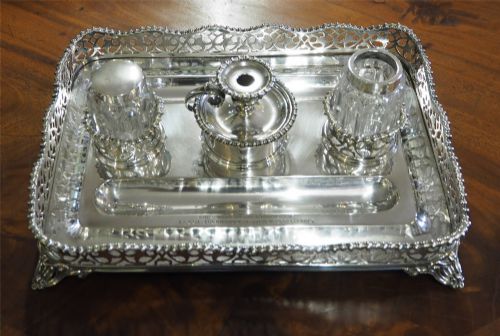
These Victorian silver plated inkstand pieces are desk accessories that anchor a study with polished metal and cut glass.
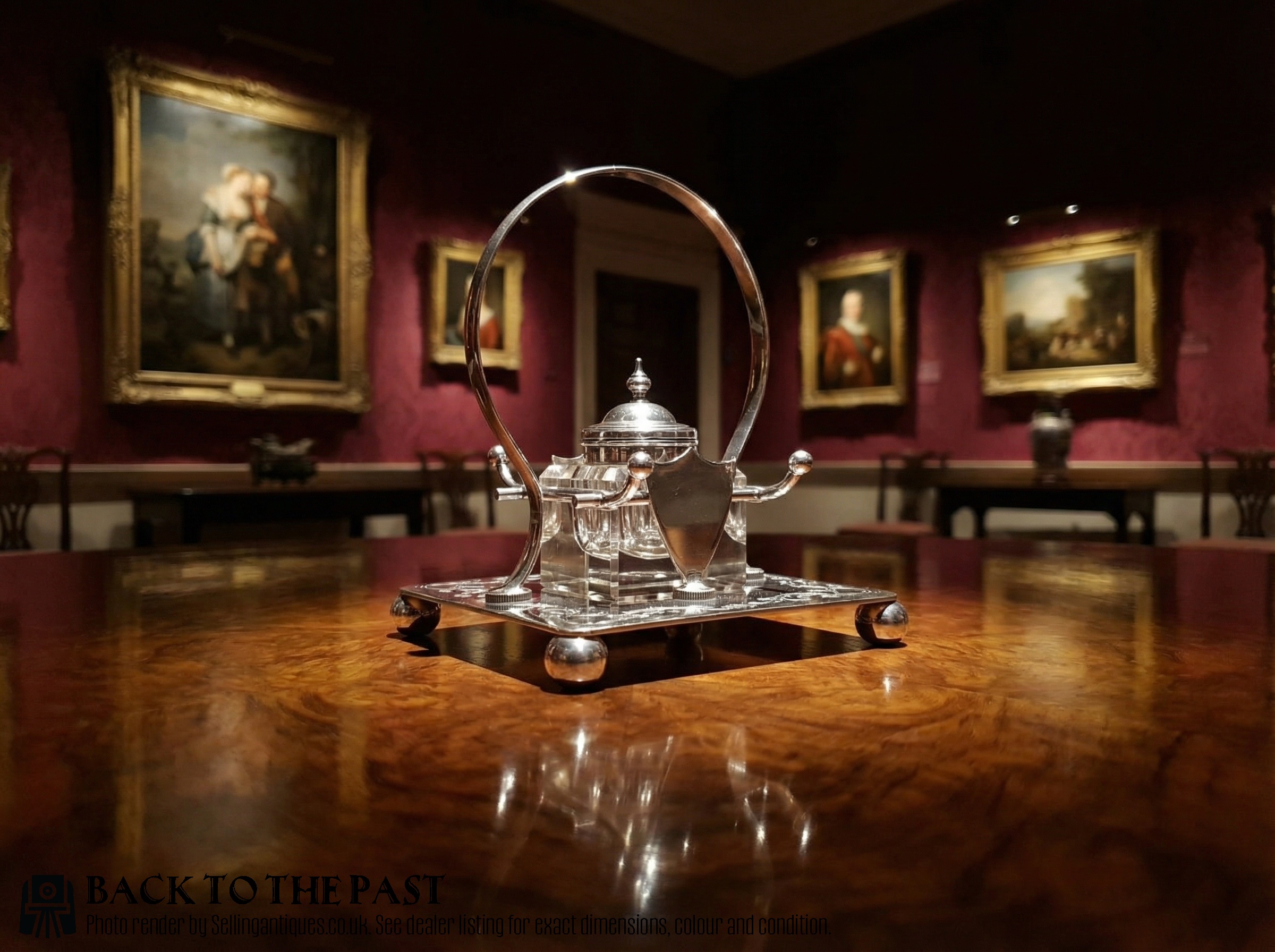
Victorian Silver Plated Inkstand
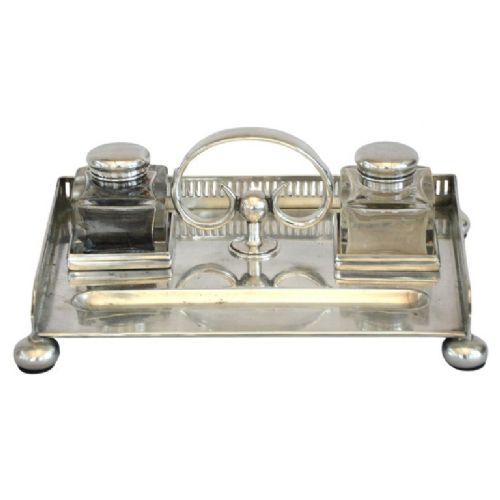
A victorian silver plated inkstand provides a dedicated platform for writing equipment on a desk or table. You encounter these desk accessories in various formats, ranging from simple stands with a single well to elaborate desk sets featuring double inkwells and pen rests.
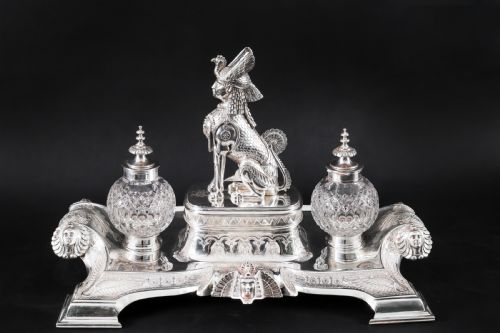
The objects span several decades of production, often incorporating materials such as oak, horn, and glass alongside silver plate. Many examples reflect specific design movements of the period, including Egyptian Revival, Rococo Revival, and Art Nouveau styles.
Makers of the era produced these desk tidies for domestic and professional use, creating functional items that also served as decorative centrepieces. The form accommodates cut glass inkwells and metal mounts designed to hold pens securely.
How they were made
Silversmiths applied silver plating techniques over base metal substrates to create these desk accessories. Manufacturers such as Elkington and Walker and Hall utilised durable plating methods that allowed for decorative relief work and clean edges.
Glass components, including cut glass inkwells and dishes, were formed through blowing and heavy cutting to achieve faceted patterns that caught the light. Wood elements like oak and organic materials such as horn were shaped and fitted with metal collars to complete the construction.
Listings feature periods from the early Victorian era through to the Edwardian period, incorporating materials like horn, oak, and cut glass.
What varies in quality
The distinction between standard and finer examples rests on the crispness of the cast mounts and the weight of the metal used in the stand. Superior pieces display substantial construction with well-defined decorative details and intact silver layers over the base metal.
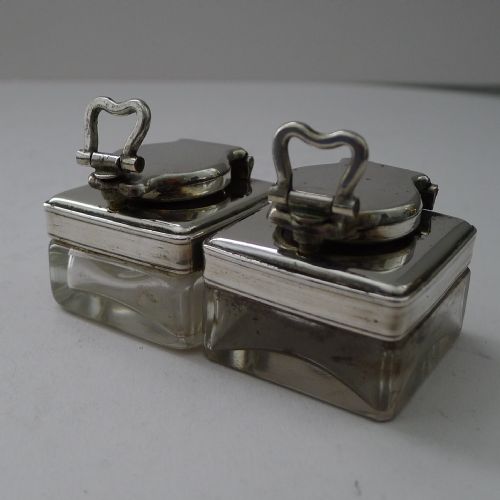
Matching components also influence the character of the object, particularly where cut glass inkwells pair correctly with the original silver plated frame. Finer desk sets incorporate integrated pen rests and secure hinged lids that align properly with the collars of the wells.
Wilkinson and Co·Walker And Hall·Harrods·W M F·Martin Hall
The Victorian Silver Plated Inkstand Glossary
- Standish
- A portable desk stand or tray fitted with inkwells, pen holders, and sanders for writing materials.
- Inkwell
- A small container for holding ink, typically fitted with a hinged lid to prevent the ink from drying out.
- Desk Tidy
- A compartmentalised tray or stand designed to organise stationery, letters, and writing implements.
- Cut Glass
- Glass shaped and patterned by grinding and polishing wheels to create deep facets and decorative designs.
- Silver Plate
- A thin layer of silver bonded to a base metal substrate, such as copper or brass, to provide a metallic finish.
Victorian Silver Plated Inkstand: Frequently Asked Questions
How do I clean a silver plated inkstand?
Clean the silver plated surfaces gently with a soft cloth and a dedicated silver polish, avoiding abrasive materials that might wear through the plate.
Take care to keep moisture away from any fitted wood or horn elements during the cleaning process to preserve the materials.
Were these inkstands used for everyday writing?
These desk accessories served as functional writing equipment in Victorian studies, offices, and libraries. People dipped their quill or steel nib pens into the inkwells while drafting correspondence at a desk.
The stands kept the ink secure and provided a convenient place to lay pens between uses during daily writing tasks.
What materials are typically found on these stands?
The primary structure relies on silver plating over base metal, paired with glass components for the ink reservoirs. Many examples incorporate secondary materials such as oak, wood, or horn to add texture and contrast to the design.
Pen rests and hinged lids are usually formed from the same plated metal as the main tray or stand.