
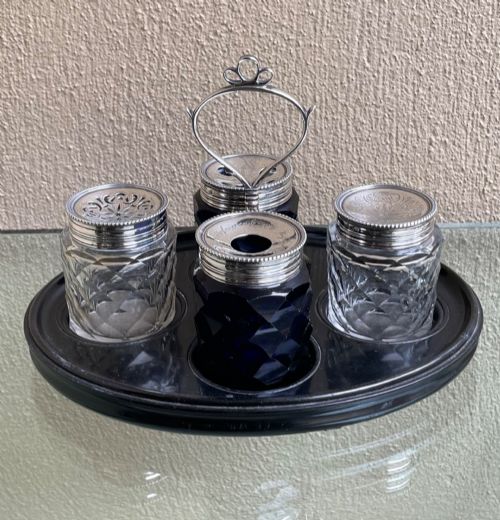


Cut Glass Ink Stand
A cut glass ink stand anchors a desk with weight and brilliance, offering heavy wells and precious mounts that turn daily writing into an occasion.
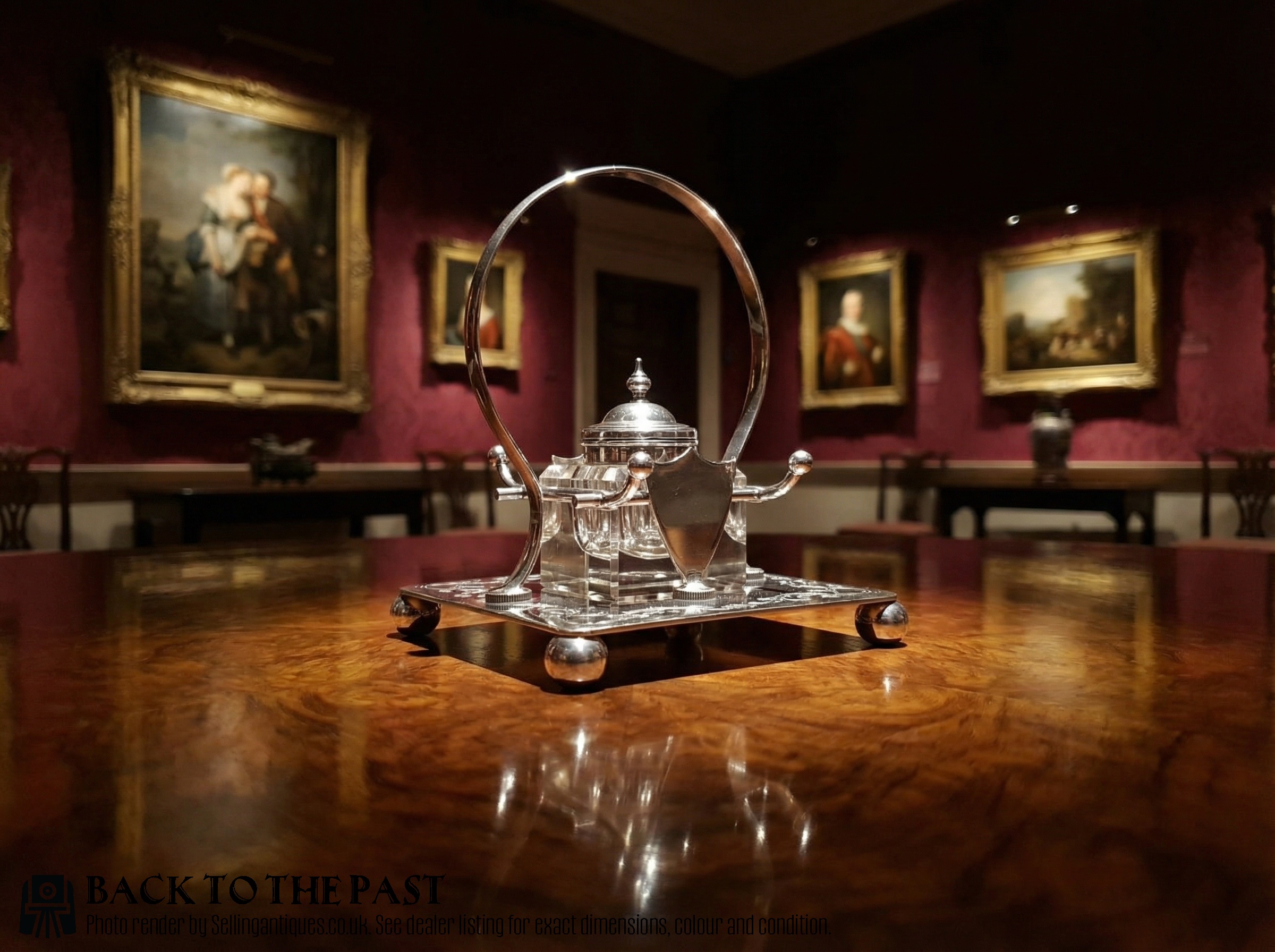
Cut Glass Ink Stand
A cut glass ink stand brings together heavy glass bottles and fitted trays of wood or metal, designed to hold ink securely upon a writing surface. The pieces appearing here span the Georgian, Victorian, and Edwardian eras, reflecting changing tastes in desk accessories through the nineteenth and early twentieth centuries.
The most common formats on this page combine cut glass inkwells with stands fashioned from sterling silver, silver plate, brass, or dense timbers such as oak and walnut. Many examples incorporate mounts or fitted trays, occasionally housing pen rests alongside the central glass reservoirs.
Makers ranged from specialist silversmiths to general metalworkers, producing everything from simple brass wells to grand double inkstands mounted in tortoiseshell or coromandel. These desk pieces served domestic and professional writers alike, evolving from utilitarian desk furniture into decorative works of craftsmanship.
How They Were Made
Glass reservoirs take shape through deep cutting and polishing, creating faceted surfaces that catch the light and obscure the sediment within the ink. These heavy glass bodies sit within fitted bases made from cast brass, Sheffield plate, or solid sterling silver.
Wooden stands utilise dense timbers like oak, walnut, coromandel, and ebony, frequently inlaid with brass or fitted with precious metal mounts and feet. Silversmiths and metalworkers shaped the frames by hand, attaching hinged lids and collars to the glass bottles with precision.
What Varies in Quality
Quality rests upon the weight and clarity of the glass, the heft of the metal mounts, and the integration of the materials within the stand. Superior pieces employ thick, deeply faceted glass bottles paired with solid silver rims or heavy brass frames rather than lighter plated alternatives.
The choice of base material distinguishes standard examples from exceptional ones, with exotic woods and hallmarked sterling silver frames commanding finer craftsmanship. Harmony between the inkwells and the base indicates whether a stand was conceived as a single unified object or assembled later from matched parts.
Rupert Favell·James Cartland & Sons·J Dixon·William Hutton & Son·Peter Henderson Deere·Frederik Haberling
The Cut Glass Ink Stand Glossary
- Cut glass
- Glass decorated by grinding facets or patterns into the surface with a wheel. This technique adds substantial weight and brilliance to inkwells.
- Inkstand
- A tray or stand holding inkwells, sanders, and pen rests for a desk. These pieces organise writing implements in one stable unit.
- Sheffield plate
- A material made by fusing a thin sheet of silver to a thicker copper base. It appears on desk stands dating from the late eighteenth and early nineteenth centuries.
- Coromandel
- A dense, dark-brown exotic timber with contrasting figure, used for luxury Victorian desk accessories. It provides a rich, polished foundation for silver mounts.
- Tortoiseshell
- The mottled shell of marine turtles applied as a veneer over a backing sheet. In desk stands, it combines with inlaid brass work in the Napoleon III style.
Cut Glass Ink Stand: Frequently Asked Questions
How do I date a cut glass ink stand?
Dating relies upon hallmarks on silver mounts, the style of glass cutting, and the timber used for the base. Georgian and Victorian examples display distinct weight and mounting characteristics.
Maker's marks stamped onto metal components further narrow the timeline, connecting the piece to specific silversmiths or manufacturing firms active in London, Birmingham, or Sheffield.
Are double inkstands more desirable?
Double inkstands feature two glass wells, typically allowing the writer to keep both black and red ink ready for use. They command attention for their symmetry and grander scale upon a desk.
Single versions remain practical for smaller writing surfaces, while double and triple configurations represent more substantial desk furniture commissioned for official use.
What is the difference between silver plate and sterling silver?
Sterling silver contains a guaranteed high purity of silver throughout the metal and bears official assay office hallmarks. Silver plate consists of a thin layer of silver bonded to a base metal like copper or brass.
Examining the edges and undersides for wear reveals the underlying metal beneath plated surfaces, distinguishing solid silver construction from plated wares.
How should I clean the cut glass wells?
Cleaning requires warm water and mild soap, avoiding harsh abrasives that might scratch the faceted surfaces or damage metal mounts. Cotton swabs help reach the interior corners of deep glass reservoirs.
Care must be taken to protect antique silver or wooden bases from excessive moisture during the cleaning process.