


Victorian Silver Plate Salts
Victorian silver plate salts are charming tabletop vessels designed to hold condiments, combining metalwork with coloured glass.
Victorian Silver Plate Salts
Victorian silver plate salts are small tableware accessories designed to hold salt at the dining table. Buyers searching for Victorian silver plate salts will encounter open salt cellars, pairs of salts, and multi-bottle condiment cruet sets.
The pieces on this page span the Victorian and Edwardian periods, stretching from the mid-nineteenth century into the early twentieth century. Common forms include figural novelties, glassware liners, and stands fashioned like everyday objects.
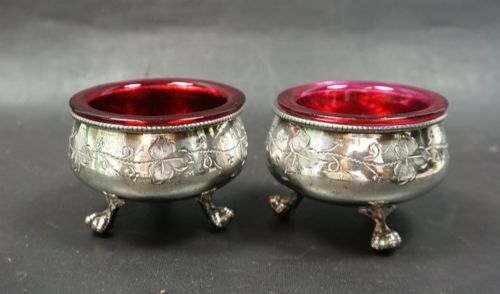
Origins are predominantly English, reflecting the manufacturing output of the period. Many examples incorporate fitted glass inserts, such as cranberry glass, or sit within structured wooden and metal frames.
Distinctions in craftsmanship
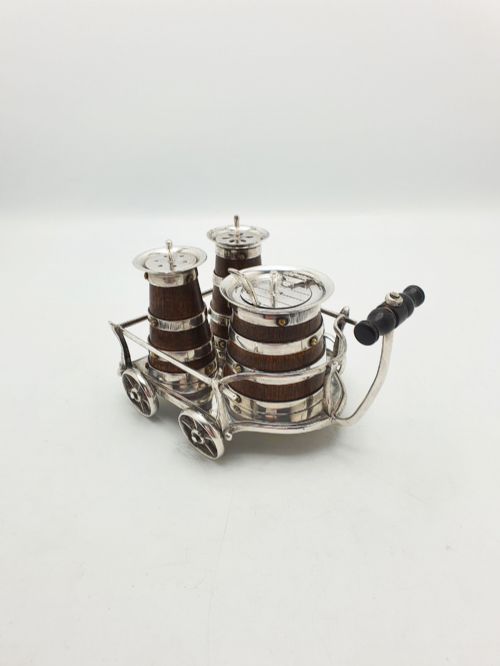
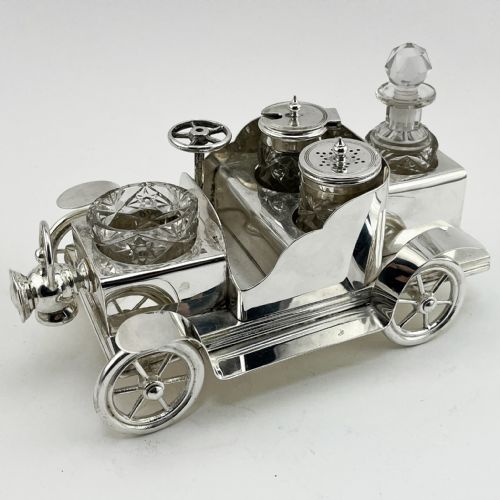
The standard of modelling defines the finer examples, particularly in novelty pieces shaped as animals, cars, or carts. Crisp definition in the casting separates superior work from softer, simpler production.
The choice of secondary materials influences the overall character of the piece. High quality items feature well-cut glass liners, unblemished wood elements, and substantial plating thickness that withstands regular use.
Listings feature items spanning the Victorian, Edwardian, and Georgian periods, utilising silver plate, cut glass, oak, and cranberry glass.
Walker & Hall·John Grinsell & Sons
The Victorian Silver Plate Salts Glossary
- Silver plate
- A base metal object coated with a thin layer of silver through chemical or electrochemical processes. This method made decorative tableware accessible to a wider Victorian household.
- Cranberry glass
- A rich red glass coloured with gold chloride during manufacture. It frequently appears as removable liners inside open salt cellars.
- Cruet set
- A fitted stand holding multiple bottles, jars, or salt cellars for the dining table. These frames often include central carrying handles.
- Open salt
- A small vessel designed to hold loose salt, requiring a small spoon for serving rather than a shaker top. Victorian examples often rested on three feet or within a metal frame.
- Novelty cruet
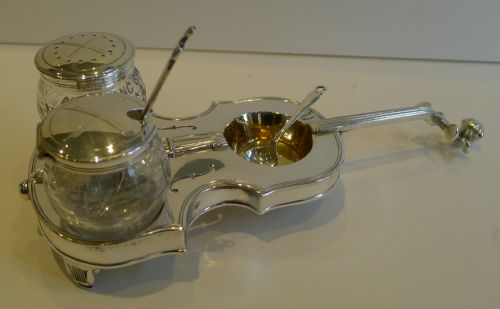
- A condiment set or salt cellar shaped to resemble an animal, vehicle, musical instrument, or domestic object. These playful designs were popular throughout the nineteenth century.
Victorian Silver Plate Salts: Frequently Asked Questions
How were salt cellars used on Victorian tables?
Dining guests used open salt cellars to take individual portions of salt using small decorative spoons. The cellars sat directly on the table cloth or within larger condiment cruet frames.
Servants or hosts filled these vessels before meals, and the coloured glass liners protected the silver plate from corrosive salt contact.
What is a novelty cruet set?
A novelty cruet set is a condiment holder shaped like an animal, cart, barrel, or musical instrument. Makers produced these whimsical designs to amuse guests during formal dining.
These sets combine practical salt and pepper storage with sculptural metalwork, often depicting farmyard animals, birds, or transport.
How do I care for silver plated salts?
Gentle cleaning with a soft cloth and mild soap preserves the thin silver layer. Avoid abrasive polishes that wear away the plated surface over time.
Glass liners should be removed and washed separately, ensuring no moisture remains trapped against the metal frame during storage.
How can I tell the period of a cruet set?
Design styles, registration marks, and manufacturing techniques help indicate the period. Pieces from the Victorian era often feature heavy ornamentation or naturalistic animal motifs.
Edwardian and later pieces tend toward lighter frames, while stamped registration numbers provide specific production years for mid-nineteenth-century items.