
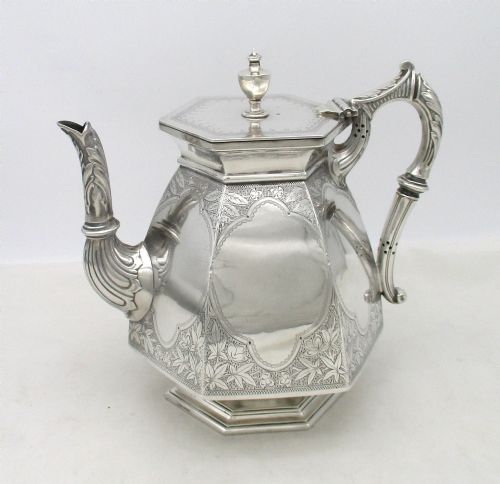

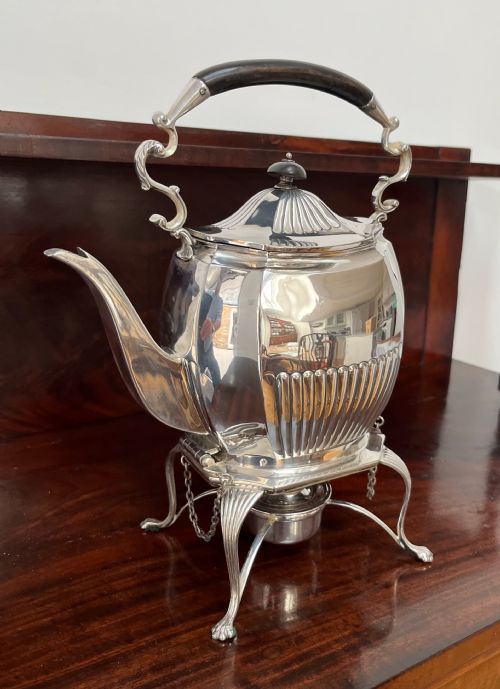


Victorian Silver Plate Kettle
These Victorian silver plate kettle pieces bring ritual and warmth to a room, offering heavy metal vessels designed for hot water at the tea table.
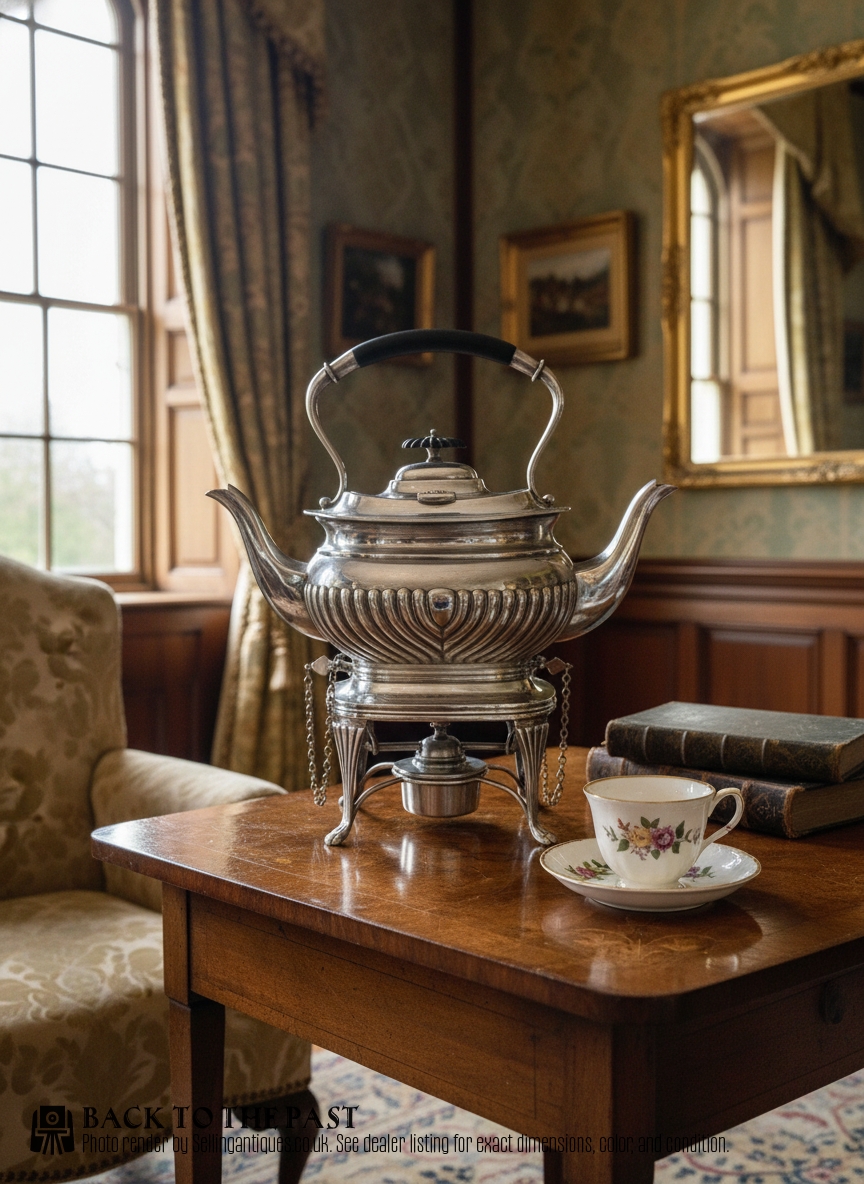
Victorian Silver Plate Kettle
A victorian silver plate kettle is a metal vessel designed to boil or hold hot water, frequently paired with a dedicated metal stand and a small spirit burner beneath. These items belong to the wider world of teaware, spanning periods from the nineteenth century through to the Edwardian era.
The version most commonly met on this page is the spirit kettle on a stand, often dating from the late nineteenth century or the Edwardian period. Alongside these kettles, the listings include larger tea urns and samovars equipped with taps for serving gathered guests.
How they were made
Makers utilised base metals such as nickel silver and copper as the foundation, applying a coating of silver through electroplating or traditional Sheffield plating techniques. This created the bright appearance of solid silver while keeping the body robust enough for daily use.
Handles and insulators incorporated materials like ebony, bone, and wood to prevent heat from transferring to the user's hand during pouring. Stands and burners were cast and assembled with matching metal components to support the weight of a filled vessel.
Materials across the listings include silver plate, nickel silver, ebony, bone, and wood.
What varies in quality
The calibre of a victorian silver plate kettle rests in the crispness of its chasing, the weight of the metal, and the integrity of the stand mechanism. Heavier metal bodies and well-balanced frames indicate a higher grade of manufacture from established workshops.
Design ambition separates standard models from exceptional ones, particularly when aesthetic movement or naturalistic motifs shape the surface. The retention of the original spirit burner and matching stand elevates the completeness of the piece.
Walker & Hall·Fenton Brothers·Frederik Ellis Tim & Co·Elkington·Mappin Webb and Co
The Victorian Silver Plate Kettle Glossary
- Electroplated Nickel Silver
- A base alloy of nickel, zinc, and copper coated with a layer of pure silver through an electrical process. This method became common in the nineteenth century for producing affordable teaware.
- Spirit Kettle
- A water kettle mounted upon a metal stand that incorporates a small fuel burner beneath. It kept water hot at the tea table without returning to the kitchen.
- Samovar
- A large heated metal urn used to boil and dispense water for tea. These pieces often feature a central internal heating tube or a spirit burner and a small tap at the base.
- Aesthetic Movement
- A late nineteenth century design style that drew inspiration from Japanese art and nature, prioritising asymmetry and stylised foliage over rigid symmetry. Pieces in this taste display distinct surface engraving and form.
Victorian Silver Plate Kettle: Frequently Asked Questions
How do I use a spirit kettle?
Fill the metal vessel with water and place it securely upon the matching metal stand above the unlit burner. Add methylated spirit to the burner reservoir, ignite it carefully, and allow the flame to heat the water from below.
Regulate the flame using the snuffer cap to maintain a steady temperature at the tea table. Ensure the wooden or bone insulators on the handle remain dry and cool during operation.
What is the difference between a kettle and an urn?
A kettle is a tilting vessel suspended in a swinging frame above a burner, designed to be tipped forward for pouring. An urn or samovar is a fixed vertical container mounted on stationary legs with a small tap near the bottom.
Urns generally hold larger volumes of water for gatherings, whereas kettles serve smaller tea parties directly from the tabletop.
How do I clean silver plated teaware?
Wash the metal surfaces gently using warm water and a mild detergent, avoiding abrasive cloths or harsh chemical dips that strip the plating. Dry the piece thoroughly with a soft cloth to prevent water spots.
Buff the exterior occasionally with a dedicated silver cloth to maintain the shine without wearing away the underlying silver layer.
How can I tell an Edwardian kettle from a Victorian one?
Victorian pieces often display heavier ornamentation, naturalistic cast details, or aesthetic movement engraving influenced by nineteenth century design revivals. Edwardian examples tend to lean towards simpler neoclassical lines or lighter proportions.
Examining the maker's mark and any registration numbers stamped into the base can help narrow down the decade of production.