
Victorian Silver Mount
Discovering a victorian silver mount brings together tactile glass, carved organic materials and solid sterling worked by specialist silversmiths.
Victorian Silver Mount
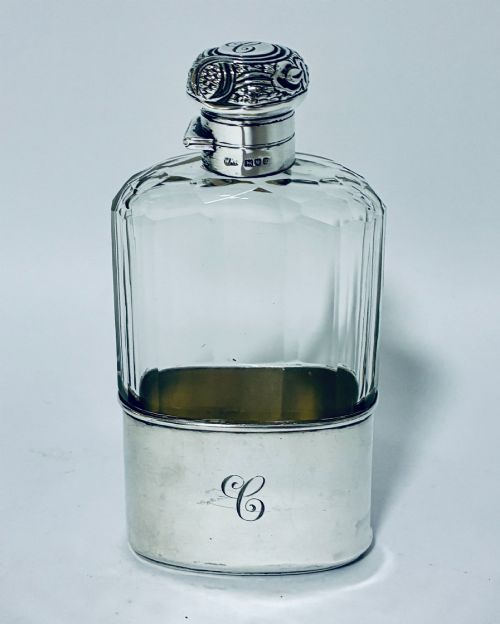
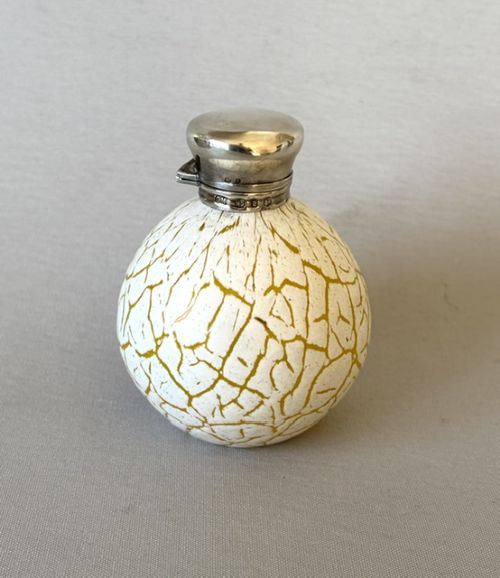
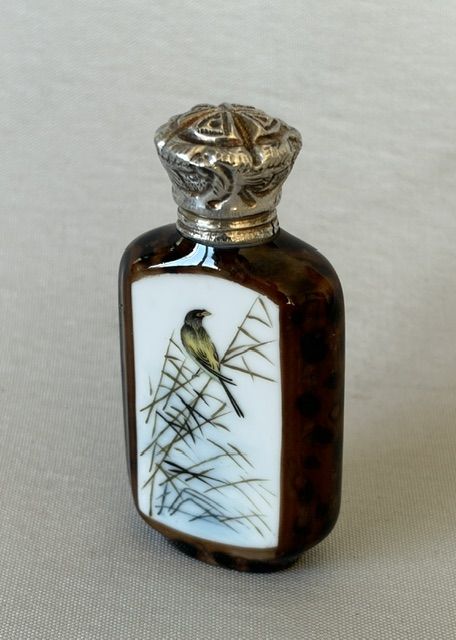
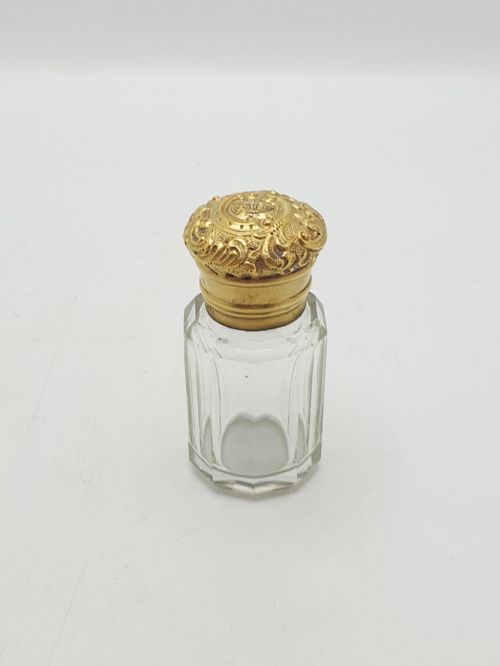
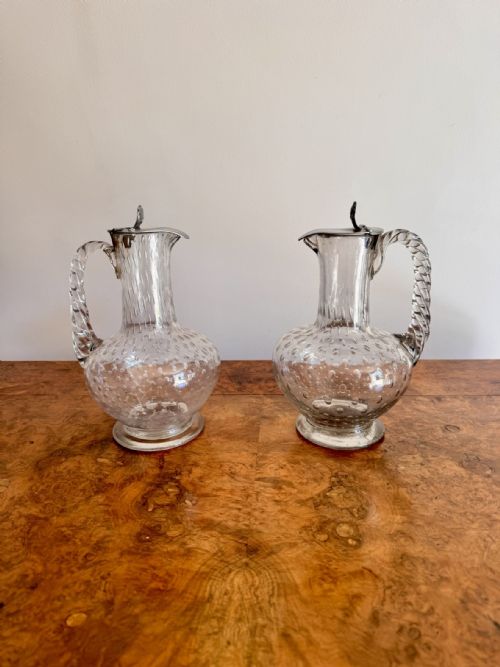
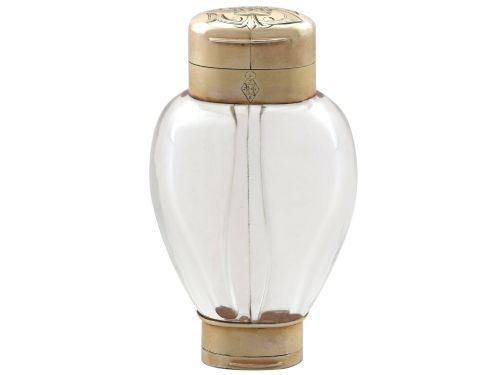
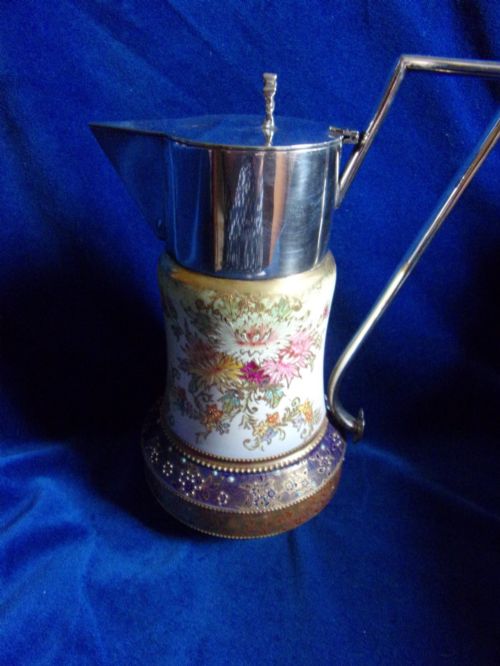
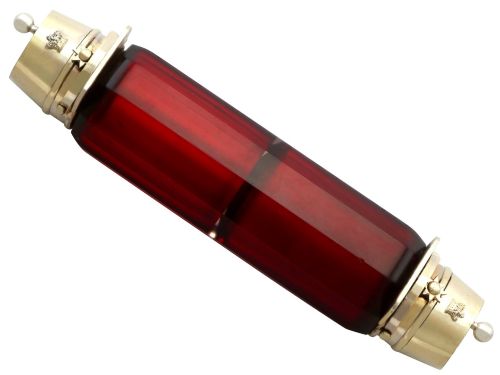
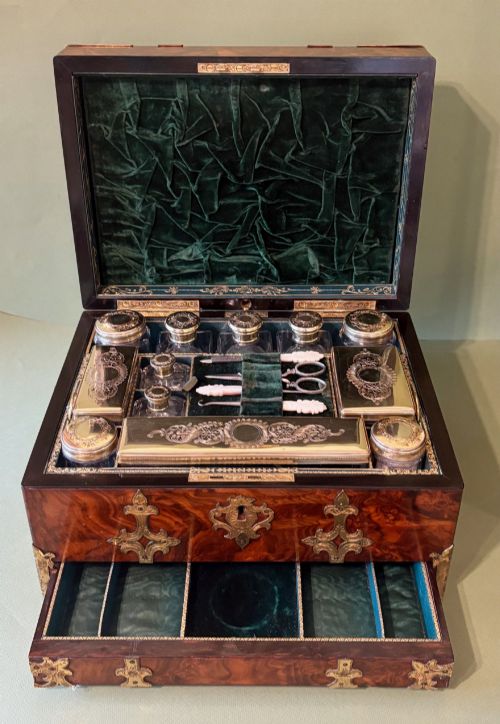
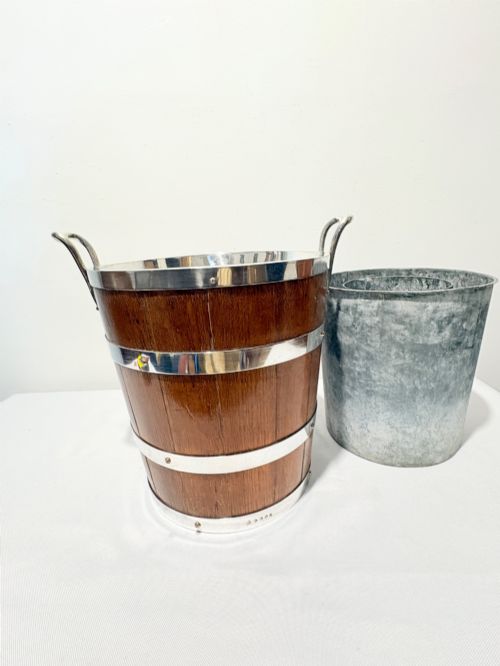
Items carrying a victorian silver mount combine functional or decorative containers with worked metal collars, caps, and bands produced during the nineteenth and early twentieth centuries. Scent bottles, claret jugs, biscuit barrels and desk accessories dominate the available selections, pairing precious or base metal with glass, ceramics, and organic elements.
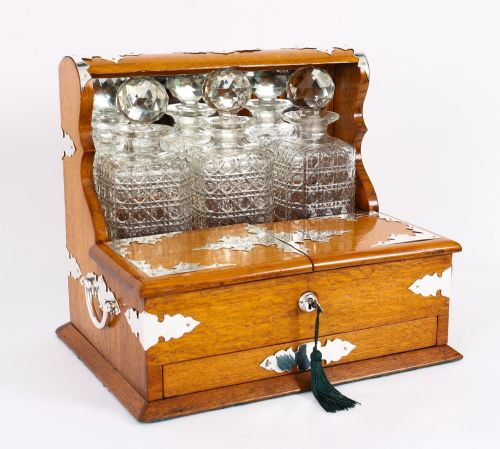
The objects stem predominantly from the Victorian and Edwardian eras, spanning from the 1860s through to the 1910s. Common structural forms include cut glass decanters, porcelain bodies, and wooden boxes enhanced by protective or ornamental metalwork.
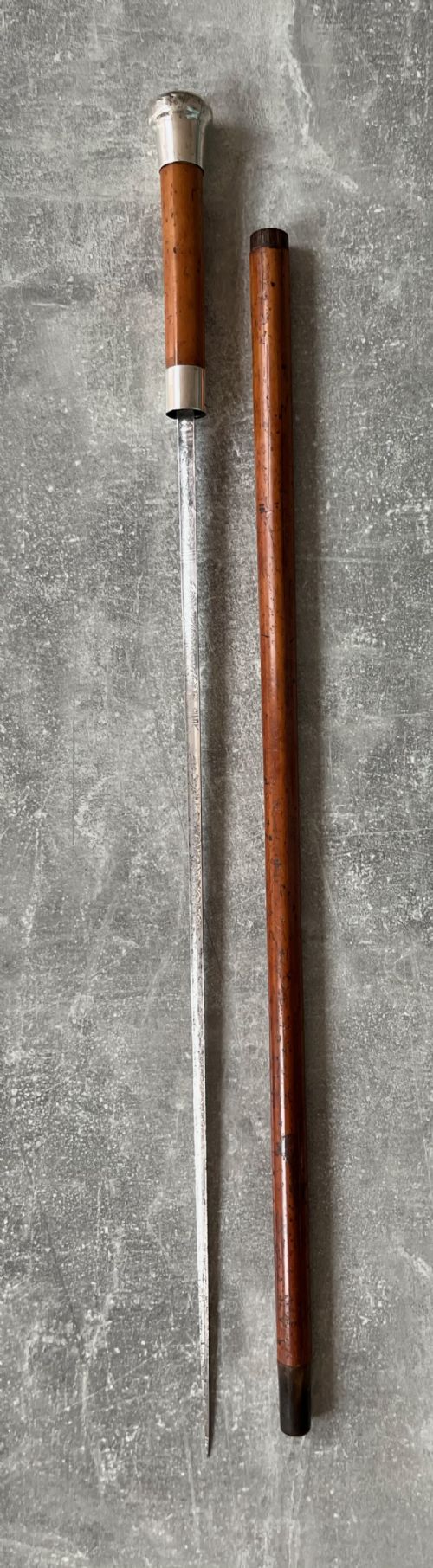
Makers utilised these mountings to reinforce rims, provide secure stoppers, or add decorative engraved highlights to fragile vessels. Buyers encounter everything from ruby glass perfume flasks to oak inkstands and carved walking sticks.
Materials and Construction
Silversmiths combined sterling silver and silver plate with cut crystal, coloured glass, tortoiseshell, oak, and horn. Glass vessels display hobnail cutting, mould-blown patterns, or overlaid colour layers in cranberry, amber, and Bristol blue.
Metal components were shaped through casting, repoussé, and piercing, then secured directly to the body of the piece using collars, hinges, and internal cork or glass stoppers.
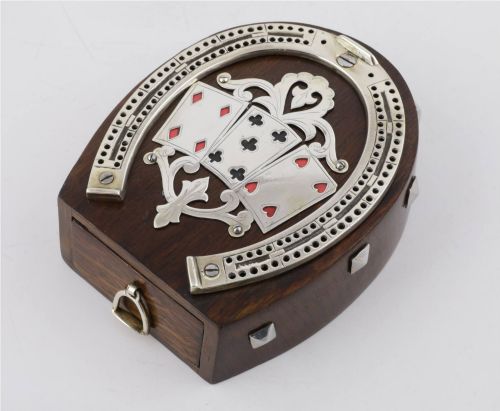
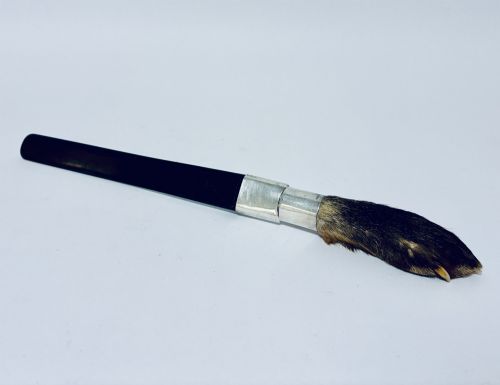
Several items incorporate taxidermy horse hooves mounted in silver as desk tidies, paperweights, and match strikers.
Assessing Craftsmanship
Distinctions in quality rest upon the weight and thickness of the silver components, the clarity and depth of hand-engraving, and the precision of the fit between metal and glass. Maker marks stamped into the silver provide evidence of workshop origin and standard.
The material integrity of the non-metal sections, such as undamaged glass facets or sound organic elements like horn and tortoiseshell, elevates the standing of individual pieces.
Henry Matthews·William Comyns·James Fenton·Charles May·Elkington
The Victorian Silver Mount Glossary
- Vinaigrette
- A small ornamental box or bottle with a perforated inner grille, designed to hold a sponge soaked in aromatic vinegar.
- Claret jug
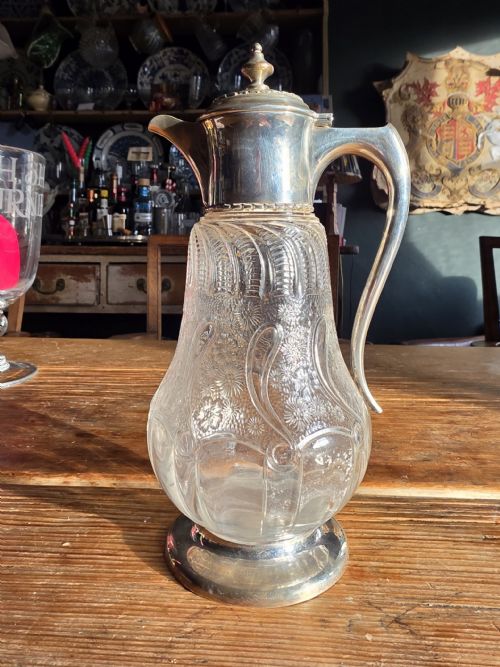
- A pouring vessel featuring a glass body fitted with a hinged silver lid, handle, and collar, designed for serving wine.
- Snuff mull
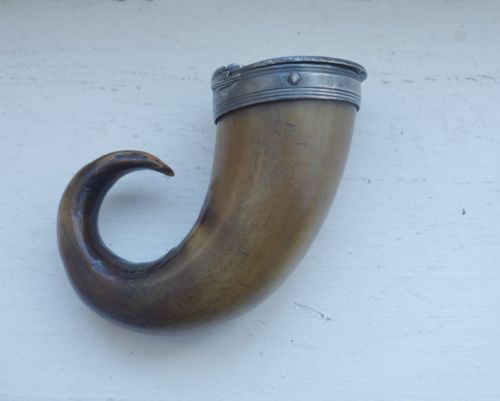
- A pocket container made from animal horn or wood, used for holding powdered tobacco and typically finished with metal hinges.
- Hallmark
- A set of official stamps applied to precious metal items indicating the maker, assay office, standard of purity, and year of testing.
- Repoussé
- A metalworking technique where the artisan hammers the design from the reverse side to form raised relief patterns on the surface.
Victorian Silver Mount: Frequently Asked Questions
What are victorian silver mount items?
These pieces consist of glass, ceramic, wood, or organic bodies fitted with functional or decorative sterling silver and plated collars, lids, or mounts.
They represent the decorative metalwork and container arts of the nineteenth and early twentieth centuries.
How were scent bottles used?
Victorian ladies carried these small flasks in handbags or kept them on dressing tables to hold perfumes, smelling salts, or aromatic vinegars.
The tight-fitting silver caps and hinged lids prevented evaporation of the volatile contents.
How do I care for silver mounts?
Gentle cleaning with a soft cloth helps maintain the polished surface of the metal without harming adjacent glass or organic materials.
Harsh chemical dips should be avoided to protect tortoiseshell, horn, and fragile glass bodies.
How do I identify the date?
Hallmarks stamped onto the silver components reveal the assay office and specific year letter corresponding to official testing records.
Stylistic cues such as cut glass patterns and object forms further help narrow down the period of manufacture.