




Victorian Silver Liquor Flask
These Victorian silver liquor flasks are sturdy travelling companions and pocket-sized vessels designed to hold spirits while on the move.
Victorian Silver Liquor Flask
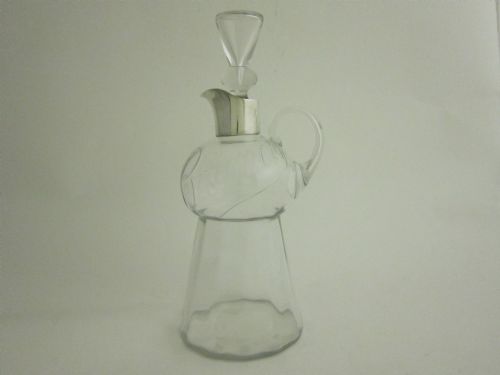
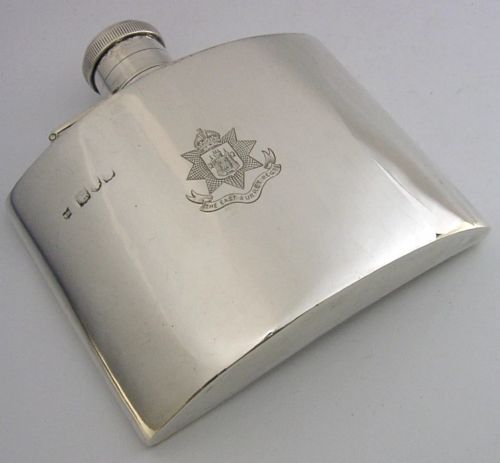
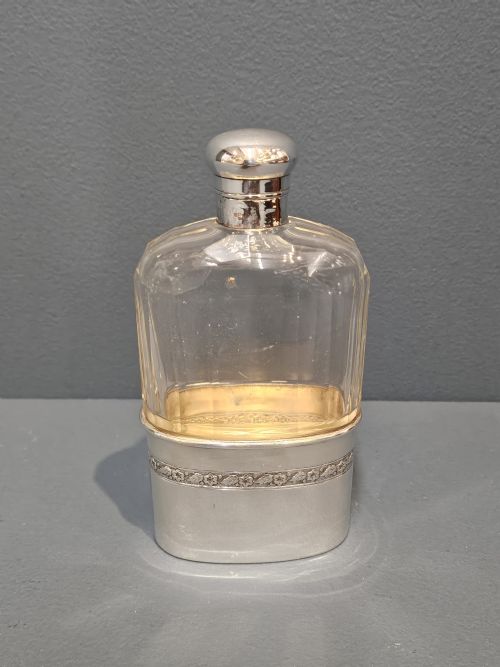
A victorian silver liquor flask typically takes the form of a pocketable hip flask or a portable glass bottle fitted with precious metal mounts. The examples seen here span the Victorian era, alongside later periods up to nineteen-forty, reflecting a long tradition of portable drinking vessels.
The primary forms include flat curved hip flasks shaped to fit a pocket, decanter-style bottles with silver mounts, and miniature bottles. Many pieces incorporate a removable cup at the base, allowing the owner to pour a measure of spirit directly.
Materials vary across the selection, featuring combinations of sterling silver, silver plate, cut glass, cut crystal, leather cases, and cork stoppers. Pieces emerge from specific contexts, such as military association items from the Boer War era and provincial assay offices like Glasgow.
Materials and construction
Silversmiths constructed these vessels using sterling silver or silver plate for the caps, mounts, and removable cups, often shaping the metal through spinning or hammering. Glass bodies were blown and frequently cut into geometric patterns or left clear and green to showcase the liquid within.
Many glass and crystal flasks feature protective leather cases that wrapped the central body to guard against knocks during travel. Cork inserts fitted within the silver screw caps ensured a secure seal for the spirits held inside.
Materials across these listings include sterling silver, silver plate, cut glass, cut crystal, leather, and cork.
Assessing the grade
Quality reveals itself in the weight of the silver mounts and the crispness of any cut glass or crystal detailing on the body. Thicker metal gauge and well-fitting removable cups indicate a higher standard of manufacture.
The presence of engraved crests, regimental details, or specific historical associations adds considerable depth to an individual piece. Makers who utilised silver gilt interiors or unusual protective leather cases demonstrate a superior level of craftsmanship.
The Victorian Silver Liquor Flask Glossary
- Sterling silver
- A standard alloy composed of ninety-two point five percent silver and seven point five percent other metals, typically copper. This material provides the durability required for items subjected to regular travel.
- Silver plate
- A base metal substrate coated with a thin layer of silver. This technique offered a more affordable alternative to solid sterling silver while maintaining a similar appearance.
- Cut glass
- Glass that has been shaped and patterned using abrasive wheels and polishing stones. The resulting facets catch the light and enhance the visual appeal of the decanter body.
- Removable cup
- A small drinking vessel fitted over the lower portion of a hip flask and secured by friction or threading. It provides an immediate drinking vessel when away from home.
- Silver gilt
- Sterling silver that has been coated with a thin layer of gold on the interior surfaces. This treatment protects the silver from the corrosive effects of alcoholic spirits.
Victorian Silver Liquor Flask: Frequently Asked Questions
What spirits did these flasks hold?
These vessels were designed to carry warming spirits such as brandy, whisky, or gin during outdoor pursuits, hunting, or military campaigns.
The inclusion of a removable cup on many designs allowed the owner to share a measure without drinking directly from the flask.
How do I care for a silver flask?
Regular gentle cleaning with a specialist silver cloth preserves the shine of the metal mounts without damaging surrounding glass or leather.
It is advisable to empty the contents and dry the interior thoroughly after use to prevent tarnishing and residue buildup.
Were all flasks made for military use?
While certain examples connect to military campaigns like the Boer War, the majority served civilian purposes for travellers, sportsmen, and gentlemen.
Military-issued pieces often bear regimental inscriptions or specific service associations that set them apart from standard civilian wares.
Why do some flasks have leather cases?
Leather cases provided an extra layer of protection against the daily wear and hardships of travel and outdoor activities.
They also offered a secure grip for cold or wet hands when the owner needed to access the spirit.