



Antique Drinking Flask
An antique drinking flask travels in a pocket or saddlebag, carrying spirits across centuries in silver, glass, leather, and coconut shell.
Antique Drinking Flask
When you search for an antique drinking flask, you encounter vessels designed for portable refreshment, spanning portable hip flasks, field campaign sets, and saddle flasks. The selection ranges from robust Victorian and Edwardian travel companions to earlier folk art vessels.
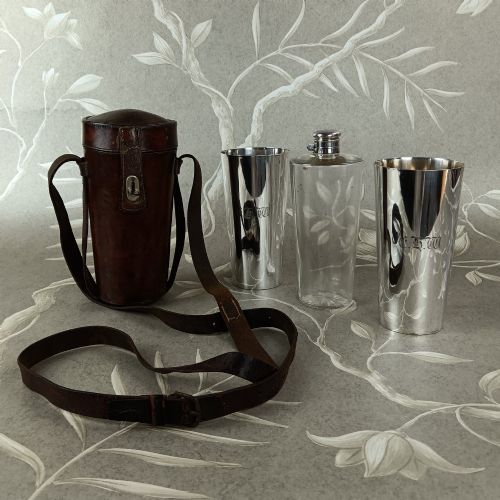
The most common forms on this page combine glass bodies with sterling silver or silver plate mounts, frequently paired with removable drinking cups at the base. You also find leather-bound examples and carved coconut shell vessels originating from various centuries.
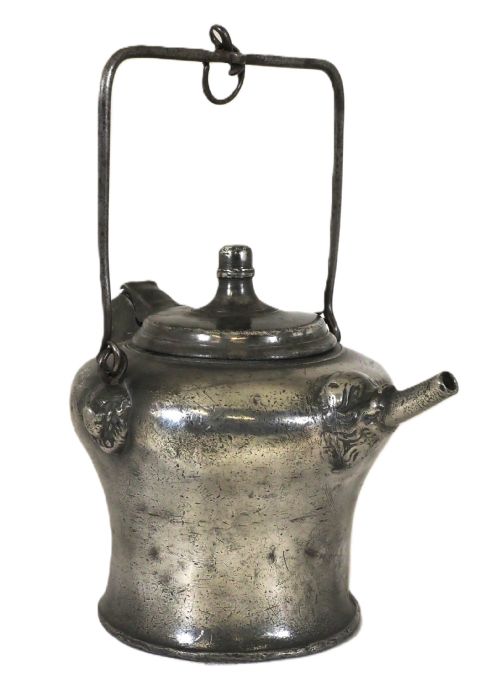
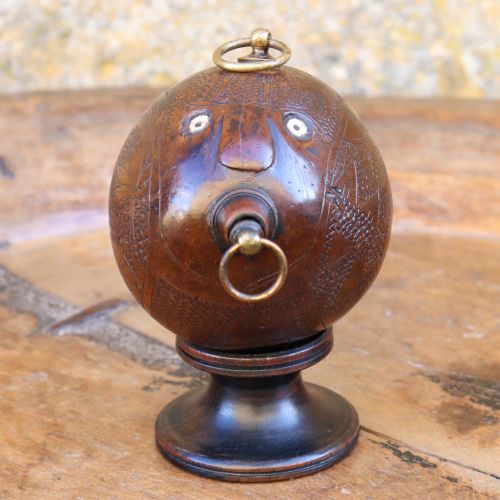
Earlier pieces introduce distinct regional variations, including Swiss pewter water vessels and naive nineteenth-century folk art creations. These objects reflect the changing social habits of travellers, sportsmen, and explorers across the Victorian, Edwardian, and Art Deco eras.
Materials and Construction
Metals such as sterling silver, silver plate, and pewter form the caps, cups, and mounts of these vessels. Smiths shaped these materials by hand or machine, often applying hallmarks to sterling silver components to record the assay office and date.
Glass and cut glass provide the translucent body for many hip flasks, allowing the contents to remain visible. In other instances, makers encased glass bottles in stitched leather or carved natural materials like coconut shell and crocodile skin.
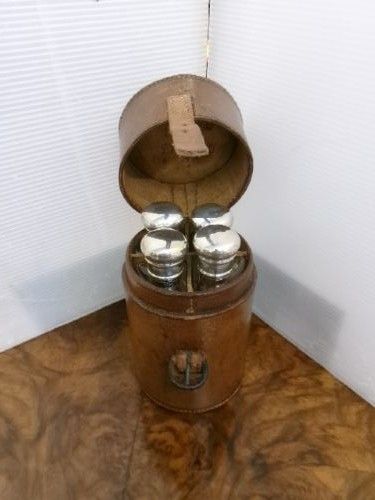
Folk art pieces demonstrate naive carving techniques directly into organic matter, while campaign sets integrate multiple flasks within fitted cases. Joinery and stitching secure the leather cases designed to protect fragile glass bottles during travel.
Listings feature materials spanning sterling silver, silver plate, pewter, glass, cut glass, leather, crocodile skin, and coconut shell.
Distinguishing Quality
Quality reveals itself in the integration of materials, from heavy-gauge sterling silver mounts down to precise leather stitching around glass bottles. The weight of the silver and the clarity of the cut glass distinguish standard utilitarian pieces from exceptional commissions.
Maker attribution elevates certain pieces, particularly when prominent firms such as James Dixon & Sons or JB Chatterley & Sons constructed the metalwork. The presence of crisp hallmarks and complete removable cups or leather cases indicates higher original intent.
The sophistication of decorative execution separates ordinary examples from finer works, whether through elegant Art Deco geometry or naive folk art carving. Preservation of the original materials and functional components dictates the standing of each survivor.
James Dixon & Sons·JB Chatterley & Sons
The Antique Drinking Flask Glossary
- Hip Flask
- A pocket-sized container specifically shaped for carrying liquor. These curved vessels fit snugly against the body.
- Saddle Flask
- A specialised drinking bottle designed to slide into a leather holster on a horse's saddle. They often feature captive caps to prevent loss during motion.
- Hallmark
- An official stamp applied to precious metals indicating purity, maker, and assay year. British silver typically displays multiple tiny marks.
- Removable Cup
- A small drinking vessel fitted over the base of a flask. It slides off to serve the contents poured from the bottle above.
- Field Campaign Set
- A portable collection of drinking vessels packed within a fitted case. These were utilised by officers and travellers on military or exploratory missions.
Antique Drinking Flask: Frequently Asked Questions
How do I date a silver flask?
Silver flasks often carry hallmarks stamped directly into the metal mount or the rim of the cap. These tiny marks include letters and symbols that reveal the specific assay office and year of production.
When hallmarks are absent, stylistic clues such as the geometric lines of Art Deco design or the heavy ornamentation of the Victorian era help narrow down the period of manufacture.
Were these flasks meant for daily use?
Original owners carried these vessels during outdoor pursuits, travel, and social occasions. Saddle flasks accompanied riders on horseback, while pocket hip flasks served travellers and sportsmen.
Today, many collectors continue to use sturdy silver and glass examples for modern outings, though fragile historical pieces are often reserved for display.
What is a campaign set?
A campaign set includes multiple flasks and sometimes accessory containers housed within a fitted leather case or box. Travellers and military officers utilised these portable bars during extended journeys away from home.
The fitted enclosures protected the glass bottles from the rigours of transport across rough terrain.