


Victorian Silver Glass Liner Dish
These victorian silver glass liner dish pieces combine precious metalwork with vibrant blown inserts, offering both function and colour for the dining table.
Victorian Silver Glass Liner Dish
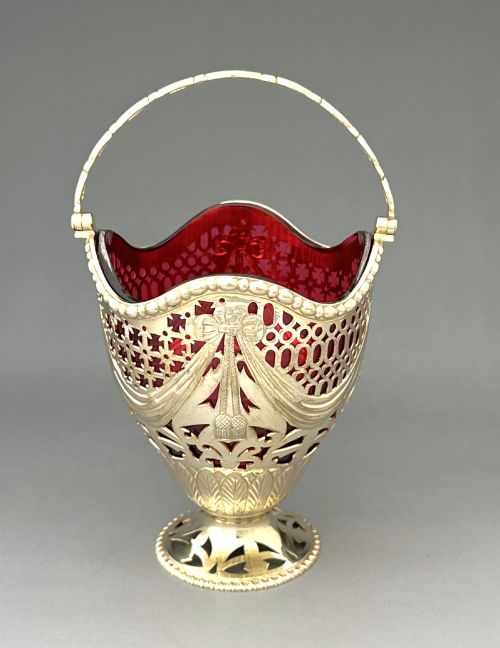
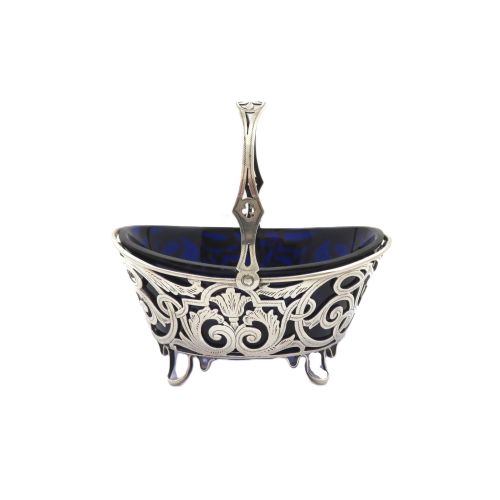
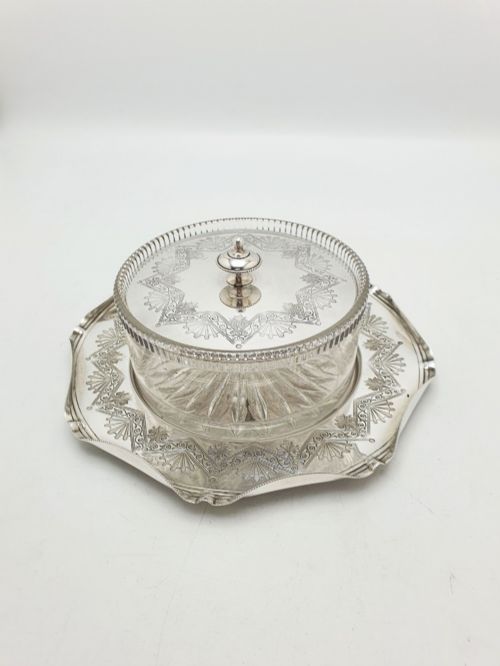
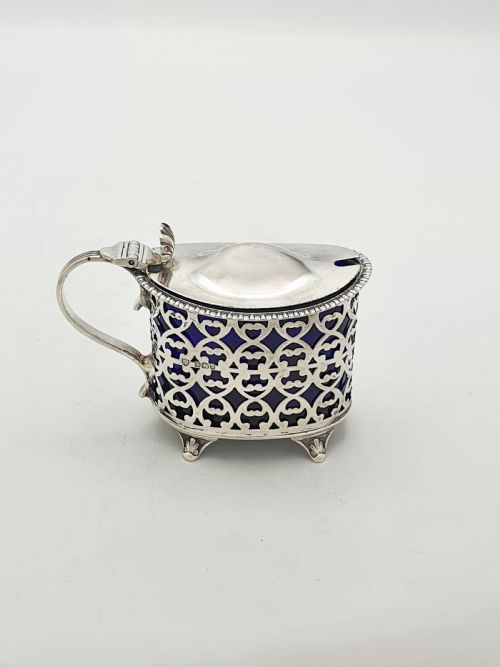
A victorian silver glass liner dish typically takes the form of a butter dish, salt cellar, mustard pot, or sugar basket designed for domestic table service. These vessels combine an outer frame of pierced or solid metal with a removable coloured vessel inside.
The most common examples on this page date from the Victorian period, spanning the late nineteenth century alongside adjacent Georgian and Edwardian styles. Forms range from boat-shaped table salts to swing-handled baskets and revolving lid butter dishes.
Materials and construction
Outer frames utilise sterling silver, silver plate, or silver-gilt, often shaped through casting, piercing, or silversmithing techniques to create decorative pierced walls and handles. Cast floral motifs and swing handles appear frequently among these metal mounts.
Internal vessels are formed from coloured glass, specifically utilising cobalt blue, cranberry, ruby, frosted, or opaline glass. These blown liners sit loosely inside the metal framework to allow removal for cleaning.
Some butter dishes feature cupped hands holding the glass liner, adding a literal touch of hospitality to the morning table.
Assessing quality
Quality rests upon the weight and definition of the metal mount, distinguishing heavy cast silver frames from lighter stamped silver plate. Pierced work shows greater skill when the openwork remains crisp and symmetrical.
The integrity of the glass liner contributes significantly, with original coloured glass liners holding higher distinction than later replacements. The depth of hue in cobalt or cranberry glass and the absence of chips along the rim indicate superior manufacture.
George Fox·W M F
The Victorian Silver Glass Liner Dish Glossary
- Silver-gilt
- Silver that has been coated with a thin layer of gold on its surface. This technique provides a rich yellow sheen to the interior or exterior of baskets and salts.
- Cobalt glass
- A deep blue glass coloured by the addition of cobalt oxide. It provides a striking contrast against bright sterling silver frames.
- Cranberry glass
- A transparent pinkish-red glass created using gold chloride during melting. It is frequently seen in sugar baskets and decorative tableware.
- Pierced work
- Metal that has been cut through in decorative patterns to create openwork designs. This technique lightens the visual weight of silver baskets and mustard pots.
Victorian Silver Glass Liner Dish: Frequently Asked Questions
What is a victorian silver glass liner dish used for?
These vessels served functional roles on the dining table, holding butter, preserves, mustard, or loose sugar.
The glass liner protected the outer metal from acidic foodstuffs while allowing the colourful insert to show through pierced silverwork.
How do I clean the glass liner?
The glass liner lifts out of the silver frame to permit safe washing in warm soapy water.
Harsh abrasives must be avoided to protect both the glass and the delicate silver or silver-gilt surfaces.
Are the glass liners usually original?
Many pieces retain their original blown glass liners in cobalt, cranberry, or frosted finishes, though replacements do occur.
Matching the exact dimensions and colour of the period adds integrity to the piece.
How do I date a silver glass liner dish?
Dating relies on hallmarks stamped into the silver frame, stylistic cues like Art Nouveau curves, and period manufacturing methods.
Assay office marks and date letters provide precise years of production for sterling items.