



Victorian Silver Flatware Set
A victorian silver flatware set brings nineteenth-century dining tables to life, offering matching or fitted silver for everything from fruit to fish.
Victorian Silver Flatware Set
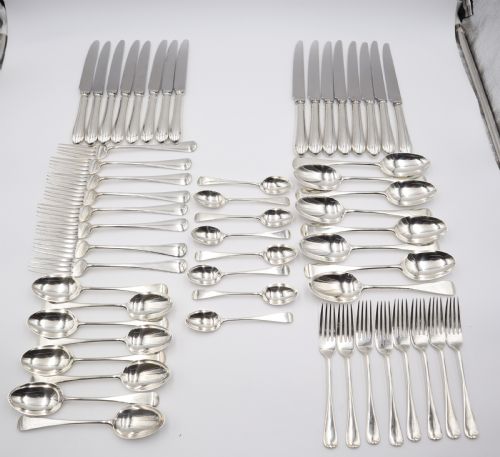
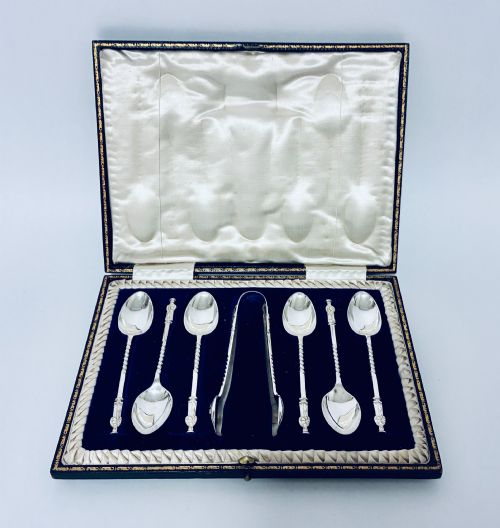
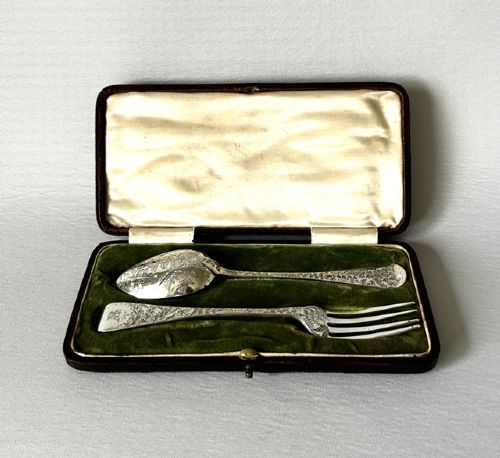
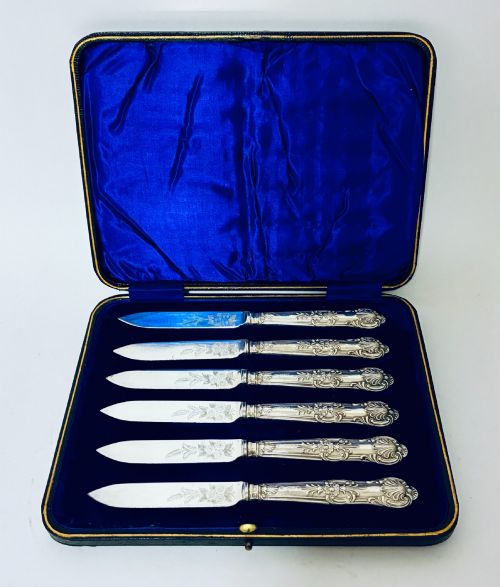
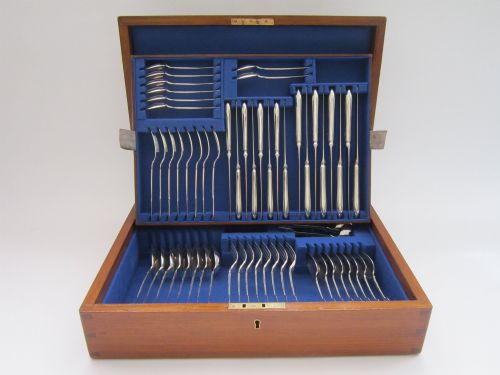
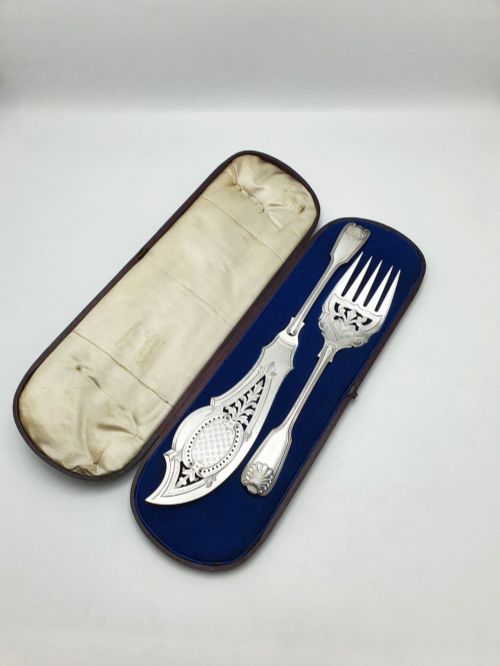
A victorian silver flatware set encompasses everything from full canteens for twelve persons down to small boxed christening sets and apostle teaspoons. The pieces you encounter most often on this page range from fiddle pattern cutlery and serving spoons to fish servers and butter knives.
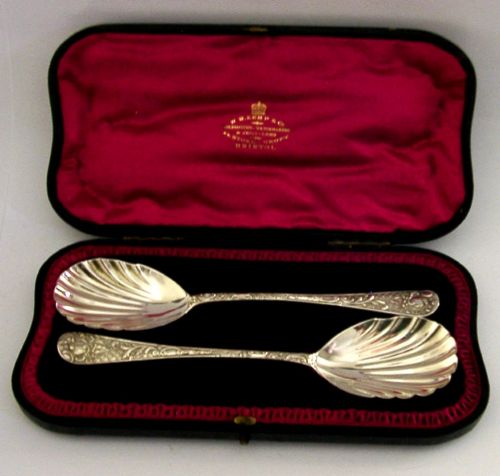
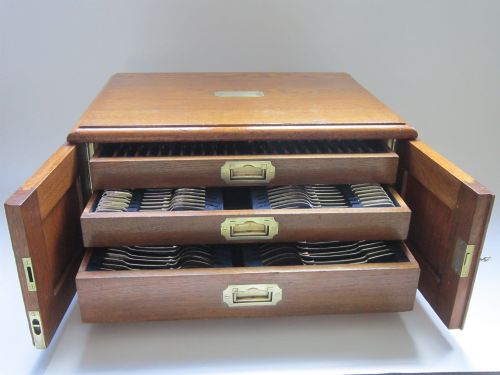
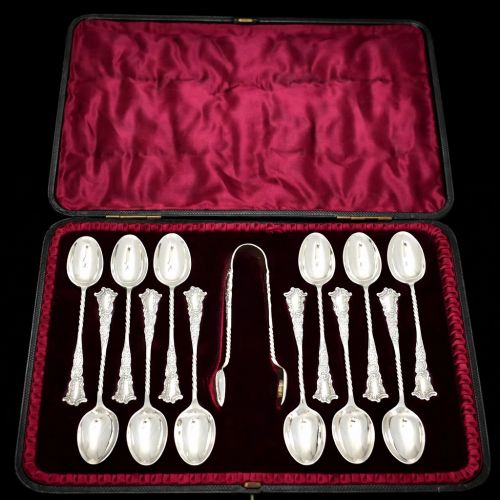
Many formations arrive in fitted boxes lined with velvet, silk, or leatherette, while larger groupings use oak canteens. These collections span the Victorian and Edwardian periods, stretching from mid-nineteenth-century domestic services to turn-of-the-century presentation sets.
Specialised gatherings like fruit and nut serving sets, coffee spoons, and campaign cutlery appear alongside standard dining configurations. Each grouping reflects the specific culinary habits and social rituals of nineteenth-century households.
Materials and Construction
Makers primarily utilised sterling silver alongside silver plate, shaping metals through casting, hammering, and engraving. Handles frequently incorporate organic elements such as horn, antler, and mother-of-pearl, or feature decorative silver motifs.
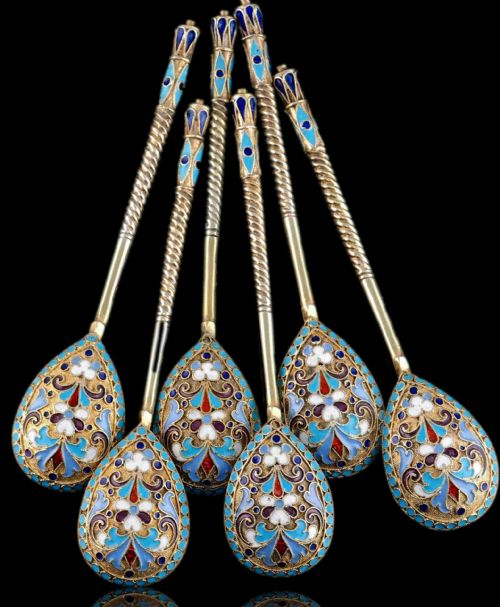
Enamelling techniques appear on specific regional pieces, notably in cloisonné work on Russian sets. Protective storage cases utilise satin, velvet, and leatherette over wooden or cardboard carcasses to house individual items securely.
The documented object types range from single teaspoons and butter knives to extensive canteens of cutlery for twelve persons.
Assessing the Standard
Quality rests on the crispness of the handle patterns, such as the detailed relief work on Queens pattern or fiddle pattern items, and the preservation of original fitted presentation cases. Heavier gauge silver provides a more satisfying weight in the hand during daily use.
The integrity of engraved decoration across fish servers and spoons distinguishes standard production from finer craftsmanship. Complete uniformity across larger canteens for twelve persons indicates careful assembly by the original maker.
Dmitrii Nikolaevich Nikolaev·Walter and John Barnard·Robert Stebbings
The Victorian Silver Flatware Set Glossary
- Fiddle pattern
- A nineteenth-century flatware handle shape widening sharply at the terminal in the outline of a fiddle. This style formed the backbone of many domestic dining services.
- Queens pattern
- An ornate nineteenth-century flatware style featuring scrollwork and shell motifs along the border. It represents a heavier and more decorative option than plain designs.
- Canteen
- A fitted box, chest, or cabinet designed to hold a complete set of cutlery. These containers often feature specific slots lined in velvet or baize for each individual piece.
- Cloisonne
- An enamelling technique where coloured glass paste is fired within wire compartments soldered to a metal base. This method creates intricate patterned decoration on decorative spoons.
- Christening set
- A small presentation grouping typically comprising a fork, knife, and spoon intended as a gift for a child. They frequently arrive in dedicated silk-lined cases.
Victorian Silver Flatware Set: Frequently Asked Questions
What is in a christening set?
A christening set typically includes a small silver fork, knife, and spoon packaged together in a fitted presentation case. These matched items served as traditional gifts for infants during the nineteenth century.
Many examples feature engraved decoration or matching silver handles. They frequently survive inside their original silk or velvet-lined boxes.
How do I clean silver flatware?
Silver flatware requires gentle cleaning with a specialist silver polish and a soft cloth to remove tarnish. Avoid harsh abrasives that can wear away engraved details on fiddle pattern or Queens pattern surfaces.
Hand washing in warm soapy water keeps the metal in good condition. Storing pieces in anti-tarnish rolls or lined canteens slows down future discolouration.
Can I use these for dining?
Victorian silver flatware sets suit regular dining use provided you hand wash them rather than putting them in a dishwasher. Sterling silver handles and steel blades require careful drying after use to prevent corrosion.
Heavier canteens designed for twelve persons easily accommodate modern dinner parties. Using them daily maintains the traditional purpose for which they were made.
What is campaign cutlery?
Campaign cutlery refers to portable dining sets utilised by officers and travellers during the nineteenth century. These items were built for mobility and often fit compactly into specialised cases.
They reflect the practical needs of people moving across the British Empire. The materials chosen prioritised durability on the move.