

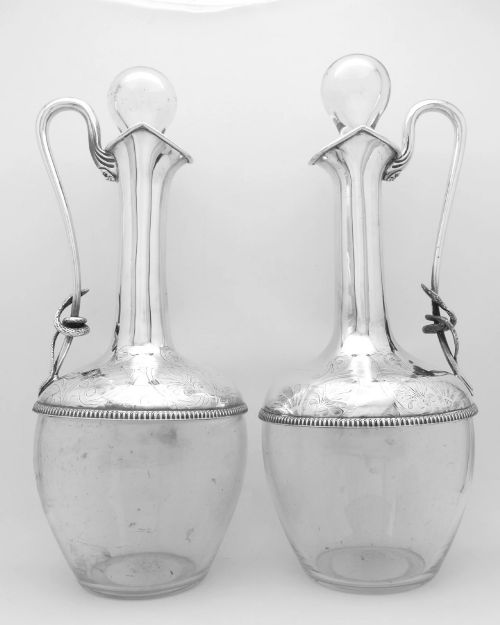


Victorian Silver Claret Decanter
A victorian silver claret decanter brings formal dining tables to life, pairing glittering cut glass with elaborate metalwork for serving wine with theatrical flair.
Victorian Silver Claret Decanter
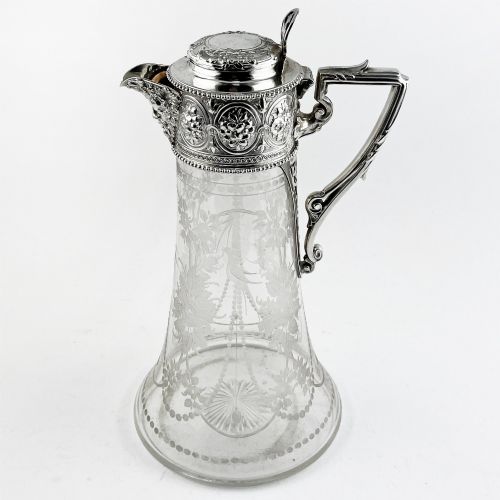
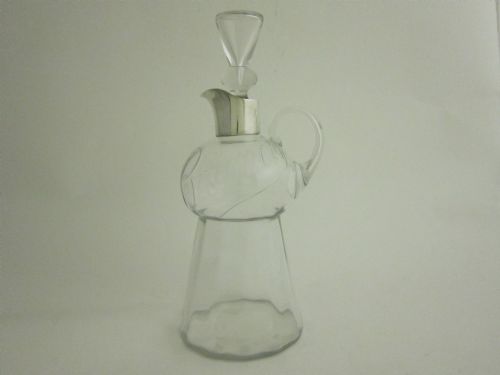
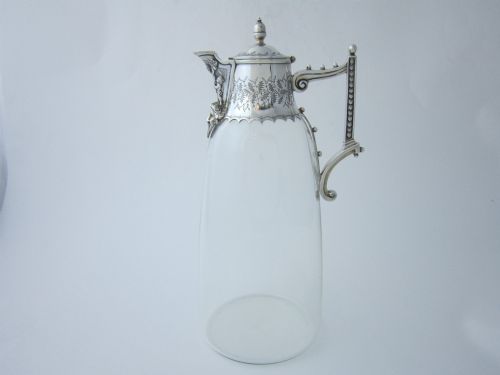
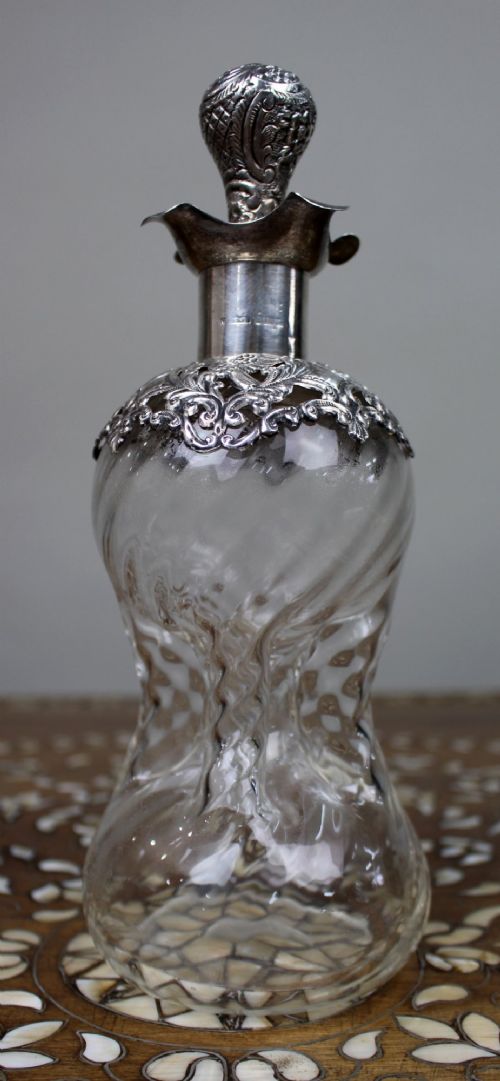
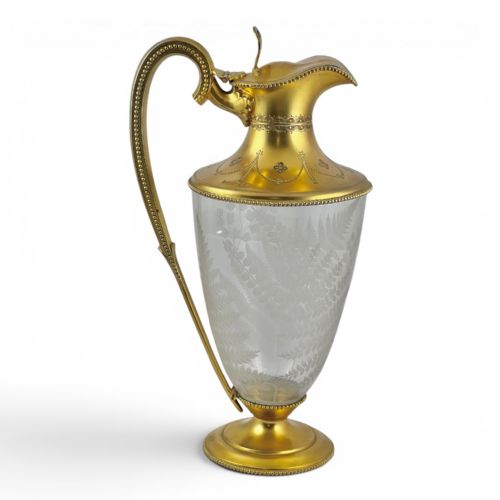
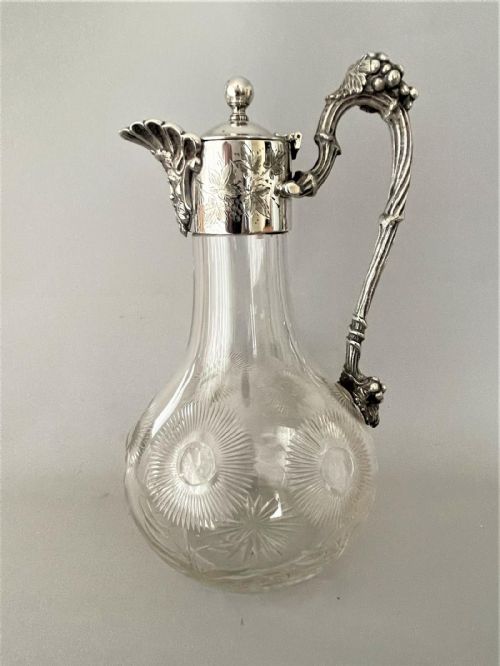
A victorian silver claret decanter combines a glass body with a metal mount, lid, and handle designed specifically for serving red wine at formal nineteenth-century meals. Most examples found here date from the Victorian and Edwardian eras, spanning styles from austere classical revivals to ornate rococo curves and angular art nouveau lines.
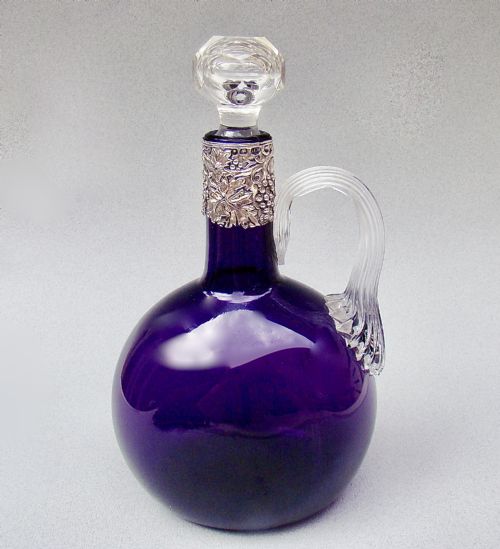
The vessels appear primarily as tall jugs with hinged lids, accompanied occasionally by matching decanter labels or paired ewers. Glass bodies take various forms, including clear crystal, deeply cut patterns, and coloured glass such as cranberry, green, or amethyst.
Makers utilised these pieces for formal hospitality, mounting metalwork securely onto blown vessels. Collectors encounter both solid sterling silver mounts and durable silver plate applied over base metal frames.
Materials and Manufacturing Techniques
Craftsmen shaped the glass bodies using blowing and moulding techniques, often applying deep wheel-cut facets or delicate etched motifs to catch the light. Coloured glass variants relied on metallic oxides added during the molten stage to achieve rich hues like cranberry and green.
Metal mounts required skilled silversmiths or platers to cast, chase, and engrave handles, collars, and hinged lids. Silver plate methods included Old Sheffield Plate and electroplating over a base metal core, whilst finer pieces employed solid sterling silver bearing assay office hallmarks.
Makers secured the metal mounts around the glass necks using waterproof adhesives and tight collars, frequently incorporating intricate details like vine leaves, Bacchus masks, or serpent handles.
Distinguishing Factors of Quality
Quality rests upon the crispness of the glass cutting, the weight and clarity of the crystal, and the depth of hand-chased detail on the silver mounts. Superior pieces display harmonious proportions between the heavy glass body and the cast metal handle.
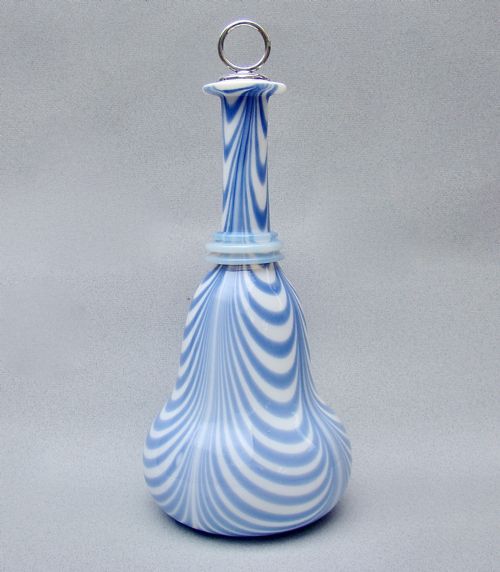
Maker attribution elevates certain examples, particularly those bearing marks from renowned workshops or notable designers. The intricacy of specialised glass, such as multi-layered Nailsea pieces or vibrant cranberry hues, also separates standard production items from exceptional works.
Asprey and Co. Ltd·Henry Matthews·Mappin and Webb·Elkington·Hukin and Heath·George Unite
The Victorian Silver Claret Decanter Glossary
- Claret Jug
- A specialised vessel designed for serving red wine, featuring a pouring spout, a hinged lid, and an attached handle. These pieces often combine glass bodies with decorative metal mounts.
- Silver Plate
- A manufacturing technique applying a thin layer of silver to a base metal such as copper or Britannia metal. This process allowed makers to offer ornate designs at a lower cost than solid silver.
- Crystal
- A high-clarity glass containing lead oxide, which increases the weight, brilliance, and refractive index of the material. It allows deep, sharp cutting patterns to catch the light effectively.
- Hallmark
- An official stamp applied to precious metals indicating the standard of purity, the assay office, and the date letter. These marks provide definitive evidence for dating solid silver mounts.
- Ewer
- A large jug with a wide spout and a curved handle, traditionally used for holding water or wine. Victorian versions often served decorative or functional roles on the dining table.
Victorian Silver Claret Decanter: Frequently Asked Questions
What is a claret decanter?
A claret decanter is a specialised serving vessel designed specifically for red wine during the nineteenth century. These pieces feature a pouring spout, a hinged lid to preserve the wine, and an integral handle.
The combination of glass and metalwork allowed Victorian dining rooms to showcase both crystal clarity and decorative silversmithing. They remain central display items for collectors of period barware.
How do I date a silver mount?
Dating silver mounts relies primarily on official hallmarks stamped directly onto the metal components. These tiny struck marks reveal the assay office, the specific year of testing, and the maker's mark.
Silver-plated items lack official date hallmarks, requiring stylistic analysis of the shape, engraving, and manufacturing techniques to determine their approximate period.
Were these used for wine?
These vessels served primarily for decanting and serving red claret at formal Victorian dinners. The wide body allowed the wine to breathe before pouring into glasses.
Beyond claret, households utilised similar jugs for lemonade, water, and liqueurs, often pairing them with matching silver decanter labels to identify the contents.
How do I clean an antique decanter?
Cleaning requires gentle warm water and mild soap, avoiding harsh abrasives that might scratch the delicate glass or wear away silver plating. Wooden bottle brushes help reach internal residues safely.
Silver mounts should be polished carefully with a non-abrasive cloth, taking care to prevent cleaning agents from entering the interior or damaging any adhesive seals around the neck.
What is silver plate?
Silver plate involves fusing or electroplating a thin layer of pure silver onto a base metal core such as copper or Britannia metal. This technique provided the visual appeal of solid silver at a fraction of the cost.
Victorian manufacturers utilised this method extensively to produce elaborate tableware, jugs, and decanter frames for middle-class dining rooms.