




Victorian Silver Calling Case
A victorian silver calling case is a slim pocket receptacle designed for social visits, offering a glimpse into nineteenth-century etiquette and fine metalwork.
Victorian Silver Calling Case
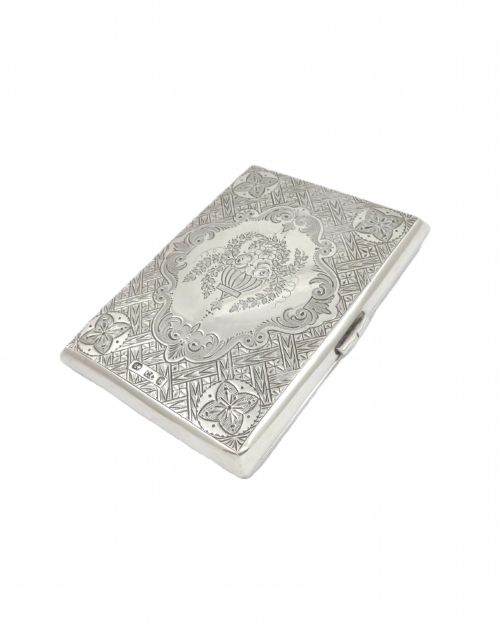
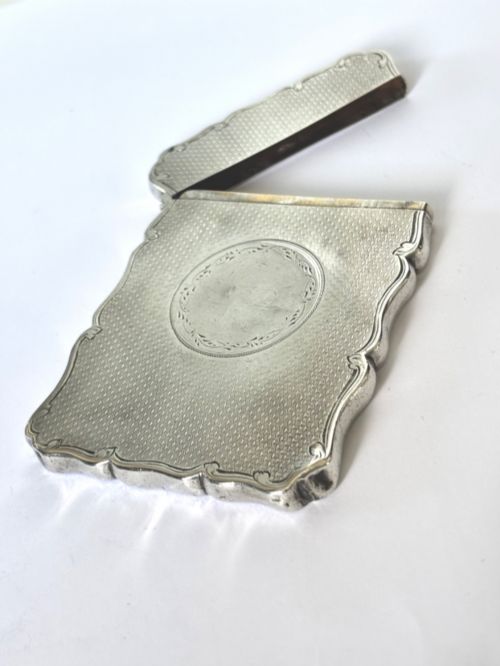
A victorian silver calling case is a compact pocket container used historically to hold visiting cards before social calls. These items appear most frequently in sterling silver, often shaped as rectangular boxes with hinged lids designed to protect paper cards from damage.
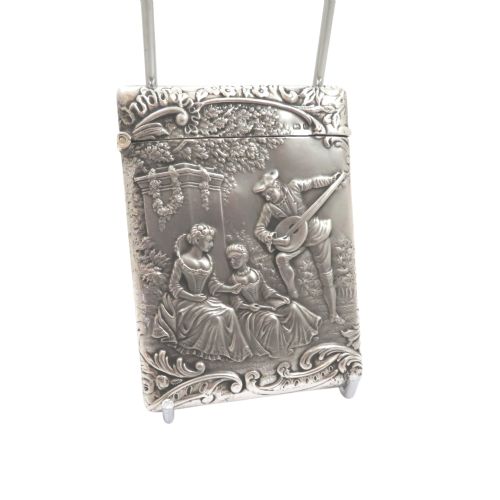
The selection ranges from plain polished sterling to elaborate examples featuring engraved scenes, architectural motifs, and integrated compartments. Specimens span the Victorian and Edwardian periods, with occasional pieces incorporating organic materials like tortoiseshell, mother of pearl, and Connemara marble alongside the metalwork.
Materials and construction
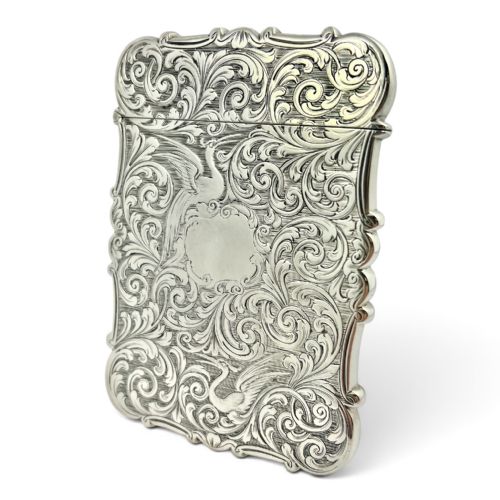
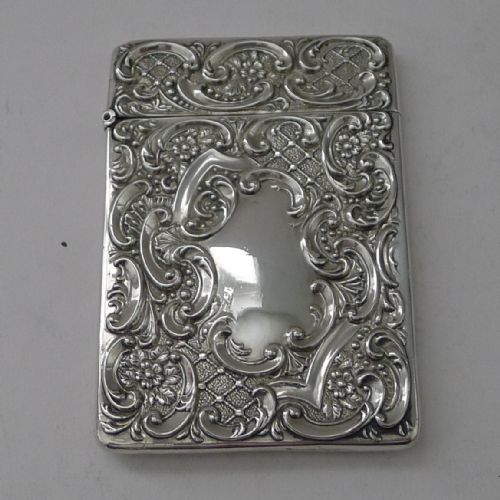
Silversmiths utilised sterling silver sheet metal, shaping bodies through stamping, folding, and soldering. Surface decoration relied heavily on hand engraving, repoussé work, and engine-turning to create intricate patterns and architectural views.
Many instances incorporate applied panels of mother of pearl, tortoiseshell, or bone secured to metallic frames. Specialised variants also feature enamel work or fitted interior linings designed to hold visiting cards securely.
Listings feature sterling silver, tortoiseshell, mother of pearl, bone, enamel, and Connemara marble across Victorian and Edwardian periods.
Assessing the craftsmanship
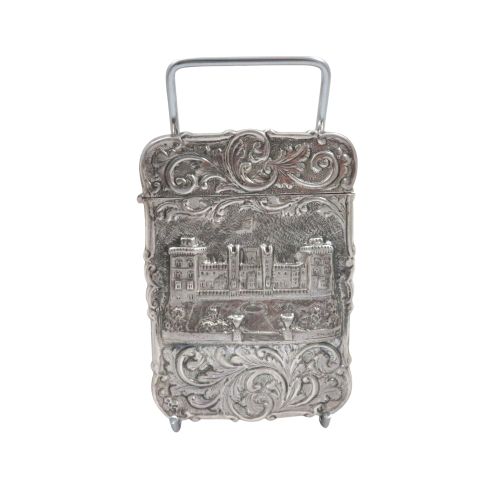
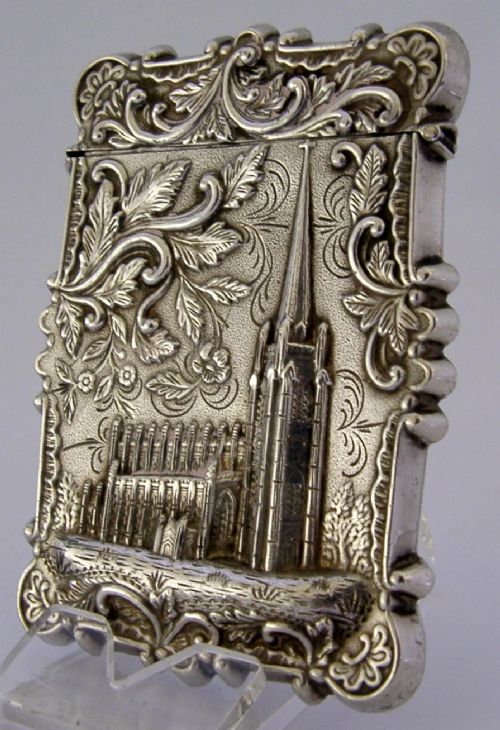
Quality rests upon the crispness of the chasing and engraving, particularly on architectural castle top pieces where fine detail defines the scene. Crisp relief work and sharply defined architectural landmarks indicate superior artisan skill.
The weight of the metal and the mechanical precision of the hinge also dictate standard. Substantial gauge silver combined with a tightly sealing lid separates standard production work from exceptional silversmithing.
Nathaniel Mills·George Unite·Hilliard & Thomason·Cronin & Wheeler·William Neale·Foxall & Co
The Victorian Silver Calling Case Glossary
- Castle top
- A descriptive term for a card case featuring a high-relief engraving or cast depiction of a famous building or landmark on the cover. These architectural scenes often portray structures such as Windsor Castle, St Paul's Cathedral, or York Minster.
- Repoussé
- A metalworking technique where the artisan hammers the silver from the reverse side to form a raised design in relief. Details are then refined from the front using chasing tools.
- Aide Memoire
- A pocket notebook or memorandum tablet often combined with a card case, incorporating ivory leaves or paper panels for recording engagements. These items frequently include a small attached pencil.
- Sterling silver
- An alloy of silver containing ninety-two point five percent silver and seven point five percent other metals, usually copper, chosen for durability. British pieces typically display hallmark stamps verifying this standard.
- Engine-turning
- A mechanical decoration method utilising a rose engine lathe to cut intricate, precise geometric patterns into the metal surface. This technique produces regular, shimmering textures across the silver.
Victorian Silver Calling Case: Frequently Asked Questions
What is a calling card case?
A calling card case is a small protective container designed to hold visiting cards used during formal social calls in the nineteenth century.
These pocket-sized accessories kept paper cards crisp and clean while individuals travelled between residences to leave their names.
How were calling cards used?
Victorian society relied on calling cards to announce arrivals, offer condolences, or leave social notices when hosts were absent.
Pronounced social rules dictated when a card was left, folded, or handed directly to a servant upon entering a home.
What materials are used in these cases?
Sterling silver forms the primary structure of most examples, frequently paired with decorative panels of mother of pearl or tortoiseshell.
Some specimens also incorporate organic elements like bone, enamel work, or regional hardstones such as Connemara marble.
How do I date a silver case?
British silver cases generally feature hallmarks stamped on the interior rim or lid, indicating the assay office, standard, and year of manufacture.
Stylistic shifts, such as the transition from early Victorian floral engraving to Aesthetic movement motifs, also help determine age.