


Victorian Sideboard with Glass
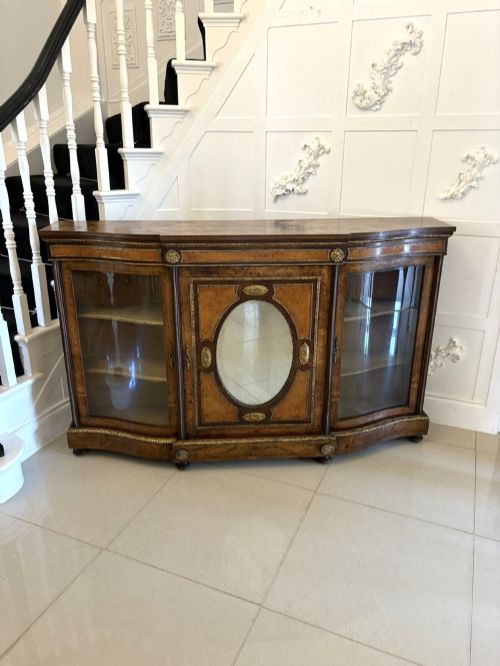
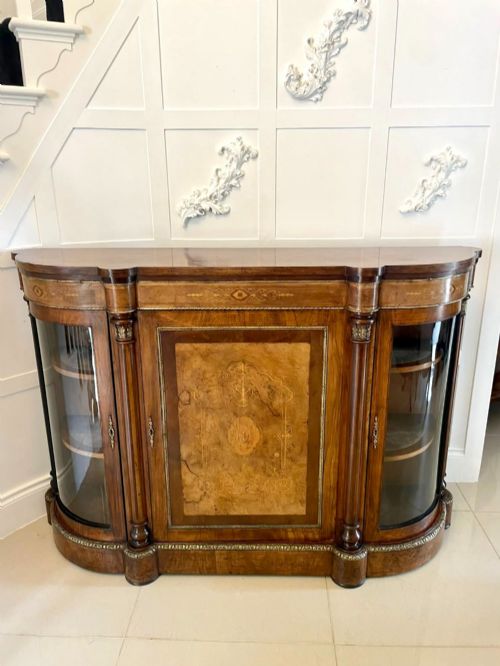
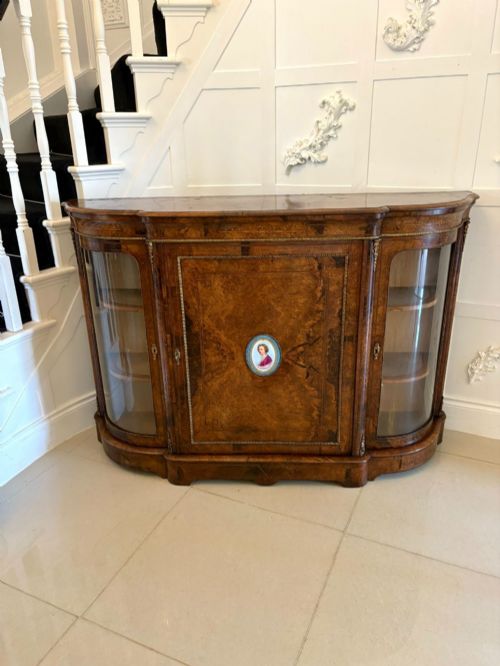
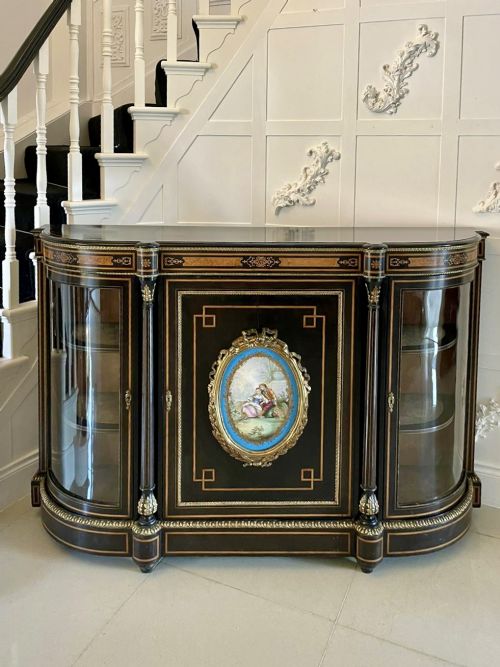
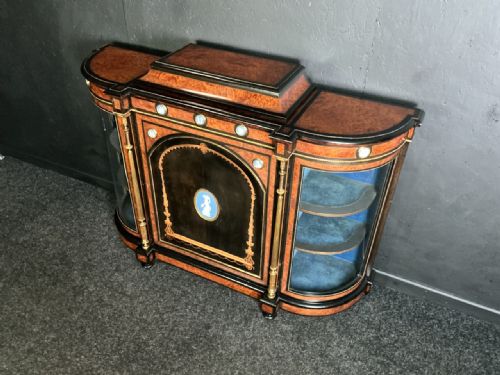
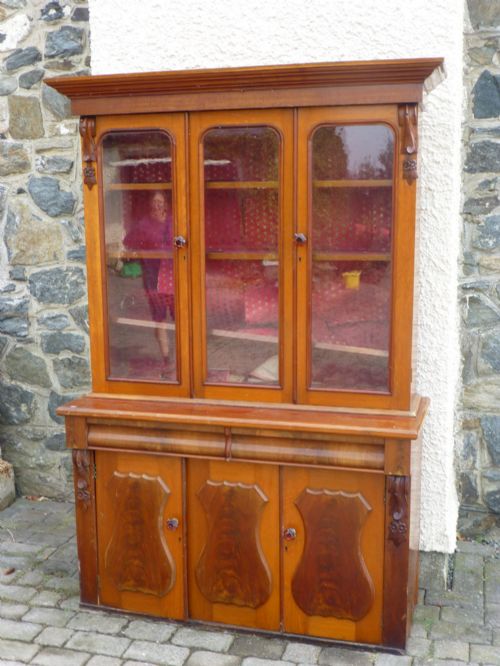
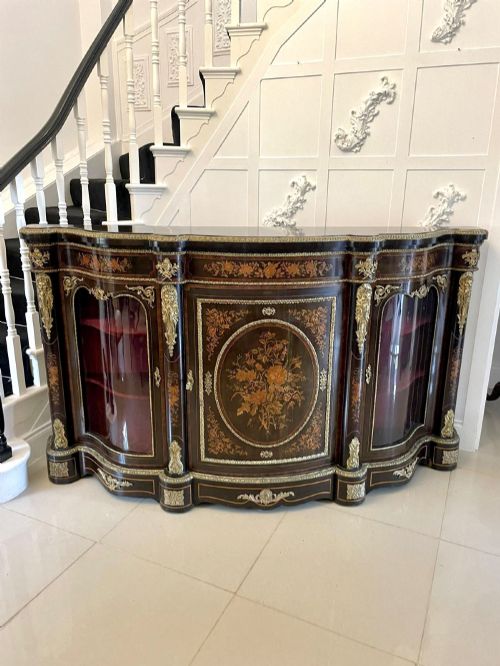
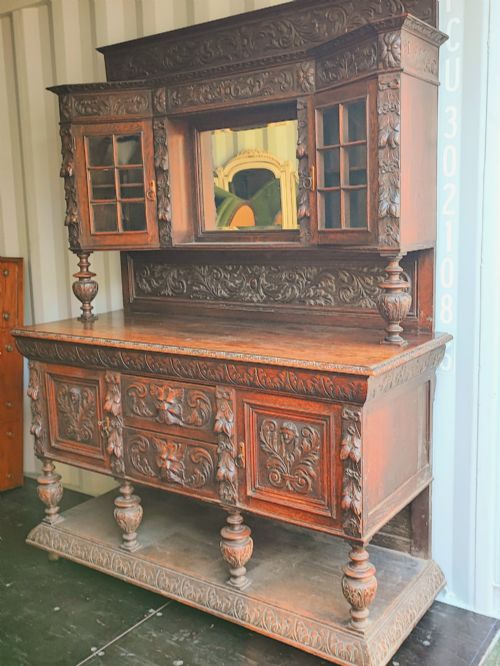
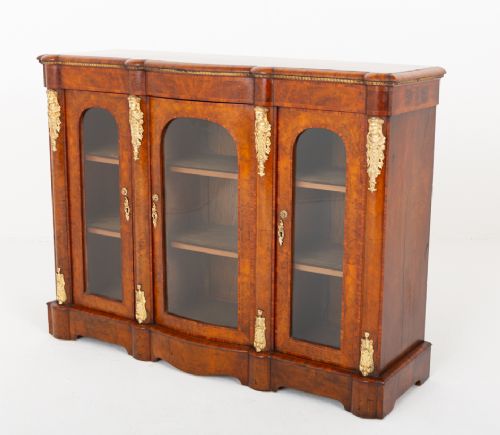
These Victorian sideboard with glass pieces are substantial display cabinets that anchor a room with burr walnut and glazed compartments.
Victorian Sideboard with Glass
A Victorian sideboard with glass typically takes the form of a credenza, pier cabinet, or display cabinet designed for formal reception rooms. These pieces combine closed storage with glazed doors or mirrored panels to showcase decorative objects.
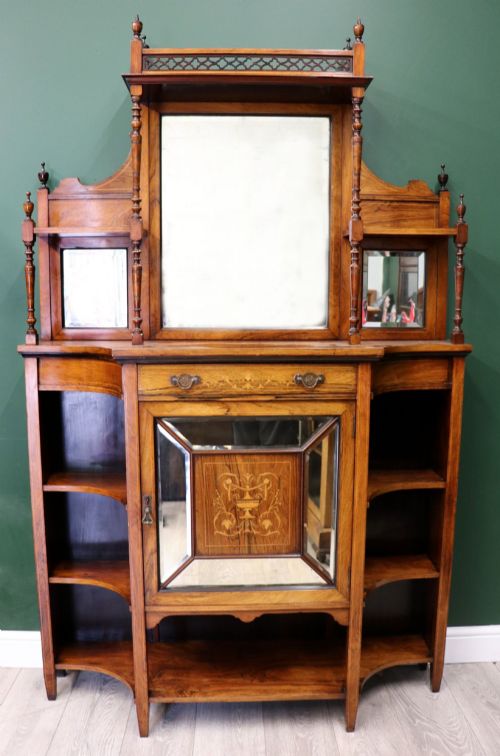
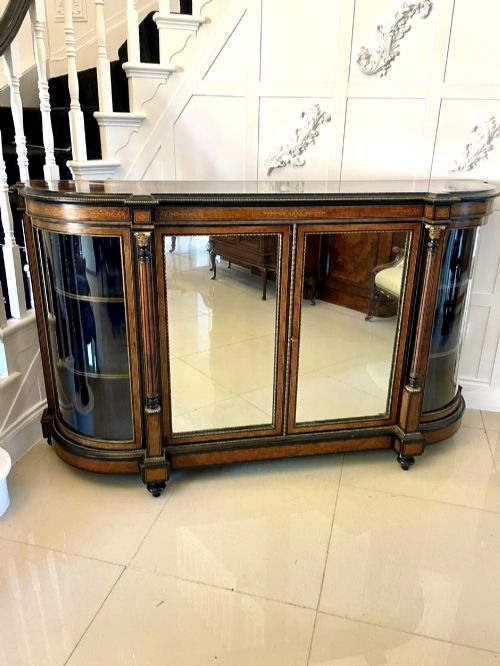
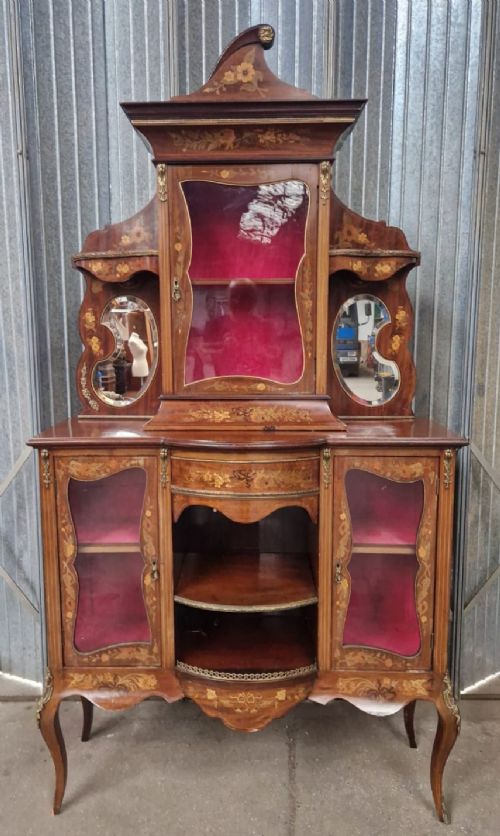
The selections on this page concentrate on burr walnut, rosewood, and oak examples dating from the mid to late nineteenth century. Credenzas and serpentine fronted cabinets dominate the inventory, frequently incorporating inlaid marquetry and gilt mounts.
How they were made
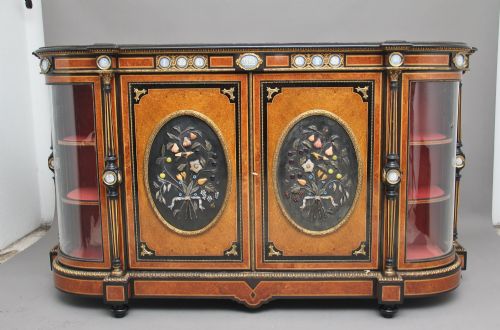
Cabinet makers utilised choice timbers such as burr walnut and mahogany, applying intricate marquetry patterns and brass stringing across curved and serpentine facades. Ormolu mounts and Sevres style porcelain plaques were integrated as architectural accents.
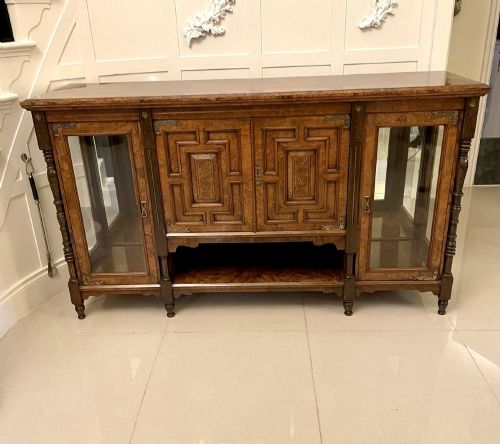
Glazing panels and mirrored backs were fitted into timber frames alongside turned columns, such as barley twist supports, reflecting light and amplifying the sense of space within the cabinet.
The inventory spans the Victorian period from eighteen-sixty to eighteen-eighty, highlighting credenzas, pier cabinets, and serpentine display furniture.
What varies in quality
The distinction between standard production and exceptional work lies in the depth of the marquetry and the crispness of the cast ormolu mounts. Finer examples exhibit carefully selected burr walnut veneers that match symmetrically across curved doors.
Structural complexity also defines the upper tier, seen in serpentine fronts and integrated mirrored backs rather than flat panel construction. Signed pieces bearing maker details demonstrate higher workshop standards.
Maison Gagneau
The Victorian Sideboard with Glass Glossary
- Credenza
- A low cabinet, often featuring glazed central doors flanked by curved side compartments. This form became a focal point for nineteenth-century drawing rooms.
- Ormolu
- Gilded bronze used for decorative mounts and framing elements. It provides a bright metallic contrast against dark walnut and rosewood veneers.
- Marquetry
- Inlaid patterns of contrasting wood veneers and botanical motifs. Skilled artisans cut these designs by hand to ornament cabinet doors.
- Serpentine
- A gently undulating front curve that moves outward at the centre and inward at the edges. This shape demands advanced woodworking skill to achieve.
- Burr Walnut
- A highly figured wood grain obtained from tree growths, prized for its swirling patterns. Cabinet makers used veneers of this timber on principal surfaces.
Victorian Sideboard with Glass: Frequently Asked Questions
Where were these cabinets used?
Victorian households placed these glazed cabinets primarily in drawing rooms and dining parlours. They provided a secure, dust-free space to display valuable dinner services, glassware, and ornaments.
The reflective glass and mirrored backs also helped brighten nineteenth-century interiors by bouncing natural light around the room. Their substantial proportions meant they typically stood against the main wall of a principal room.
How do I date a glass sideboard?
Dating relies on observing the timber choices, decorative motifs, and construction techniques characteristic of the period. Pieces from the eighteen-sixties and seventies frequently showcase burr walnut veneers, marquetry inlay, and cast ormolu mounts.
Broader nineteenth-century examples may incorporate specific revival styles, such as Jacobean details or barley twist columns. Examining the interior timber and backboards offers further clues regarding workshop origins.
How do I live with one?
Living with a nineteenth-century display cabinet involves placing it away from direct sunlight and strong heat sources to protect the wood veneers. Maintaining stable indoor humidity prevents the timber from warping or cracking over time.
These large cabinets require adequate floor space and a neutral wall background to let the figured burr walnut and gilt mounts stand out. They function well in modern interiors as statement storage for glassware and collections.