
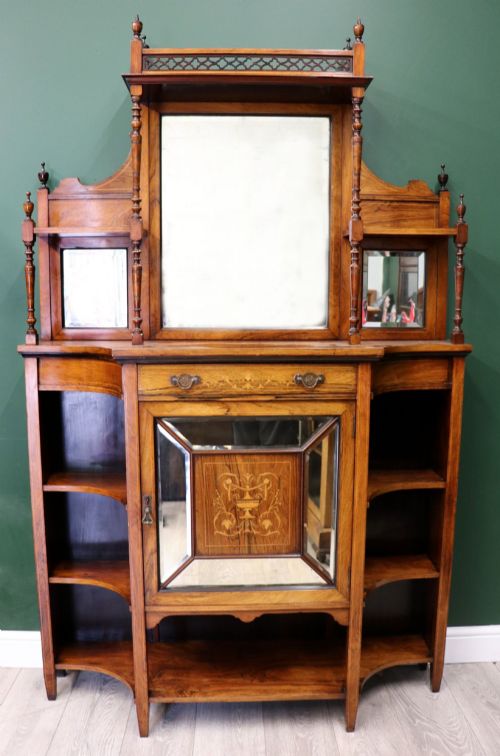
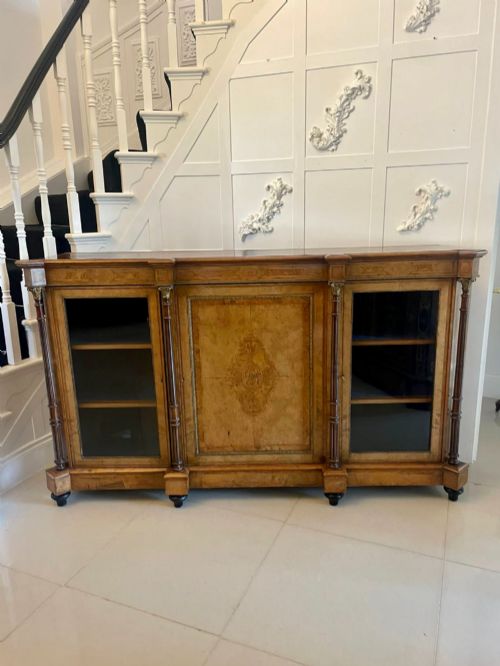
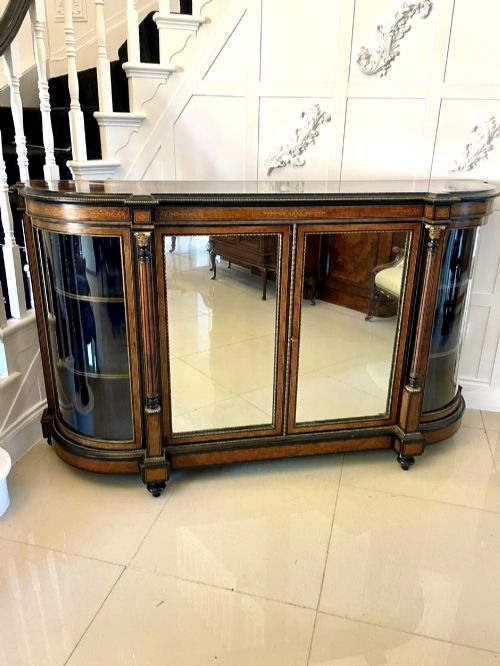
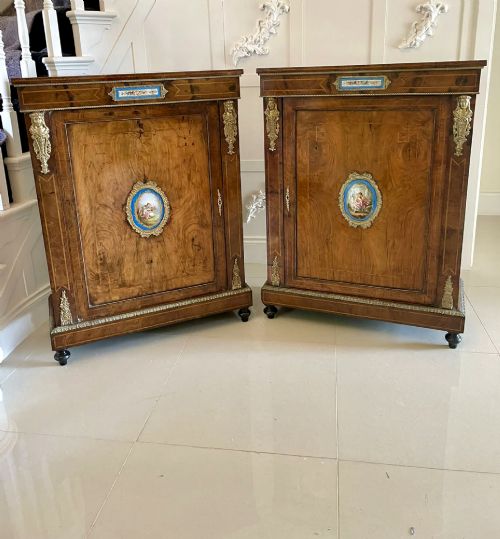
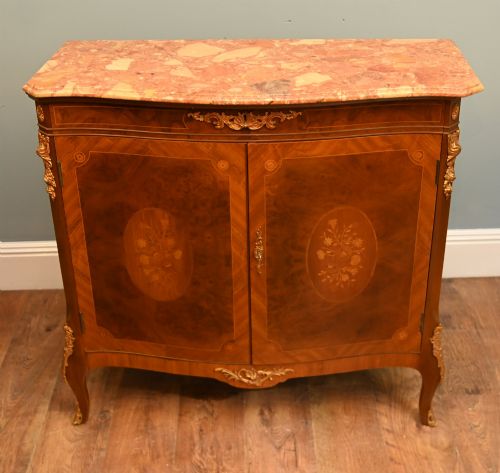
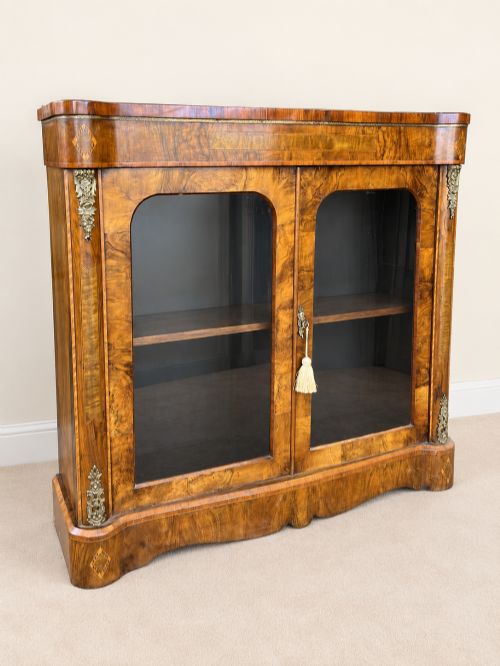
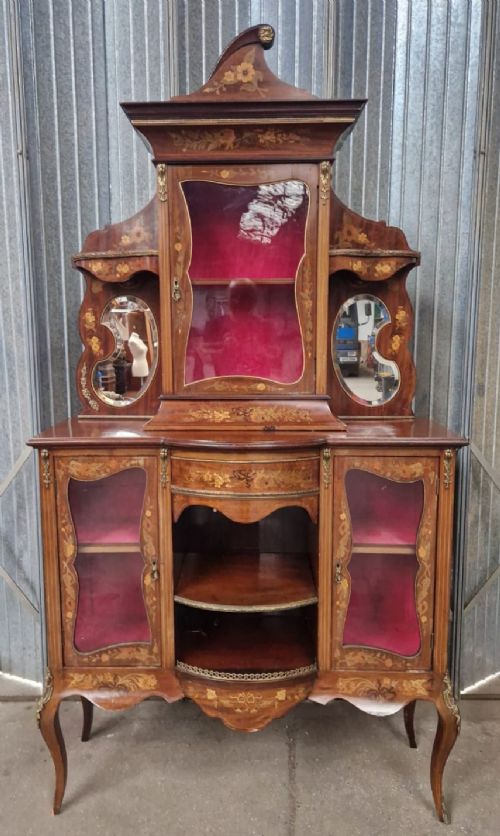
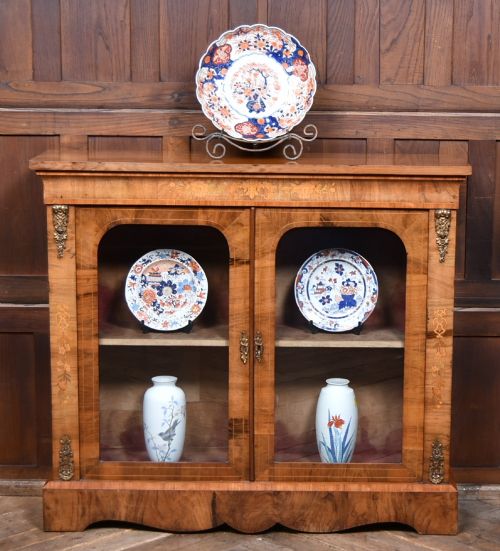
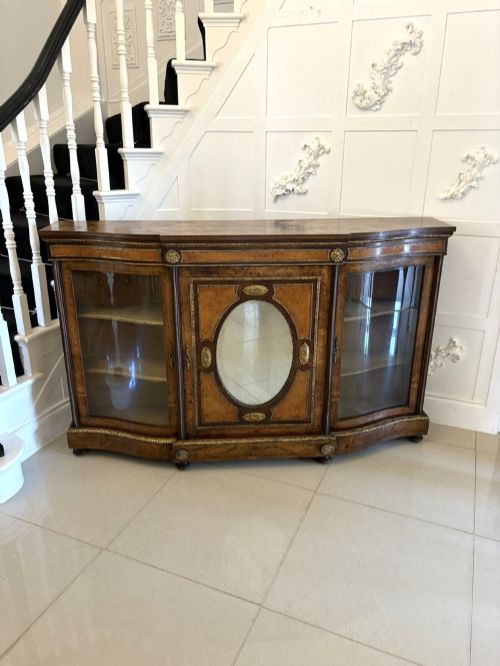
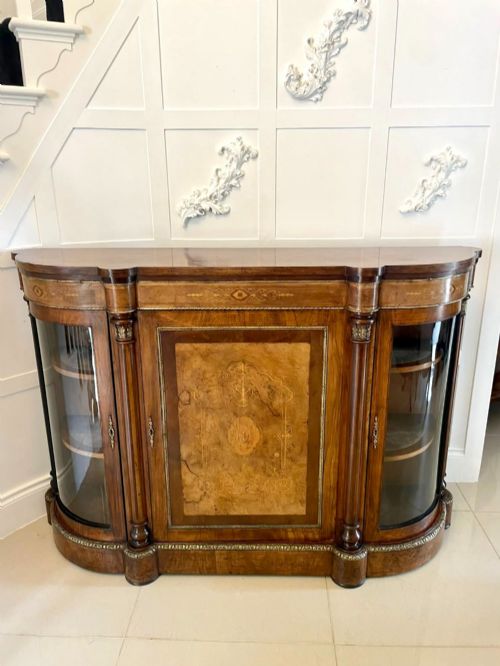
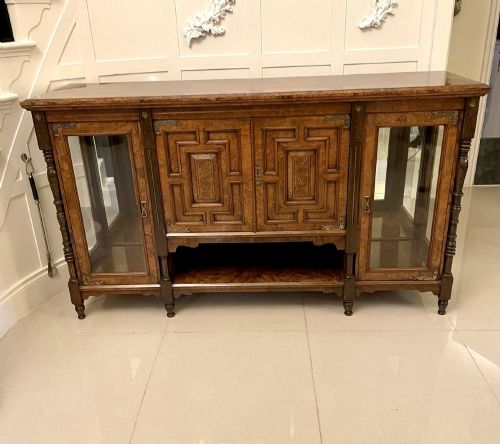
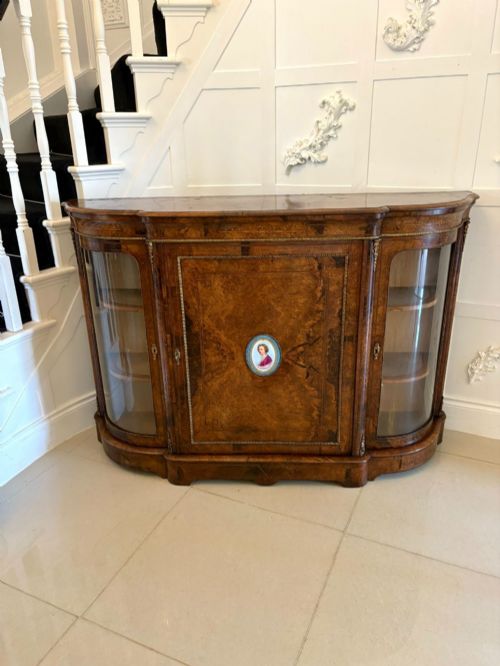
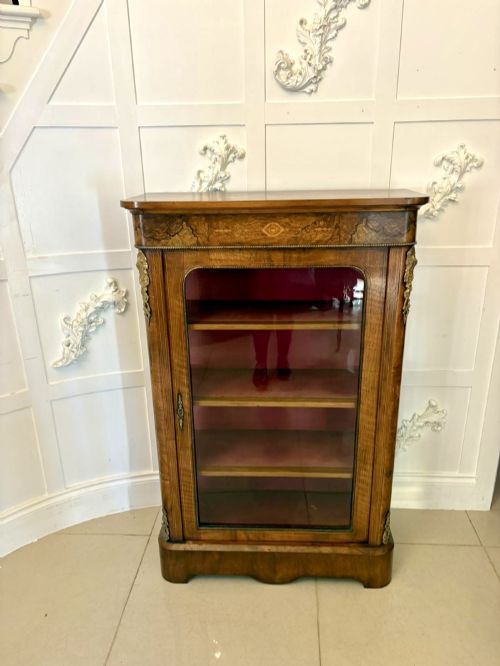

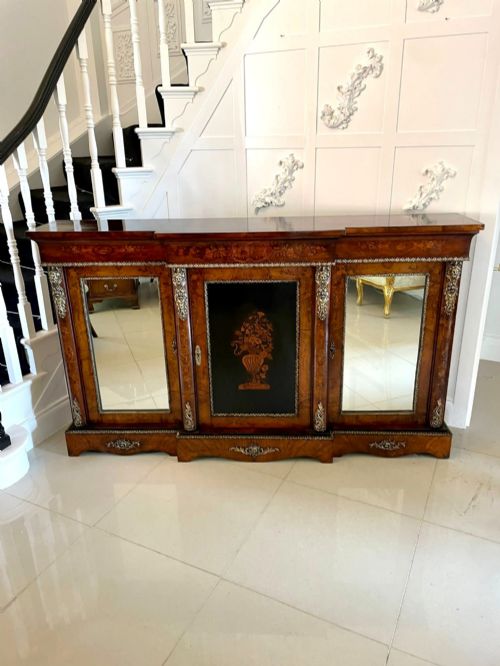
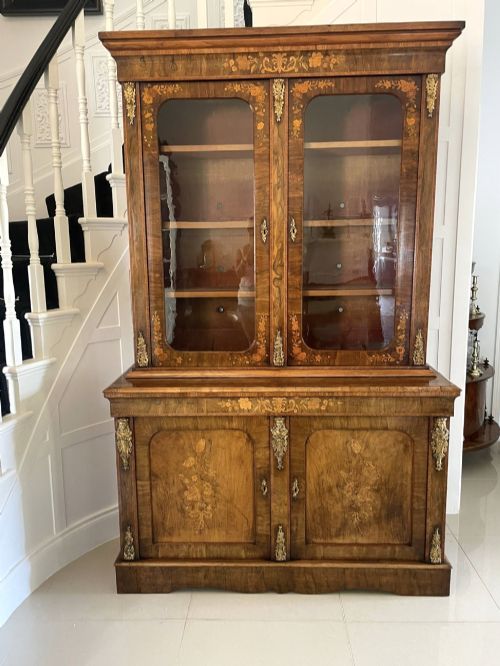
Inlaid Walnut Credenza Cabinet
An inlaid walnut credenza cabinet brings rich timber figure and meticulous marquetry to a room, offering both display space and refined storage.
Inlaid Walnut Credenza Cabinet
An inlaid walnut credenza cabinet is a substantial nineteenth-century storage piece, most frequently appearing from the Victorian era. These items span various formats including side cabinets, pier cabinets, and glazed display bookcases.
The designs draw on multiple stylistic influences, ranging from French Louis XVI and Baroque revivals to the Aesthetic Movement and Victorian French Revival. Buyers encounter credenzas alongside related sideboards and serpentine display cases.
Origins stretch from English workshops to French makers, utilising timber figures suited to formal reception rooms. The pieces combine glass doors and shelved interiors with decorative exterior surfaces.
Materials and Construction
Burr walnut and plain walnut form the primary wooden structures, providing intricate grain patterns across large surfaces. Boxwood inlay and floral marquetry create detailed geometric or botanical patterns within the timber.
Ormolu mounts in cast gilt brass frame doors, panels, and corners to accentuate the cabinet architecture. Glass panels, porcelain plaques, and velvet-lined interiors complete the construction of these elaborate pieces.
Secret compartments occasionally hide behind the elaborate marquetry panels of nineteenth-century credenzas, waiting for future finders.
Design Execution and Detail
The standard of an inlaid walnut credenza cabinet rests on the precision of its marquetry and the richness of the walnut veneer. Finer examples incorporate crisper cast ormolu mounts and integrated porcelain plaques rather than plain timber panels.
Construction depth separates standard production items from exhibition pieces, particularly when shaped serpentine fronts and multiple glazed doors are involved. The complexity of the internal shelving and the integration of mirror backs also distinguish the work.
Gillows·Lamb of Manchester·Maison Gagneau
The Inlaid Walnut Credenza Cabinet Glossary
- Credenza
- A low cabinet traditionally used for display and storage, often featuring a central door flanked by curved glass cabinets. These pieces sit low to the ground and anchor formal interior spaces.
- Ormolu
- Gilt bronze or brass mounts applied to furniture for decorative enrichment. The metalwork frames panels and corners to add metallic contrast to the dark timber.
- Marquetry
- Inlaid wood veneers forming pictorial or geometric patterns on furniture surfaces. Craftsmen cut contrasting timbers like boxwood to fit flush into the walnut ground.
- Burr Walnut
- Timber taken from walnut tree growths that produces intricate, swirling grain patterns. This highly decorative wood defines the most elaborate nineteenth-century cabinets.
- Pier Cabinet
- A narrow display cabinet designed to fit the wall space between windows. These upright pieces typically feature a single glazed door and velvet-lined interior shelves.
Inlaid Walnut Credenza Cabinet: Frequently Asked Questions
Where do I place an inlaid walnut credenza cabinet?
These cabinets suit principal reception rooms, dining spaces, or wide hallways where their length and reflective glass doors make an impression.
Position them against a large, flat wall away from direct sunlight to protect the walnut veneer and delicate boxwood inlay from fading.
How do I clean walnut and ormolu?
Dust the timber regularly with a soft, dry cloth and apply a quality beeswax sparingly to nourish the burr walnut grain.
Keep ormolu mounts free of moisture and harsh chemical polishes, using only a dry microfibre cloth to maintain the gilt surface.
What fits inside these cabinets?
The interior shelving accommodates porcelain, glassware, books, or decorative objects behind lockable glazed or solid doors.
Many examples feature velvet-lined compartments suitable for preserving textiles, flatware, or sensitive collections away from dust.
How do I identify Victorian pieces?
Look for the characteristic combination of burr walnut veneers, boxwood floral marquetry, and cast ormolu mounts typical of the mid-nineteenth century.
Construction details such as hand-cut dovetails on internal drawers and original mirrored backs help confirm the nineteenth-century origin.