
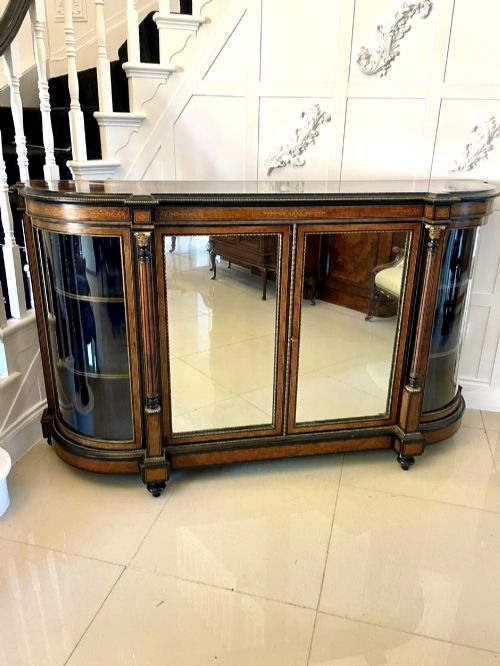
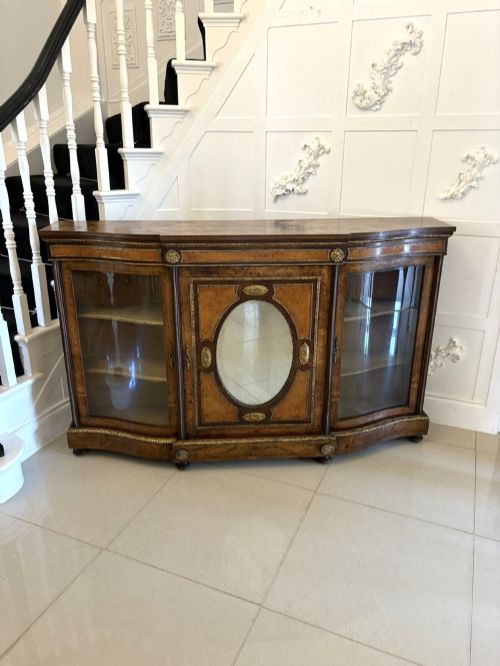
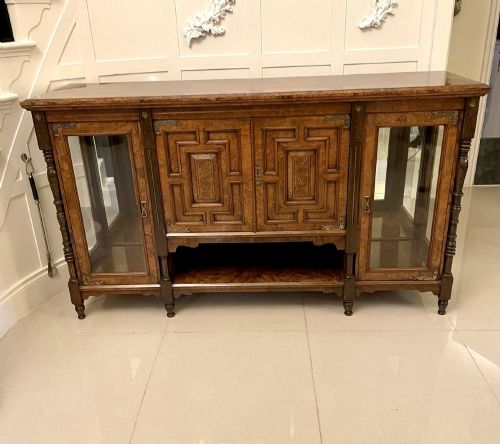
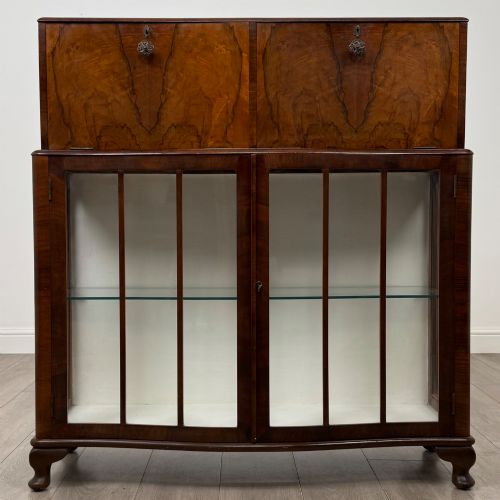
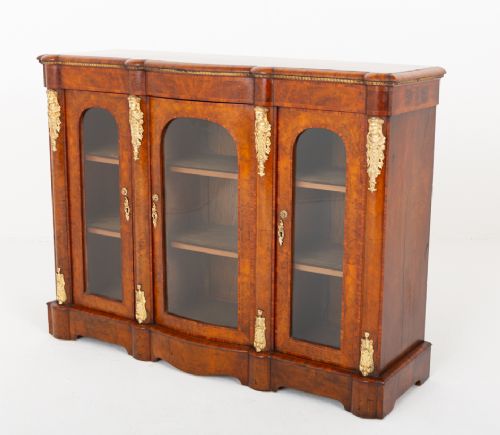
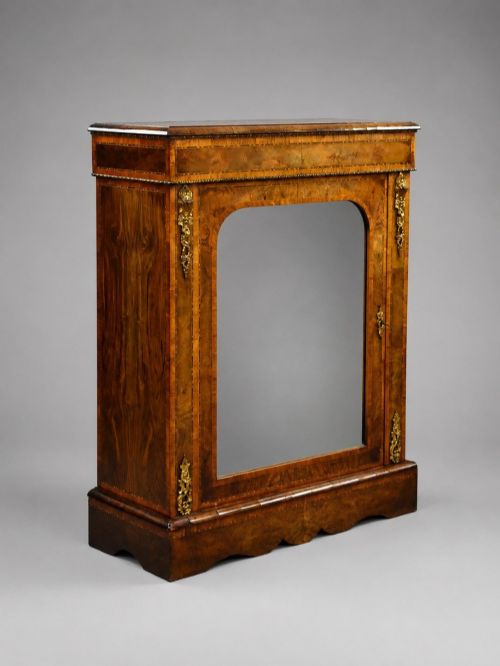
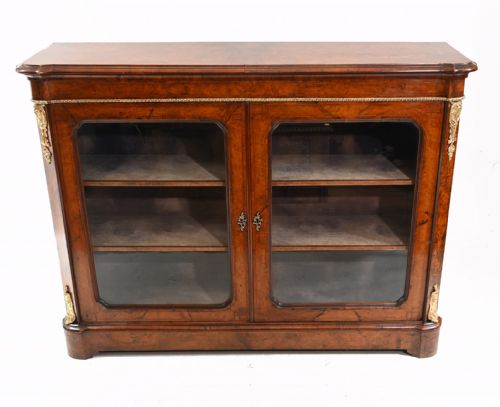


Walnut Glass Door Sideboard
A walnut glass door sideboard brings together rich timber and glazed display space, offering a refined storage solution for dining rooms and drawing rooms alike.
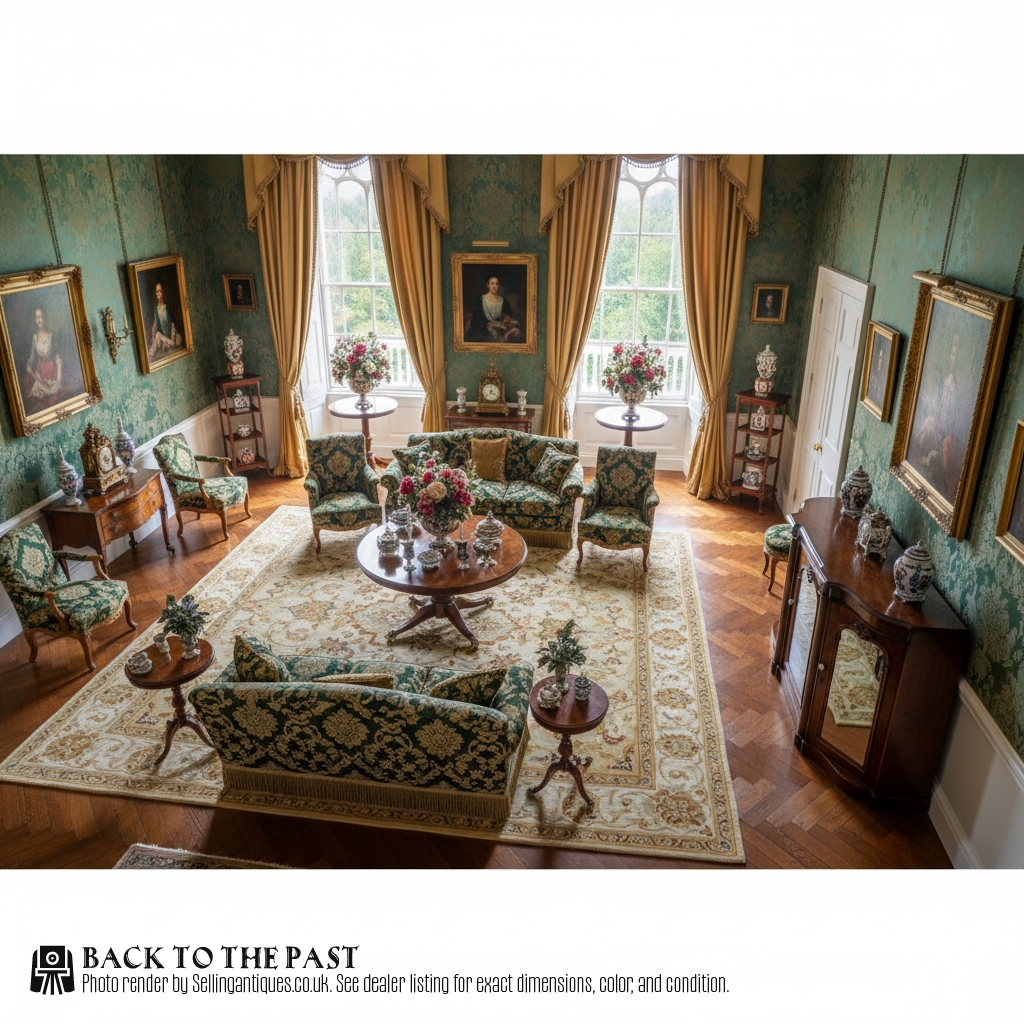
Walnut Glass Door Sideboard
A walnut glass door sideboard spans several distinct nineteenth and early twentieth century manifestations, most commonly appearing as Victorian and Edwardian credenzas, pier cabinets, and display pieces. These forms frequently incorporate glazed doors to showcase contents while protecting them from dust.
The selections available here lean heavily towards Victorian pieces from the mid to late nineteenth century, alongside Edwardian examples and occasional Queen Anne Revival variations from the nineteen twenties. Credenzas and side cabinets dominate the selection, often featuring figured or burr walnut surfaces paired with glass panels.
Makers and craftsmen of these periods utilised the natural figuring of walnut to create striking visual focal points in domestic interiors. The integration of glass doors allowed these heavy timber items to maintain a lighter, more decorative presence within the room.
Assessing quality in walnut furniture
The choice of veneer significantly influences the overall calibre of the piece, with dense, highly figured burr walnut commanding greater attention than plain timber. The crispness of marquetry inlay and the precision of boxwood stringing demonstrate the skill invested by the original cabinet maker.
Secondary elements such as the weight and chasing of ormolu mounts, the clarity of the glass, and the internal fitting of shelves distinguish superior examples from standard production. Construction details, including serpentine fronts and well-executed carvings, separate ambitious commissions from simpler workshop output.
The listings here draw predominantly from the Victorian and Edwardian periods, showcasing materials like burr walnut, ormolu, and mirror glass.
The Walnut Glass Door Sideboard Glossary
- Credenza
- A sideboard or display cabinet, often featuring glazed central or side cupboards and decorative mounts. This form became particularly popular during the Victorian era for formal entertaining rooms.
- Burr Walnut
- A distinct timber growth obtained from the burls of walnut trees, prized for its swirling and knotty grain patterns. Cabinet makers sliced this wood into thin veneers for decorative effect.
- Ormolu
- Gilded bronze or brass used for decorative mounts and fittings on nineteenth-century furniture. It provides a bright metallic accent against dark wood.
- Marquetry
- The art of applying decorative pieces of veneer to a structure to form intricate patterns and pictures. It frequently incorporates various exotic and domestic woods.
- Pier Cabinet
- A narrow display cabinet designed to fit the wall space between windows. These pieces often feature glass doors and internal shelving for ornaments.
Walnut Glass Door Sideboard: Frequently Asked Questions
What is a credenza?
A credenza is a low cabinet or sideboard traditionally used for storage and display in formal rooms. Many examples feature glass doors and delicate mounts.
In nineteenth-century interiors, these pieces functioned as central display units for fine porcelain and silver.
How do I identify burr walnut?
Burr walnut is recognised by its dense, swirling grain patterns and clusters of small knots caused by tree growths. It differs significantly from straight-grained timber.
Cabinet makers used this wood as a veneer on prominent surfaces to catch the light and add visual depth.
Are these pieces Edwardian or Victorian?
The pieces span several decades, primarily originating from the Victorian period between eighteen sixty and eighteen ninety, alongside Edwardian and later revival styles.
Examining the internal construction, hardware, and style of inlay helps distinguish between mid-Victorian and later twentieth-century interpretations.
Where should I place a glass door cabinet?
These cabinets suit dining rooms, living spaces, or hallways where their glazed doors can protect displayed objects while keeping them visible.
Placing them away from direct sunlight preserves the rich colour of the walnut veneer and prevents timber warping.