

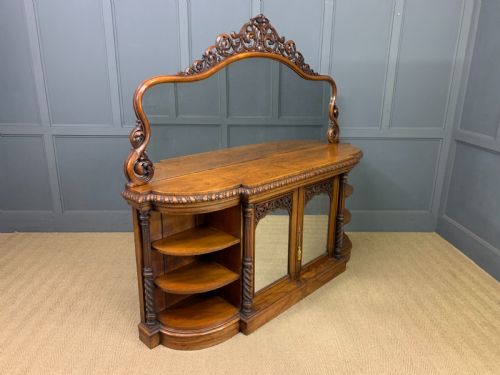


Burr Walnut Mirrored Credenza
A burr walnut mirrored credenza brings rich timber grain, deep polish, and reflective glass together in one substantial nineteenth-century room centrepiece.
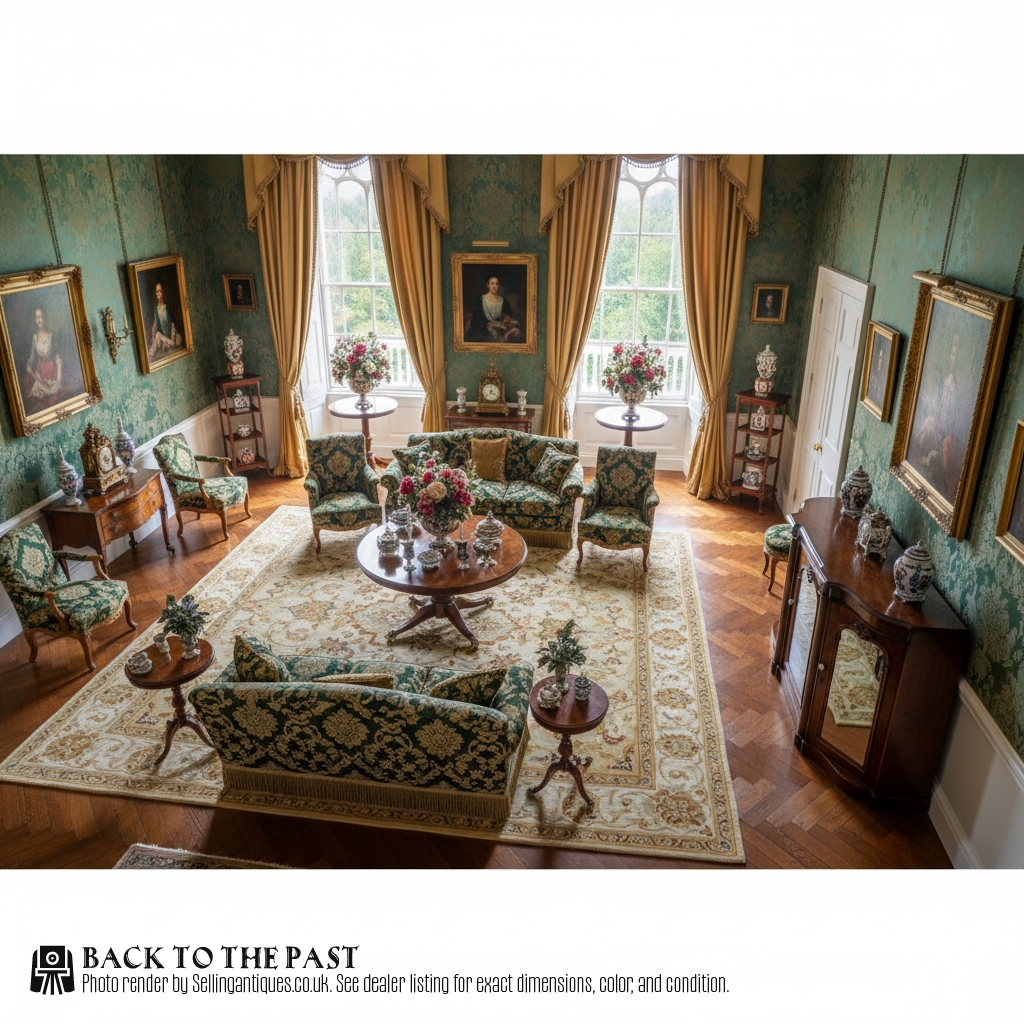
Burr Walnut Mirrored Credenza
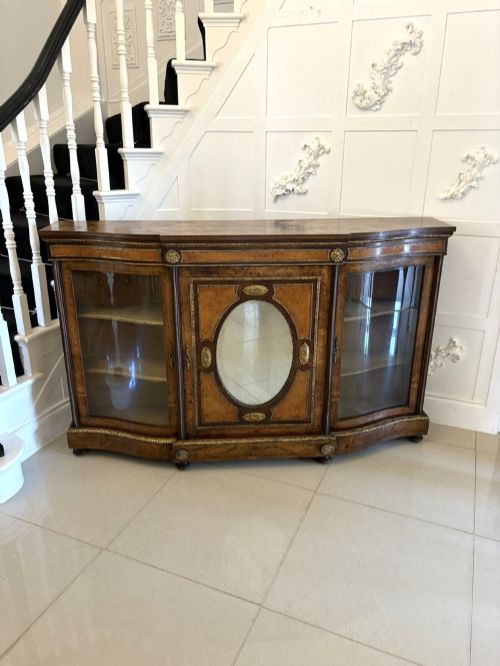
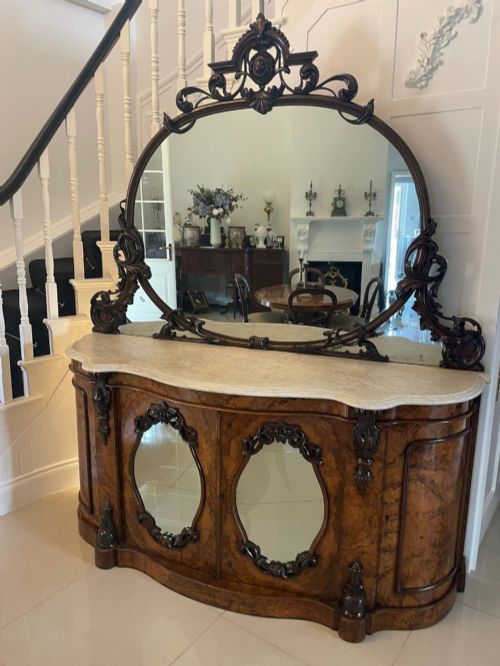
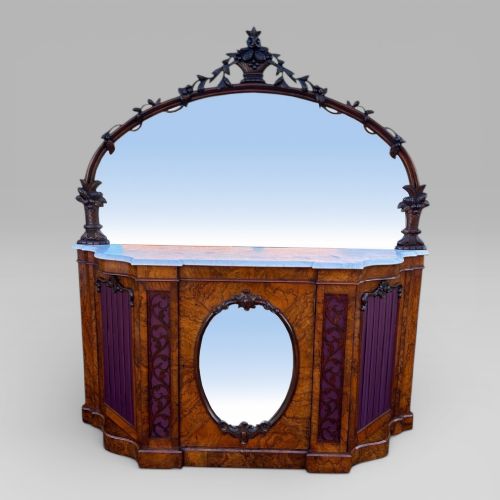
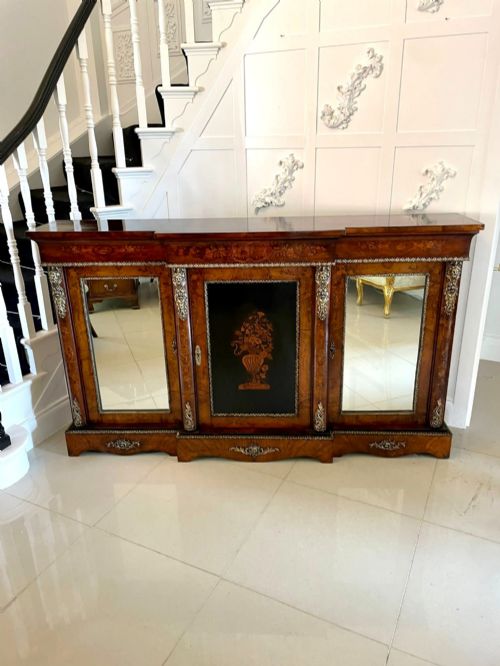
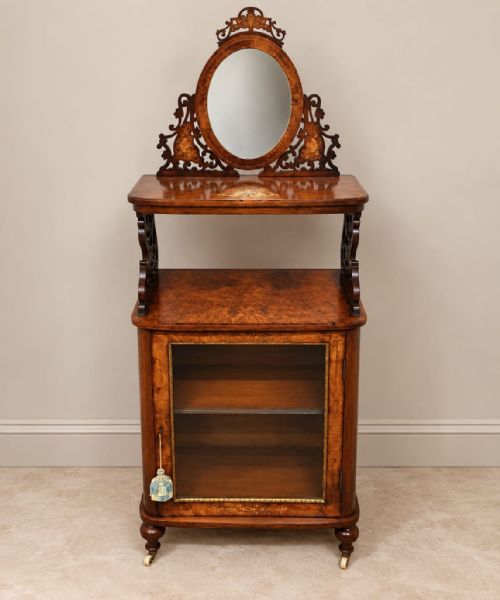
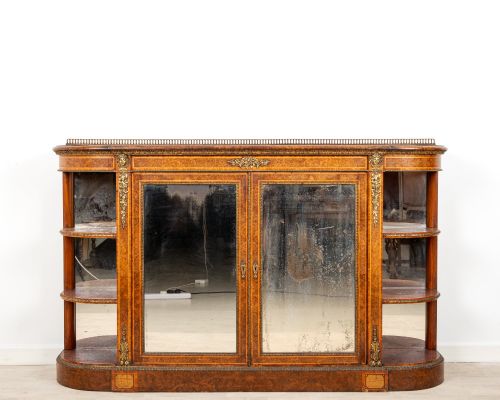
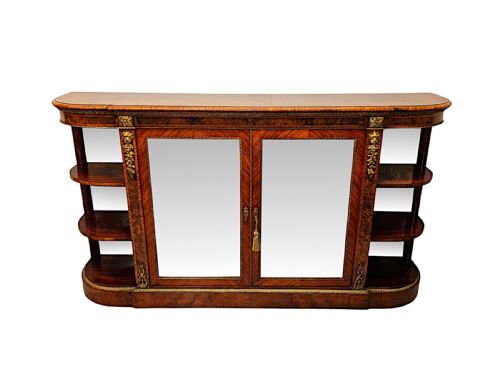
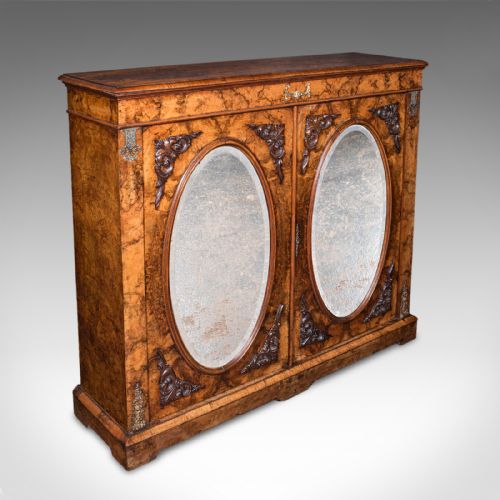
When searching for a burr walnut mirrored credenza, collectors encounter low, long side cabinets designed primarily during the Victorian period. These pieces frequently feature curved serpentine fronts, flanking display cupboards, and central mirrored doors or high carved mirror backs.
The materials and forms vary across nineteenth-century examples, shifting from simple walnut side cabinets to large exhibition-quality pieces adorned with marquetry and porcelain plaques. Most pieces listed here belong to the Victorian era, spanning from eighteen-fifty to eighteen-eighty, alongside a few Regency and later Art Deco interpretations.
How They Were Made
Cabinet makers utilised highly figured burr walnut veneers applied over solid carcases to create rich, swirling grain patterns across the curved and flat surfaces. Ormolu mounts in cast gilt bronze accentuate the architectural breaks, door borders, and feet.
Mirrored glass is set into doors or incorporated into substantial carved backboards, while select examples incorporate white marble tops or delicate satinwood and amboyna inlay within the marquetry panels.
Listings span multiple decades, incorporating Victorian burr walnut, Regency walnut, and later Art Deco cocktail cabinets.
What Varies in Quality
The standard of a burr walnut mirrored credenza rests upon the selection of the burr veneer, the crispness of the hand-carving, and the intricacy of any marquetry work. Finer examples display symmetrical grain matching across multiple doors and panels rather than random patching.
Structural heft also separates cabinet grades, seen in heavy serpentine marble slabs, substantial ormolu mounts, and maker attributions such as Gillows or the Epstein workshops.
Gillows·Harry and Lou Epstein
The Burr Walnut Mirrored Credenza Glossary
- Burr walnut
- A figured timber veneer taken from the knotted growth of a walnut tree. It produces swirling, highly decorative grain patterns prized by nineteenth-century cabinet makers.
- Ormolu
- Gilt bronze mounts cast and chased with decorative motifs. These metal ornaments are fixed to the corners and doors of finer Victorian credenzas.
- Credenza
- A low cabinet for the dining room or drawing room. Nineteenth-century versions frequently incorporate mirrored doors and glazed side compartments.
- Marquetry
- Inlaid patterns formed from different coloured woods and veneers. These decorative motifs adorn the doors and friezes of better cabinets.
- Serpentine front
- A furniture front curved with a convex centre flanked by concave ends. This undulating shape requires skilled carpentry to veneer accurately.
Burr Walnut Mirrored Credenza: Frequently Asked Questions
What is a burr walnut mirrored credenza?
A burr walnut mirrored credenza is a low nineteenth-century cabinet featuring figured wood veneer, curved doors, and integrated mirror glass.
Cabinet makers designed these pieces for principal rooms to display decorative objects while providing enclosed storage space.
How were these cabinets used originally?
Victorian households utilised these credenzas in drawing rooms and morning rooms to store porcelain, books, and glassware. The top surface held lamps or decorative ornaments during evening gatherings.
The mirrored backs and glass doors also served to amplify natural daylight within nineteenth-century interiors.
How do I date a Victorian credenza?
Dating relies on stylistic shifts visible in the cabinet construction, carving motifs, and secondary timbers used inside the carcase. Pieces from eighteen-fifty often incorporate heavy mirror backs and bold serpentine shapes.
Later Victorian examples from eighteen-eighty tend to feature refined marquetry inlay and ebonised detailing alongside traditional walnut.
How do I care for burr walnut furniture?
Burr walnut requires stable room humidity and protection from direct sunlight to prevent the timber veneer from drying or fading. Regular dusting with a soft, dry cloth preserves the French polished surface.
Avoid placing damp items or liquid polishes directly onto the historic wooden or marble tops.