



Mirrored Door Credenza Cabinet
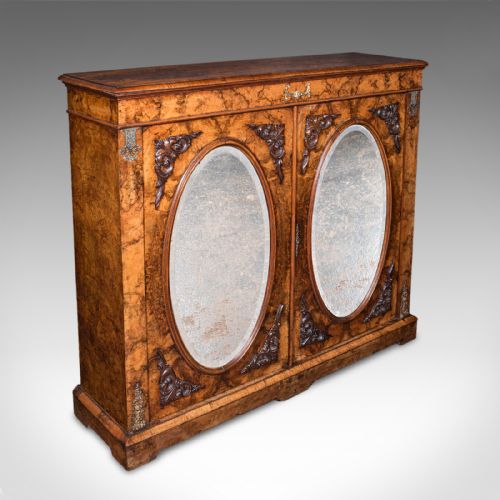
A mirrored door credenza cabinet brings reflective depth and rich timber figure into a room, uniting display space with concealed storage.
Mirrored Door Credenza Cabinet
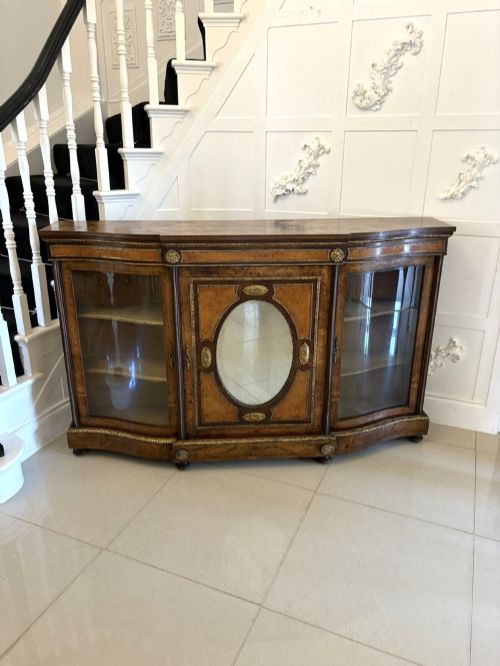
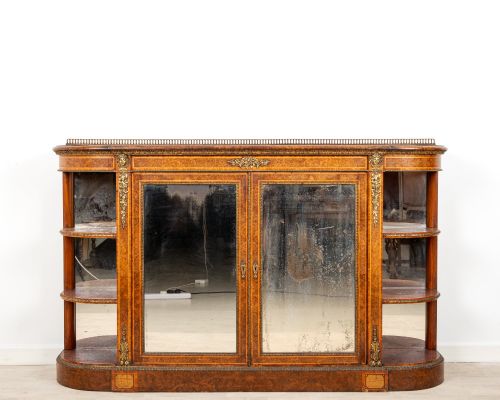
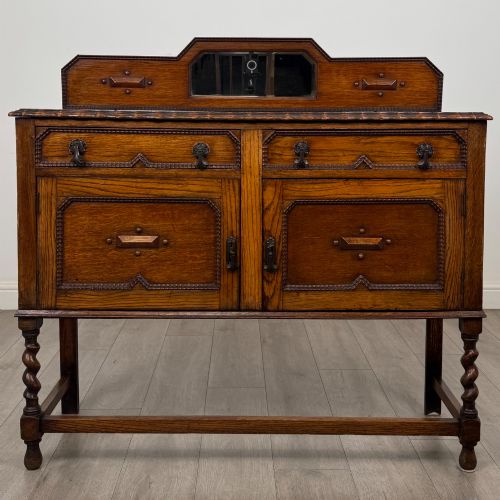
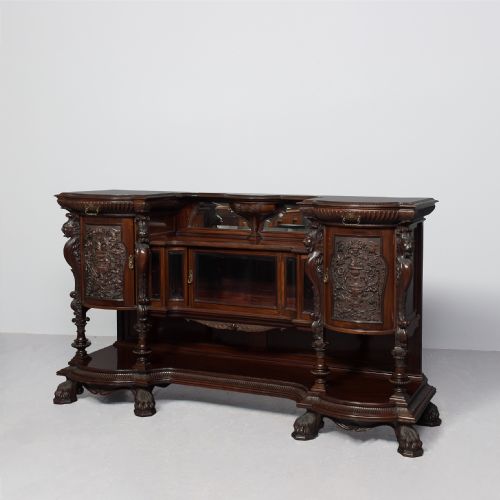
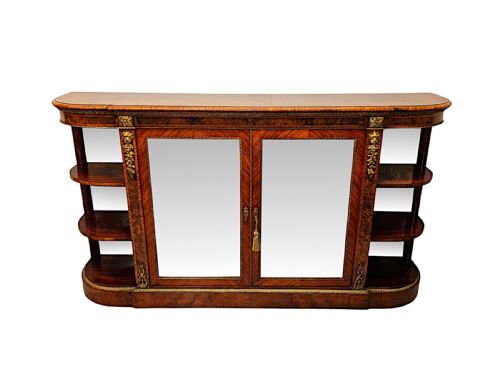
A mirrored door credenza cabinet represents a grand category of nineteenth-century reception room furniture, spanning Victorian, Regency, and Edwardian periods. Buyers encounter substantial side cabinets and credenzas alongside chiffoniers and mirror-back sideboards.
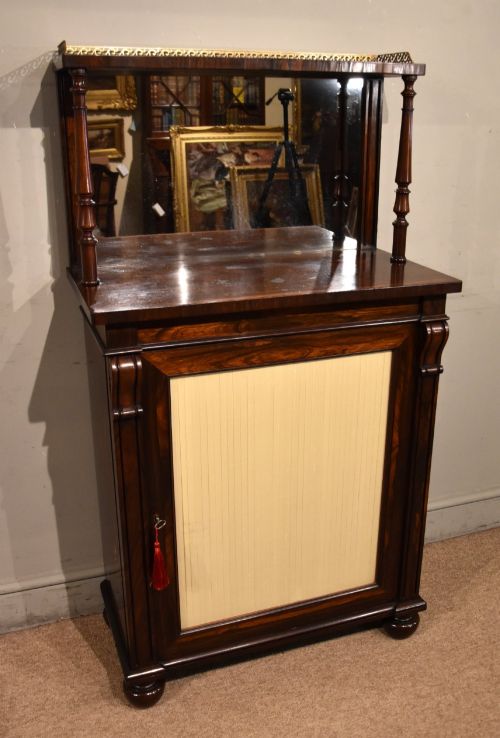
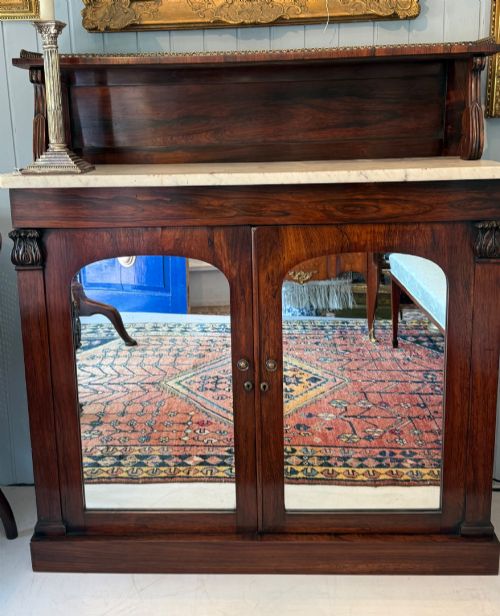
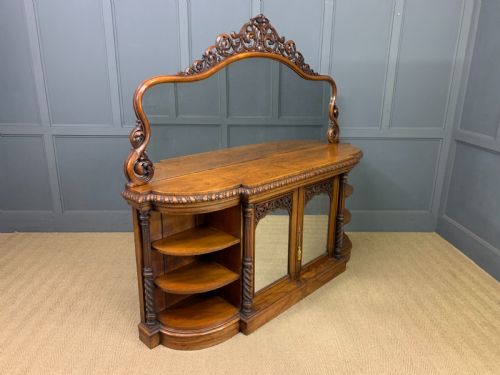
Makers utilised various formats, ranging from low three-door credenzas to towering mirror-back chiffoniers fitted with marble tops. These variations reflect the changing demands of nineteenth-century domestic interiors, from formal morning rooms to elegant drawing rooms.
Materials and construction
Cabinet makers selected dense foundational timbers such as mahogany and oak, applying figured veneers including burr walnut and rosewood across the primary surfaces. Mirror glass panels were set into doors or mounted on upright backboards to bounce light around the room.
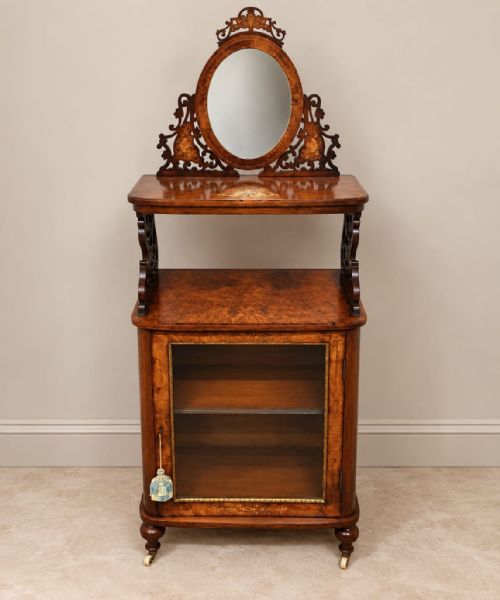
Ornaments of cast or gilt bronze, known as ormolu, were frequently mounted onto the corners and stiles of Victorian burr walnut pieces. Marquetry inlay in contrasting light and dark woods added botanical or geometric decoration to the doors and friezes.
Listings feature nineteenth-century pieces spanning the Regency, Victorian, and Edwardian eras, executed in rosewood, mahogany, oak, and burr walnut.
Judging execution
The grade of a mirrored door credenza cabinet depends upon the selection of timber veneers and the intricacy of the marquetry. Highly figured burr walnut and richly grained rosewood indicate a superior workshop origin.
Structural refinement appears in the handling of curved serpentine fronts, the weight of the cast ormolu mounts, and the integration of mirror glass. Finer examples display meticulous joinery and substantial marble tops fitted cleanly to the carcase.
Gillows
The Mirrored Door Credenza Cabinet Glossary
- Credenza
- A low cabinet designed for dining rooms or drawing rooms, frequently fitted with central cupboards flanked by curved glass or mirrored doors.
- Chiffonier
- A compact sideboard popular in the nineteenth century, usually featuring shelves or a mirror superstructure above enclosed lower cupboards.
- Ormolu
- Gilt bronze mounts cast and chased to embellish the corners and panels of high-status furniture.
- Burr walnut
- A decorative wood veneer harvested from the knot growths of walnut trees, yielding complex swirling grain patterns.
- Marquetry
- The art of applying small pieces of veneer to form intricate pictorial or geometric patterns across furniture surfaces.
Mirrored Door Credenza Cabinet: Frequently Asked Questions
What room suits a mirrored door credenza cabinet?
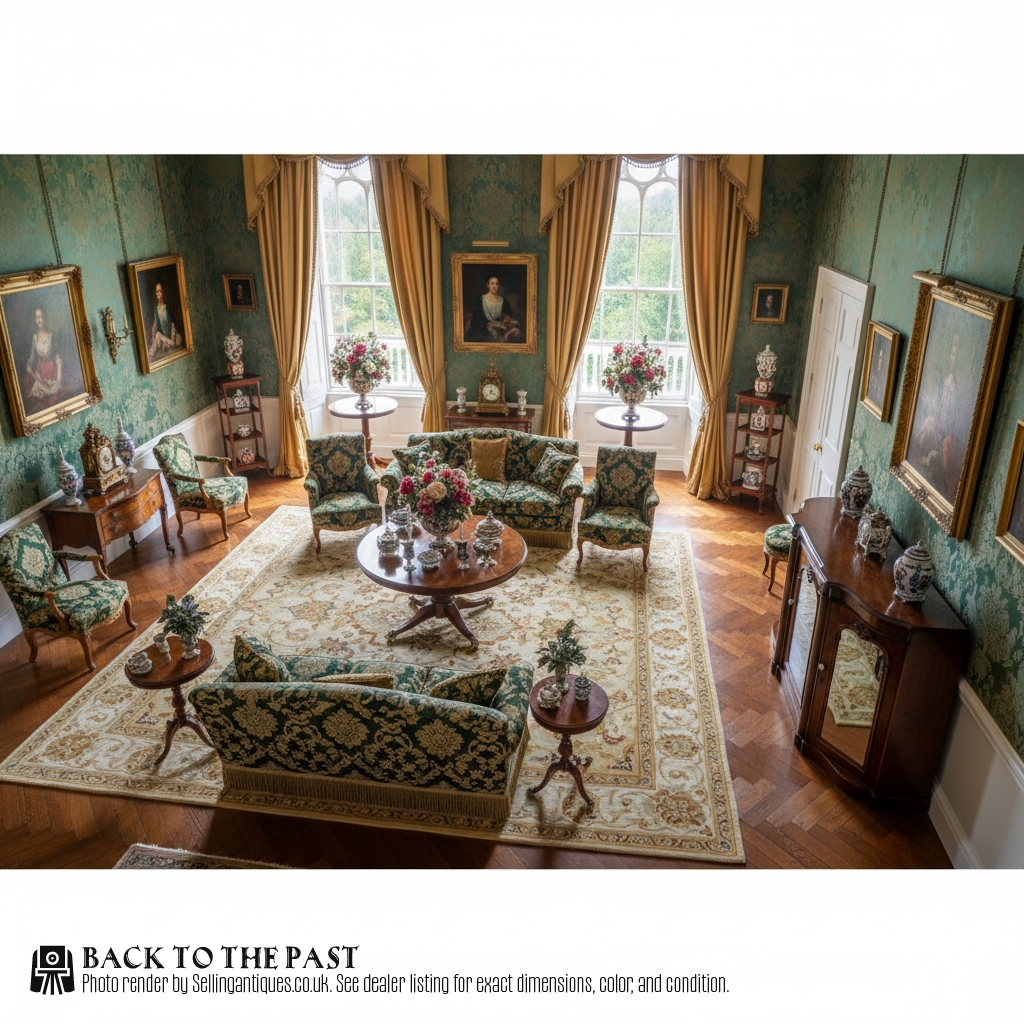
These cabinets work naturally in drawing rooms, dining spaces, or large entrance halls where their reflective glass and polished timber command attention.
They pair well with traditional or eclectic interiors, offering surface area for lamps and decorative objects alongside enclosed storage for glassware or books.
How do I distinguish a Victorian credenza from a Regency one?
Victorian examples tend to feature heavily figured burr walnut, serpentine fronts, and gilt ormolu mounts. They often embrace revival styles or ornate carving.
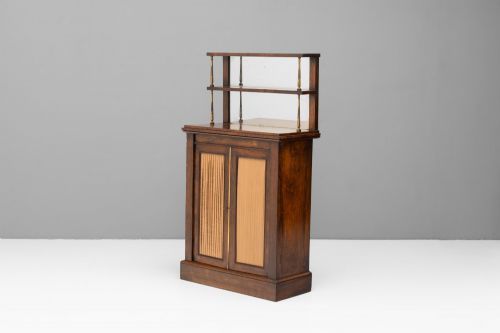
Regency pieces rely more upon dark rosewood, brass inlay, and restrained classical proportions, frequently incorporating open shelves or brass galleries.
Were mirrors original to these nineteenth-century cabinets?
Many credenzas and chiffoniers were built specifically with mirrored doors or high mirror-backs to maximise light in period drawing rooms. The silvering on older glass often displays subtle age spots and irregularities.
Makers integrated mirrors to lighten heavy timber carcases, creating a sense of increased spatial depth within Victorian reception rooms.
How should I care for the timber and mirror glass?
Maintain the wood surfaces with a suitable wax polish applied sparingly, avoiding silicone sprays that damage antique finishes. Protect the timber from direct sunlight and sudden temperature shifts.
Clean the mirror glass with a soft cloth and mild solution, taking care to prevent moisture from seeping behind the edges of the antique silvering.