
Victorian Sideboard Table
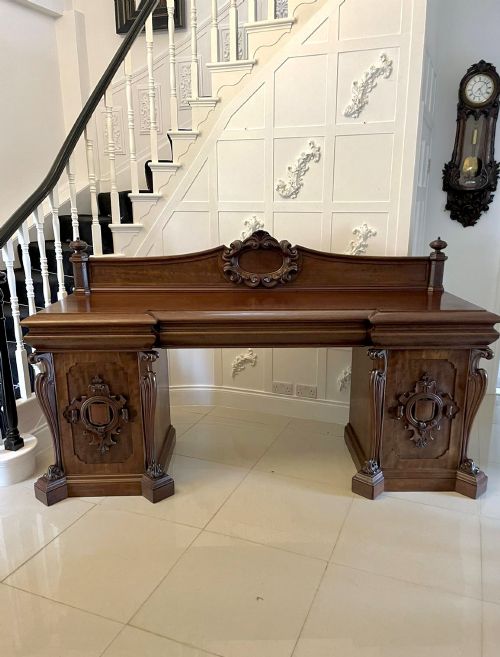
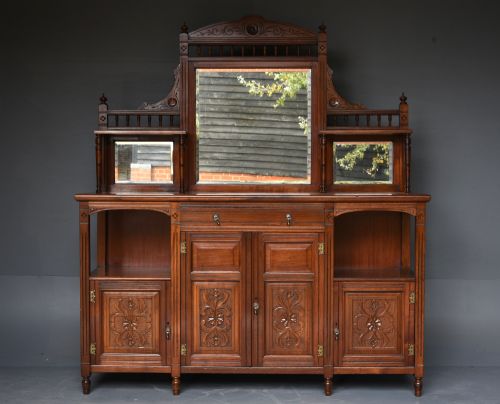
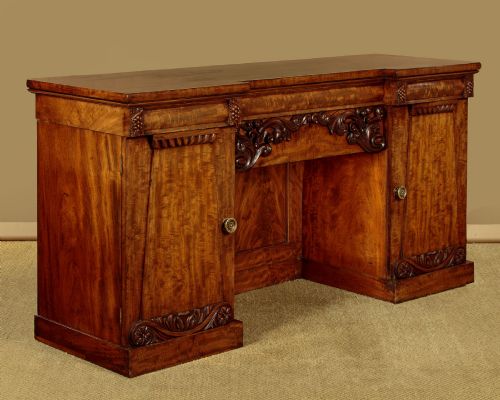
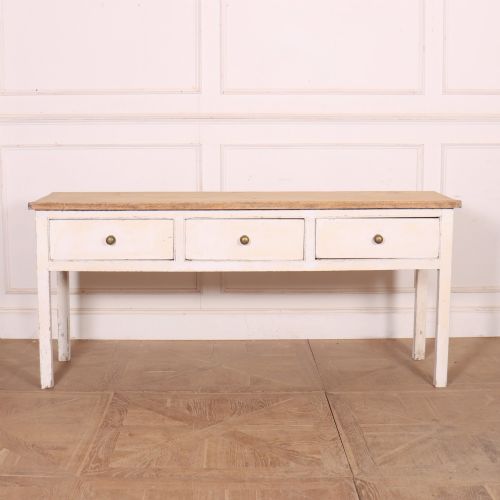
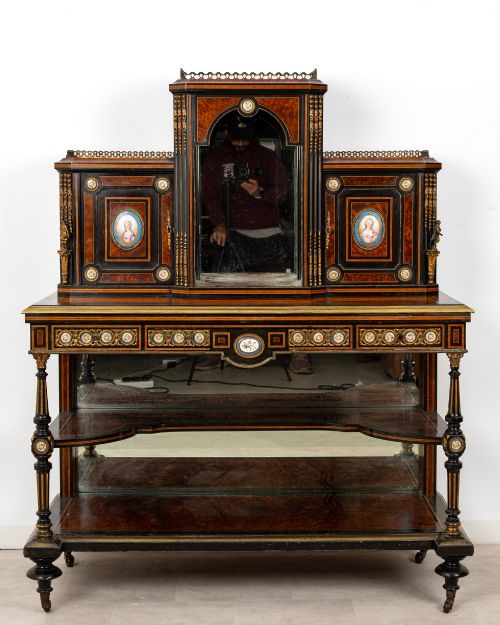
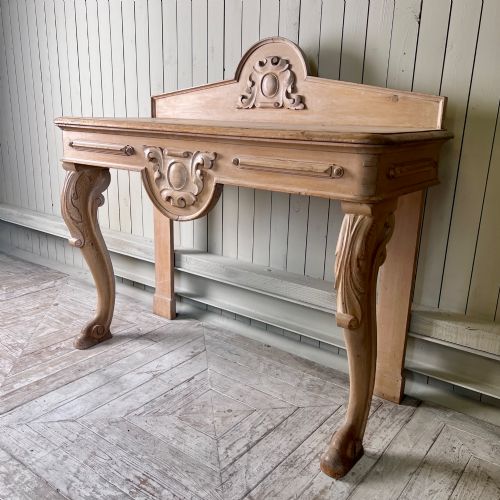
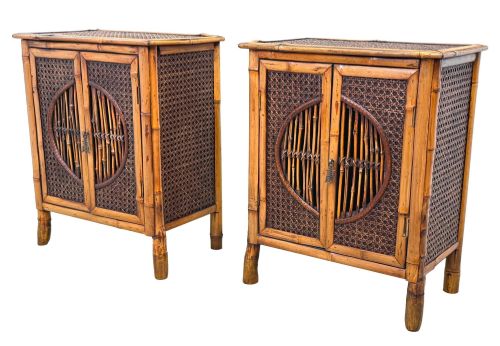
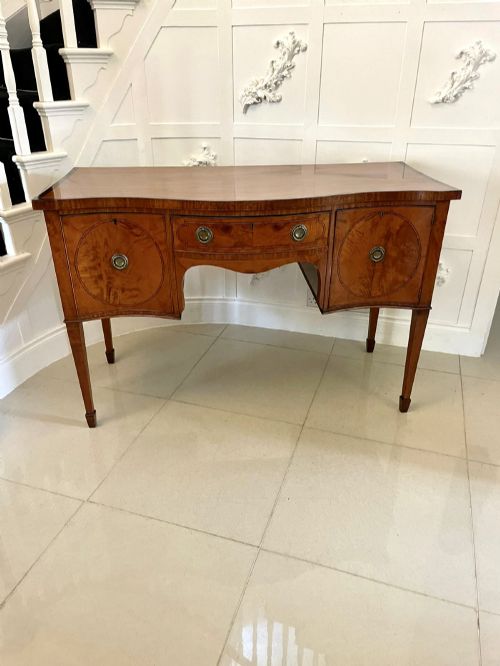
These Victorian sideboard table pieces span dining servers, credenzas, and serving tables that anchor period rooms with heavy functional timber.
Victorian Sideboard Table
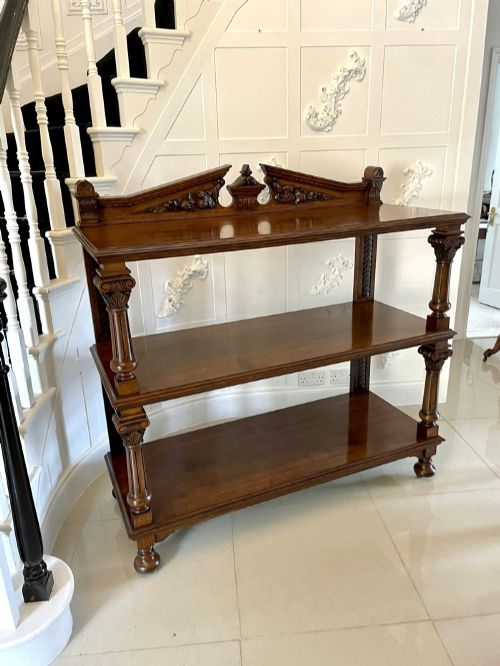
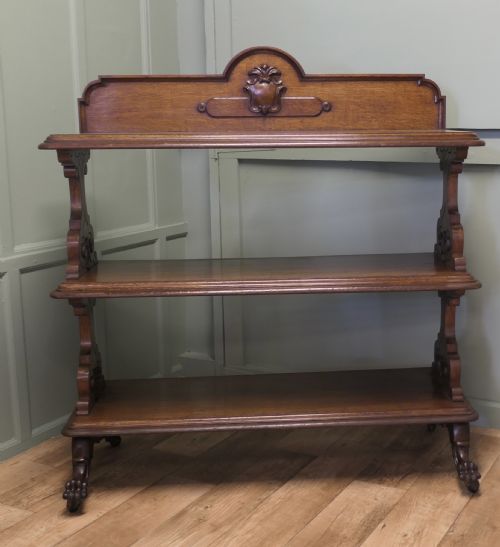
When searching for a victorian sideboard table, a buyer explores heavy dining room furniture designed for serving food, storing silver, and displaying plate. The pieces most commonly met on this page include 19th-century mahogany and oak sideboards, serving tables, and three-tier buffets spanning the decades from eighteen-fifty to eighteen-ninety.
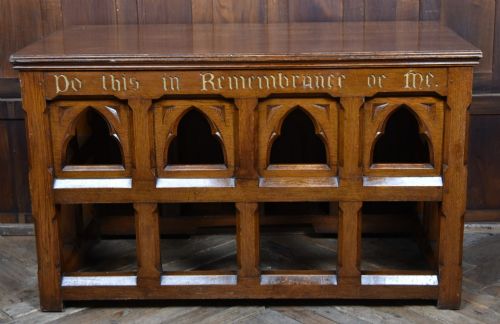
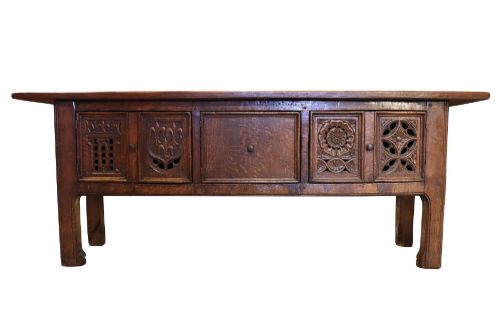
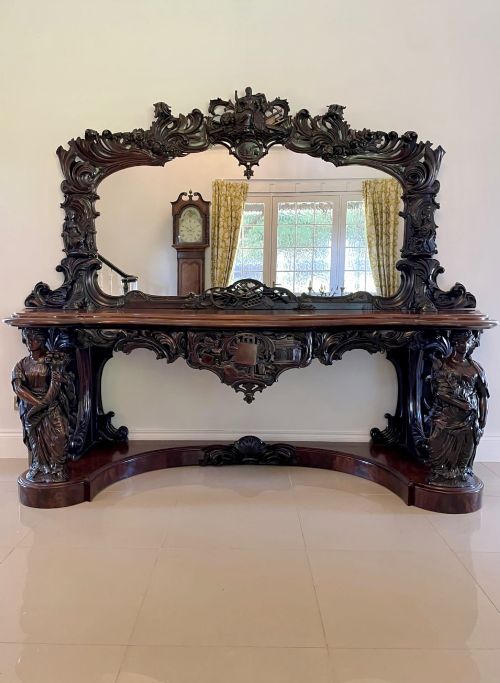
The forms encompass carved oak Gothic Revival dresser bases, burr walnut telescopic dumbwaiters, and inlaid mahogany servers. Alongside these stand smaller side cabinets, console tables, and occasional lamp tables sharing the same Victorian aesthetic vocabulary.
Origins range across English country workshops, Scottish oak furniture makers, and pieces influenced by Anglo-Indian and Aesthetic Movement designs. Each object reflects the heavy utilitarian and decorative demands of nineteenth-century domestic life.
How they were made
Construction relies heavily on dense timbers such as mahogany, oak, walnut, and pollard oak, often accented with burr walnut veneers or satinwood. These woods are selected for stability and rich grain patterns, providing the structural foundation for heavy carved doors, turned columns, and tiered shelves.
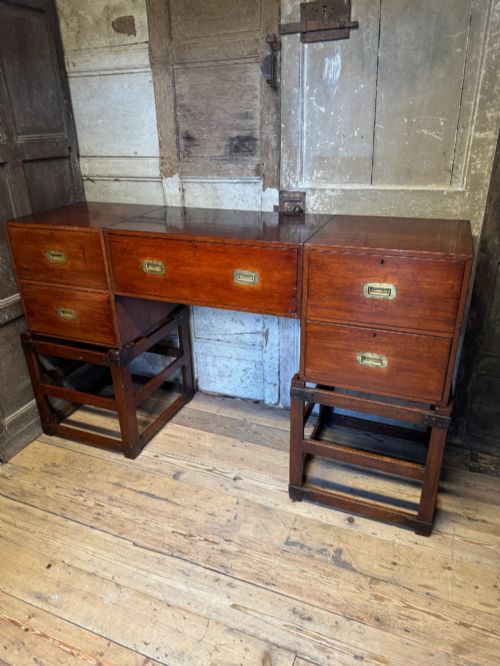
Joinery techniques involve traditional framing, dovetailed drawers, and panelled construction designed to support substantial weight over long periods of use. Metal elements such as brass handles, reeded columns, or ormolu mounts are integrated alongside glass, marble tops, and original castors.
Periods represented across the inventory range from eighteen-fifty through to nineteen-thirty.
What varies in quality
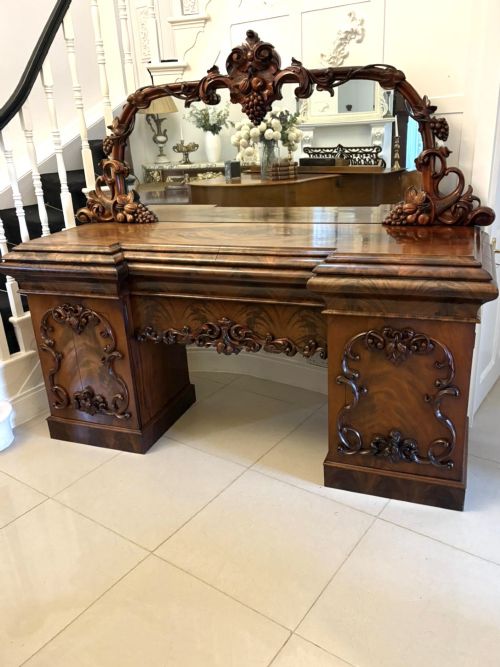
Quality reveals itself in the depth of timber selection, such as figured mahogany or burr walnut, and the crispness of hand-carving on panels, corbels, and mouldings. Superior examples demonstrate rigorous attention to proportion, particularly in narrow dresser bases or large mirror-back console tables.
The integration of secondary materials like marble inserts, brass hardware, and original castors distinguishes standard utility items from exhibition-grade pieces. Construction integrity, including the stability of tiered buffets and metamorphic mechanisms, separates robust craftsmanship from ordinary output.
Gillows
The Victorian Sideboard Table Glossary
- Dumbwaiter
- A multi-tiered serving piece or mobile stand used for holding dishes and utensils during meals. Telescopic and metamorphic versions allow the shelves to adjust in height.
- Credenza
- A sideboard or display cabinet originating in continental Europe and adopted into Victorian interiors for storing and showcasing silver and glassware.
- Buffet
- A low sideboard or serving table equipped with shelves or cupboards designed specifically for food service and dining room storage.
- Dresser base
- A heavy wooden lowboy or cabinet featuring drawers and occasionally a lower pot shelf, traditionally used in kitchens or dining spaces.
- Ormolu
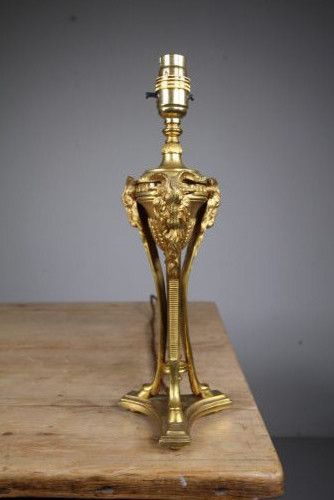
- Gilt bronze ornamentation applied to furniture and light fittings to provide bright metallic contrast against dark woods.
Victorian Sideboard Table: Frequently Asked Questions
What is a Victorian sideboard table?
These pieces are heavy wooden servers, buffets, and console tables designed for dining rooms during the nineteenth century. They provided essential storage for cutlery and tableware while displaying serving dishes.
Today they function as practical storage units and surface displays in hallways, living rooms, and dining spaces.
How were these tables used?
Victorian households utilised these items during formal meals to hold extra dishes, wine bottles, and silver service away from the main dining table. Cupboards and drawers stored linens and utensils out of sight.
Tiered versions allowed servants to stage courses progressively without cluttering the dining area.
How do I identify different styles?
Styles range from plain English country oak to ornate Gothic Revival carvings, Aesthetic Movement lines, and Neoclassical or revival designs. Examining the decorative motifs, wood types, and structural silhouettes helps determine the specific aesthetic.
For instance, heavy pointed arches point to Gothic Revival, while clean rectilinear forms often indicate Aesthetic Movement influence.
How do I care for antique wood?
Protect timber surfaces by keeping pieces away from direct heat sources and sudden temperature fluctuations that cause wood to dry and crack. Regular gentle dusting preserves the natural patina of the polish.
Avoid commercial silicone sprays and instead use appropriate beeswax treatments sparingly to nourish mahogany, oak, and walnut finishes.