
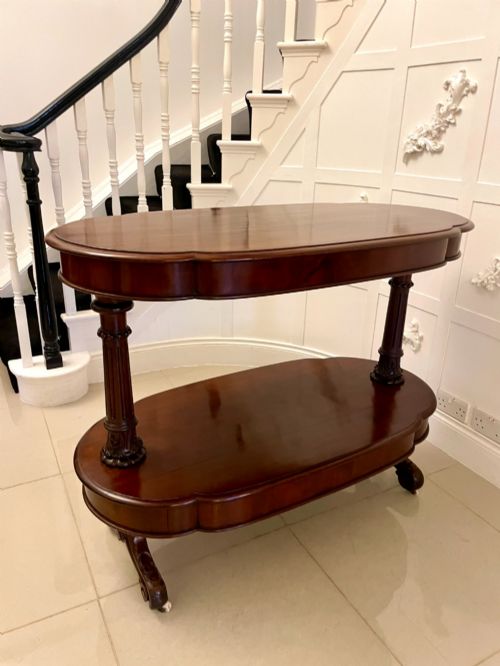
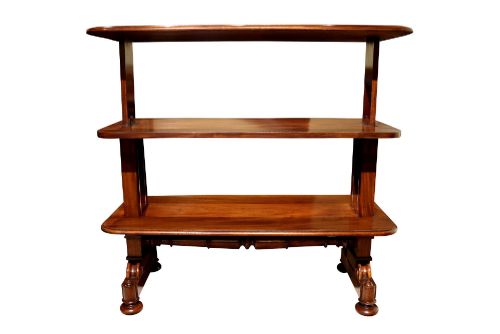
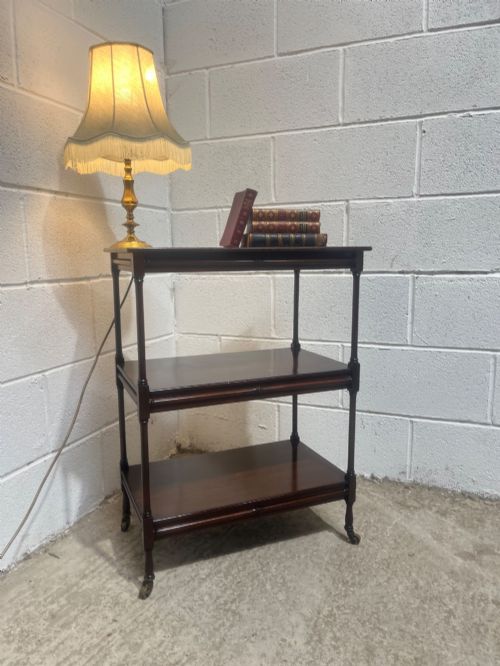
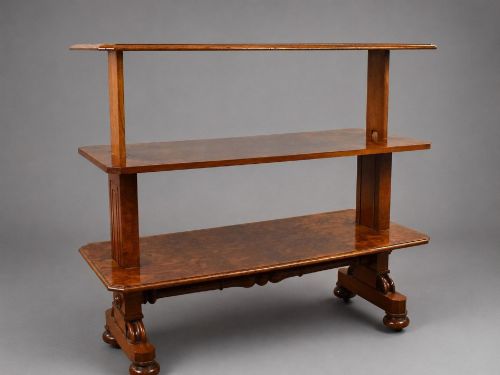




Victorian Tier Serving Table
These Victorian tier serving table pieces offer tiered wooden shelving for dining service, combining practical multi-level storage with period craftsmanship.
Victorian Tier Serving Table
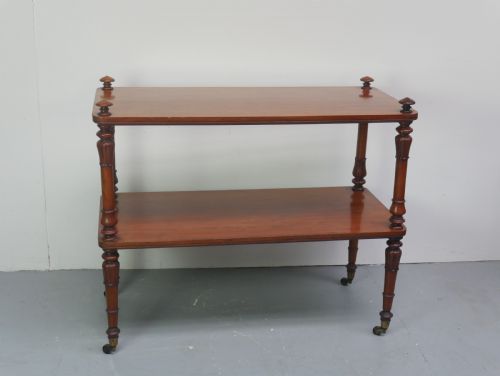
A victorian tier serving table encompasses multi-tiered wooden furniture designed for dining rooms, functioning variously as dumb waiters, buffets, trolleys, and etageres. Most examples found here date from the nineteenth century, including specific decades such as eighteen-eighty and eighteen-fifty alongside William IV and Edwardian periods.
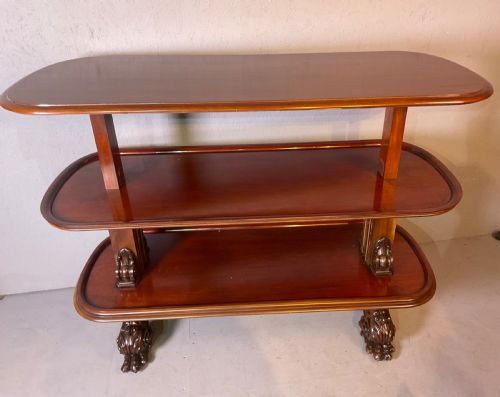
The primary forms utilise three tiers supported by columns or carved uprights, frequently mounted on castors for movement around the dining room. Variants range from static sideboards and serving consoles to metamorphic and rise-and-fall pieces that adjust in height.
Makers and styles span standard Victorian production, Gothic Revival, Aesthetic Movement, and Anglo-Indian designs, reflecting diverse nineteenth-century tastes in dining room furniture.
Craftsmanship and Proportion
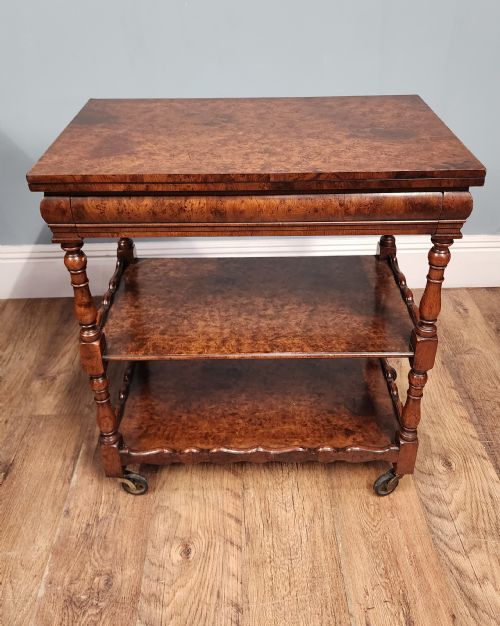
Quality rests on the selection of timber and the crispness of the carving, particularly on columnar supports and tiered edges. Finer pieces employ figured veneers like burr walnut or substantial solid mahogany rather than plain secondary woods.
Mechanisms differentiate standard tables from sophisticated examples; adjustable rise-and-fall fittings and folding actions operate smoothly on superior pieces. The presence of original castors and structurally sound tier joints further separates high-grade dining furniture from simpler utility items.
Listings feature nineteenth-century woods including mahogany, walnut, oak, burr walnut, and amboyna.
Gillows of Lancaster and London·Maple and Co
The Victorian Tier Serving Table Glossary
- Dumb Waiter
- A multi-tiered serving table used in dining rooms for holding dishes and bottles without requiring servant attendance. These pieces often feature three revolving or stationary shelves.
- Etagere
- A set of open shelves for displaying small objects or serving items. They typically feature multiple tiers supported by slender uprights.
- Metamorphic
- Furniture designed to change shape or function through mechanical action. In serving tables, this often involves shelves that rise, fall, or fold.
- Castor
- A small wheel mounted on a swivel attached to the legs of furniture. Original brass castors help verify period authenticity.
- Burr Walnut
- A figured wood veneer taken from the burl growth of a walnut tree. It provides a highly decorative and patterned surface for cabinet fronts and table tiers.
Victorian Tier Serving Table: Frequently Asked Questions
What is a Victorian tier serving table used for?
These pieces served nineteenth-century dining rooms as auxiliary surfaces for holding food, wine, and tableware during meals.
Today, they function as versatile display stands or side tables in living spaces, holding books, plants, and decorative objects.
How do I identify a rise and fall dumb waiter?
Rise and fall mechanisms utilise internal wooden or brass stems that allow the tiers to adjust in height.
Testers can operate the winding or sliding mechanism to check that the shelves lock securely at different levels.
What is the difference between a buffet and a dumb waiter?
Buffets generally incorporate solid cabinetry, sideboards, or fixed serving surfaces designed to stand against a dining room wall.
Unfixed dumb waiters and trolleys typically offer open multi-tiered shelving supported by columns, often fitted with castors for mobility.
How should I care for mahogany and walnut tiers?
Polished wood surfaces require regular dusting with a dry, soft cloth to prevent the accumulation of abrasive particles.
Keep these tables away from direct sunlight and radiators to protect the antique polish and prevent veneer splitting.