


Victorian Ship Ocean Painting
A victorian ship ocean painting brings the drama of 19th-century maritime commerce and coastal weather directly into a room.
Victorian Ship Ocean Painting
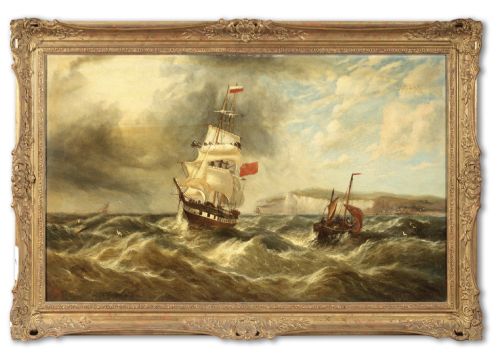
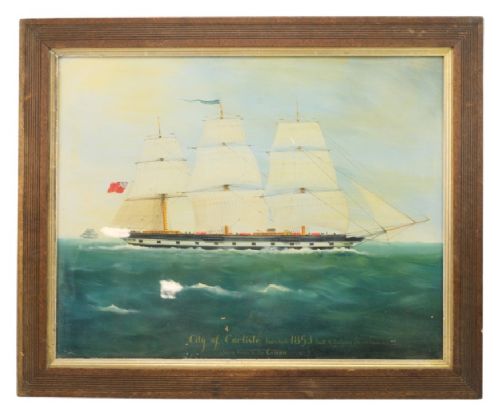
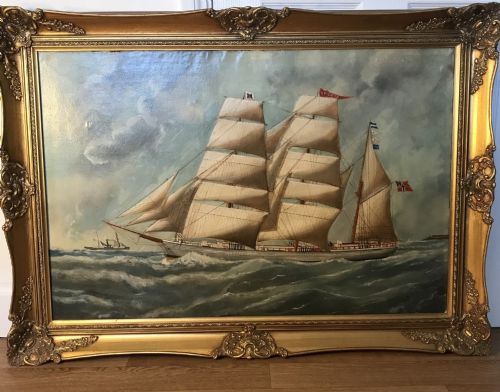
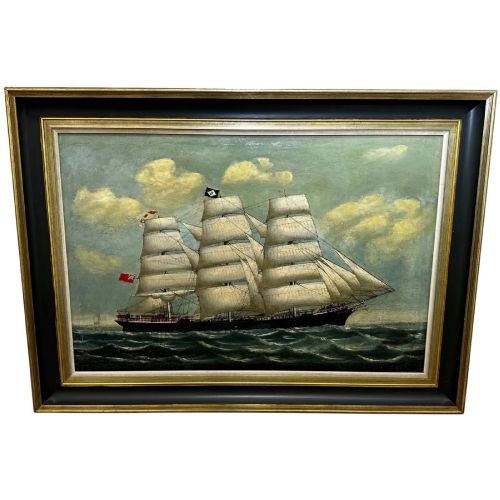
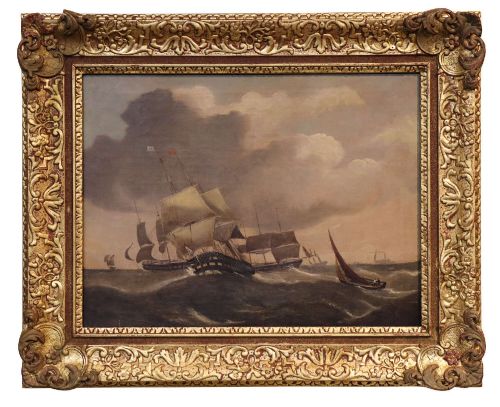
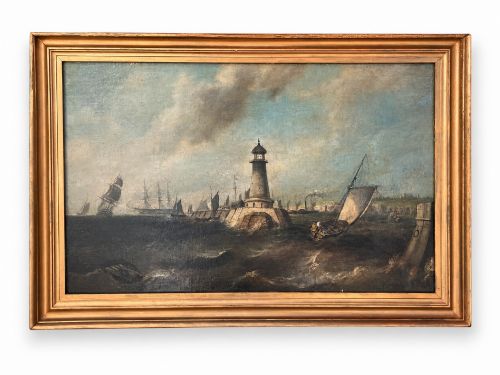
A buyer examining a victorian ship ocean painting encounters canvas and paper works recording named vessels, naval shipping, and coastal scenes. These works capture specific vessels like clippers and barques navigating rough seas, estuaries, or harbours.
The pieces on this page span the 19th century into the early 20th century, encompassing oil paintings, watercolours, and charcoal works. Subjects range from dramatic shipwrecks and stormy waters to quiet anchorages and busy coastal boatyards.
Most examples meet the collector through oil on canvas or watercolour mediums, often framed in period giltwood. These artworks frequently document historical vessels, naval operations, and named geographical locations across British and international waters.
Materials and Technique
Artists built these maritime scenes primarily using oil paint on canvas or board, alongside watercolour and charcoal on paper. Oil paint allowed layers of pigment to describe heavy seas and atmospheric skies, while watercolour offered translucent washes for coastal light.
Canvases were stretched over wood frames and frequently housed within gold leaf and giltwood frames. Paper works were protected behind glass to preserve the delicate pigment of watercolour and charcoal.
Pigments were applied with varying brushwork to render the textures of wooden and steel hulls, billowing canvas sails, and churning ocean water. Support materials included canvas, wood, paper, and glass.
Victorian artists occasionally painted rough seas so convincingly that viewers inside dry drawing rooms instinctively reached for sea legs.
Quality and Execution
Quality in these maritime works rests upon the precision of the vessel rigging, the anatomical accuracy of the hull, and the convincing movement of water. Master hands capture the weight of a three-masted schooner and the specific behaviour of wind in the sails.
Compositional balance separates standard coastal records from compelling marine art. The relationship between the ship, the horizon, and turbulent weather determines the visual authority of the piece.
The preservation of the pigment and the integrity of the original canvas or paper support influence the standing of a painting. Framed works retain additional value when housed in period giltwood that complements the palette of the sea and sky.
John Rose Miles·Lai Fong·Nicholas Condy·Charles William Adderton·Thomas Bush Hardy·Daniel Sherrin·Charles Sim Mottram·George Gregory·George Stanfield Walters·Marie Edouard Adam·E Tucker·Dr Frederick A Cook·V Dybdal·J Wilson·Richard Ball Spencer·J Syer·Arthur Joseph Meadows
The Victorian Ship Ocean Painting Glossary
- Barque
- A sailing vessel with three or more masts having the fore and mainmasts square-rigged and the mizzenmast fore-and-aft rigged. This rig appeared frequently in commercial shipping lanes during the 19th century.
- Clipper
- A very fast sailing ship of the 19th century characterised by a sharp bow and tall masts carrying a large expanse of canvas. These vessels moved trade goods across global oceans.
- Giltwood
- Wood carved and covered with a thin layer of gold leaf or gold paint. This material formed the traditional frames for fine Victorian oil paintings.
- Marine Art
- Artistic representation of ships, maritime scenes, and the sea. This genre encompasses both calm coastal watercolours and dramatic oil paintings of naval battles and shipwrecks.
- Watercolour Painting
- A method in which the paints are made of pigments suspended in a water-based solution. Artists utilised this medium on paper to capture luminous coastal atmospheres.
Victorian Ship Ocean Painting: Frequently Asked Questions
How do I identify a ship in a painting?
Study the number of masts, the rigging arrangement, and the shape of the hull to determine whether the vessel is a barque, schooner, or clipper. Many 19th-century canvases also include inscriptions, flags, or titles on the frame identifying the specific ship and its voyage.
Historical records and shipping registries often match these named vessels to specific trade routes or documented maritime events, such as Arctic expeditions or troop transport.
Where were these maritime paintings displayed?
These works originally hung in the drawing rooms and offices of shipowners, captains, and merchants connected to 19th-century maritime trade. They served as proud records of commercial fleets and naval vessels.
Today, collectors place them in studies, living rooms, and hallways where traditional giltwood frames complement period interiors and maritime collections.
What is the difference between oil and watercolour marine works?
Oil paintings utilise heavy pigments on canvas to build thick layers of paint that capture turbulent waves and dramatic storm lighting. Watercolours employ translucent washes on paper to render softer coastal light and atmospheric harbour views.
Oils generally required heavier giltwood frames, while watercolours demanded glass protection to safeguard the paper surface from environmental moisture.
How do I care for a Victorian maritime painting?
Keep oil and watercolour works away from direct sunlight and fluctuating humidity to prevent canvas warping, paint cracking, or paper fading. Watercolours and charcoal drawings particularly require glass protection and stable indoor environments.
Dust giltwood frames gently with a dry cloth and avoid chemical cleaners on the painted surfaces of both canvas and paper.