

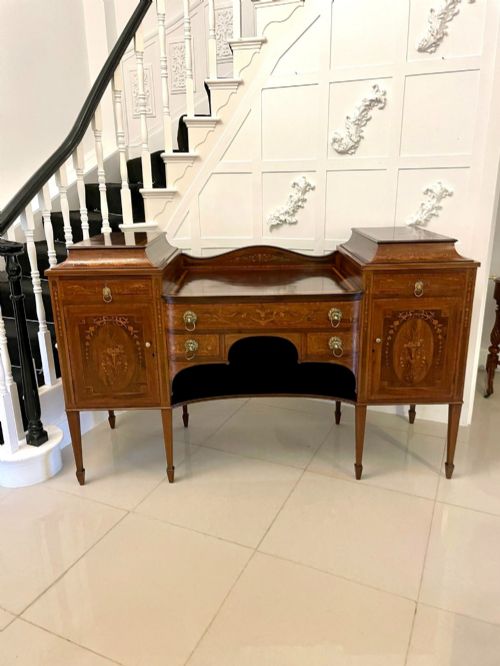
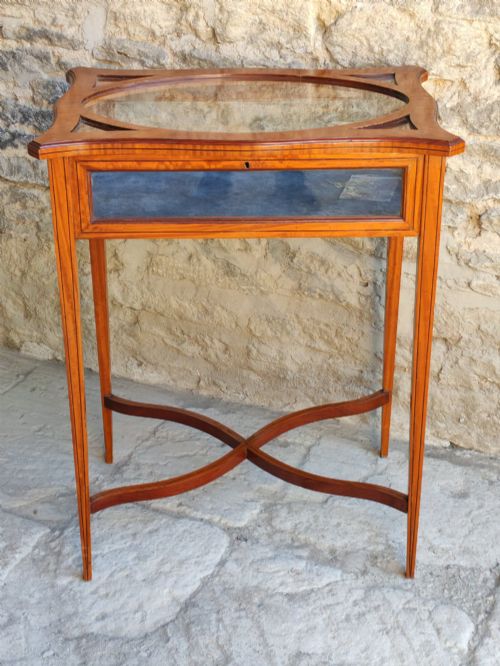
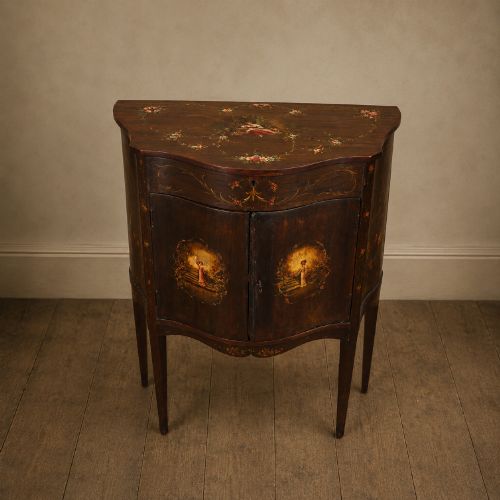


Victorian Sheraton Revival Furniture
Victorian Sheraton Revival furniture brings the neoclassical elegance of the eighteenth century into the nineteenth century through satinwood, mahogany, and intricate painted panels.
Victorian Sheraton Revival Furniture
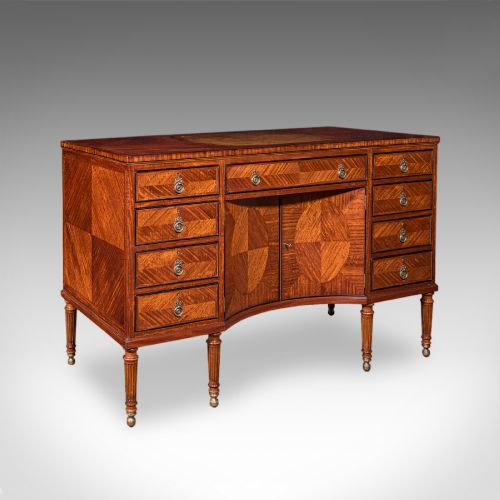
Victorian Sheraton Revival furniture reinterprets classic Georgian proportions using late nineteenth-century manufacturing methods and decorative vocabularies. When searching for victorian sheraton revival furniture, buyers encounter a diverse range of domestic forms spanning side cabinets, display cabinets, desks, bookcases, and tables.
The pieces on this page emerge primarily from the nineteenth century, including specific dates around 1880, 1890, 1900, and extending into the Edwardian period. Satinwood and mahogany dominate the structural woods, frequently accented by contrasting stringing and marquetry.
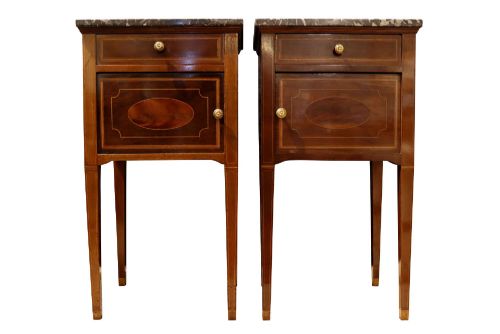
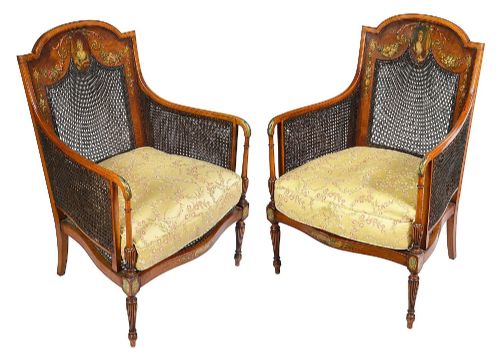
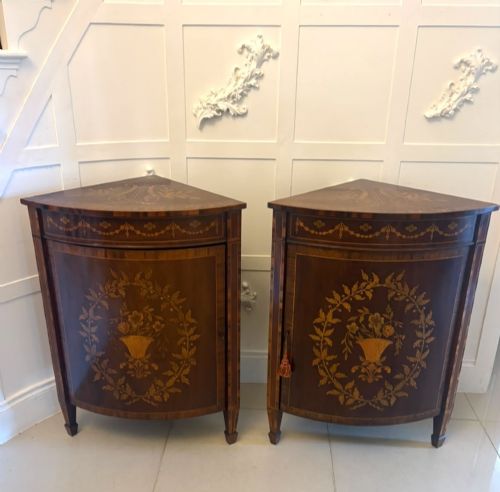
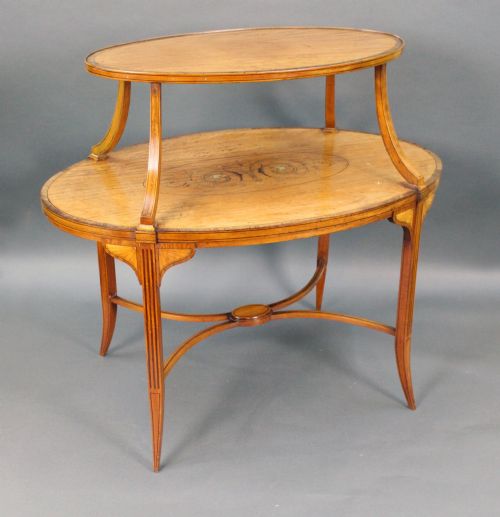
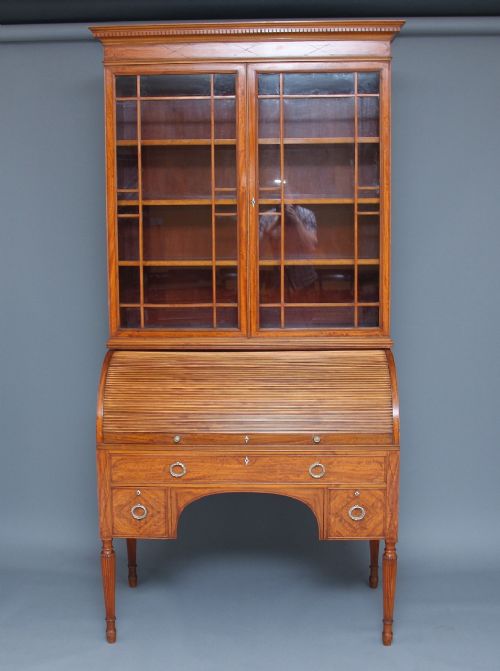
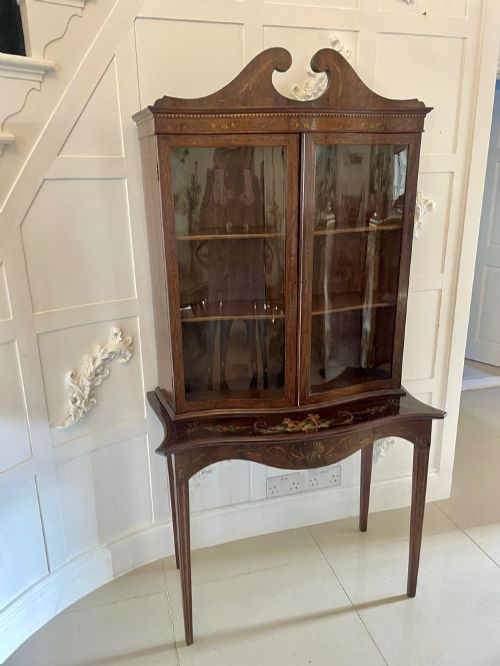
Forms vary from practical bedside cupboards and corner cabinets to decorative étagères, bijouterie tables, and expansive breakfront bookcases. Painted decoration and detailed inlay define the visual identity of these items across both cabinetwork and seating.
Materials and Construction
Craftsmen built these pieces using primary timbers of satinwood, mahogany, rosewood, and walnut, complemented by lighter contrasting stringing in boxwood. Structural integrity relied on traditional joinery applied to domestic furniture forms like side cabinets, desks, and tables.
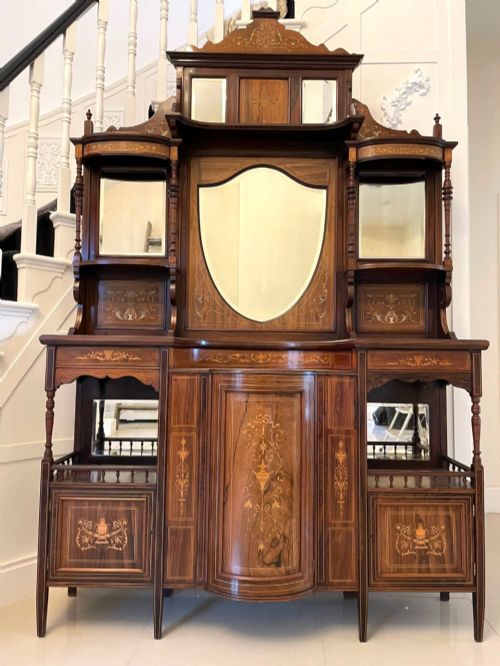
Surface ornament combined cabinetmaking with fine arts through marquetry inlay, brass mounts, glass panels, and hand-painted decoration. Upholstered seating incorporates specialised fabric and webbing alongside polished wooden frames.
Makers utilised decorative veneers and crossbanding to frame panels on cylinder bookcases, card tables, and serpentine side cabinets.
Victorian Sheraton Revival Furniture Retail Price Guide 2026
Typical asking prices for victorian sheraton revival furniture among the pieces listed under this phrase on Sellingantiques today, from the lower quarter to the upper quarter. They describe what is for sale here now, not the wider market.
Listings combine satinwood, mahogany, rosewood, and walnut with hand-painted decoration across Victorian and Edwardian periods.
Assessing Quality and Execution
The standard of execution in cabinetwork separates standard production from exceptional pieces. Finely judged proportions, crisp marquetry, and balanced timber selection distinguish high-grade examples.
Painted decoration varies significantly in execution, ranging from simple linear borders to detailed figurative panels on satinwood ground. Original glass, intact brass hardware, and signed cabinetmaker documentation elevate a piece within its category.
Edwards and Roberts·Hewetsons London·Maple and Co·Gillows
The Victorian Sheraton Revival Furniture Glossary
- Satinwood
- A durable, lustrous timber native to the tropics, prized for its pale yellow colour and smooth grain. It forms the primary visual surface for much of the painted and inlaid cabinetry.
- Marquetry
- The art of applying thin veneers of various woods, metals, or shells to a structural base to create pictorial or geometric patterns. This technique decorates the doors and tabletops of cabinets and desks.
- Demi-lune
- A half-moon or semicircular shape utilised in the design of side cabinets and tables. This form fits flush against walls while offering curved front dimensions.
- Étagère
- An open tiered piece of furniture designed for displaying small objects, books, or ornaments. These multiple platforms are supported by slender uprights.
- Bergere
- An enclosed armchair featuring upholstered sides and a cushioned seat. The wooden frame is typically polished mahogany or satinwood.
Victorian Sheraton Revival Furniture: Frequently Asked Questions
What is Sheraton Revival furniture?
Sheraton Revival furniture represents nineteenth-century interpretations of eighteenth-century neoclassical designs associated with Thomas Sheraton. These pieces appropriate light timbers, symmetrical geometries, and classical motifs.
Craftsmen during the Victorian and Edwardian eras revived these aesthetic principles to satisfy contemporary domestic demand for lighter, more refined interior furnishings.
How do I identify satinwood?
Satinwood is a dense, yellow-gold hardwood that displays a natural sheen resembling satin fabric when polished. It serves as a primary veneer or solid wood for cabinets, desks, and tables.
Cabinetmakers frequently paired satinwood with darker inlay materials like mahogany or rosewood to create high-contrast decorative panels.
Where were these pieces used?
Victorian households positioned these items across drawing rooms, libraries, bedrooms, and reception spaces. Specialised forms served distinct domestic functions, from music storage to writing and display.
Smaller items like étagères and bedside cupboards provided versatile utility alongside decorative presence in private and public rooms.
How do I care for inlaid wood?
Inlaid surfaces require protection from direct sunlight and extreme humidity fluctuations to prevent veneer lifting and wood cracking. Regular dusting with a soft, dry cloth preserves the polished finish.
Avoid chemical polishes and maintain stable indoor conditions to safeguard both the primary timbers and delicate painted decorations.