
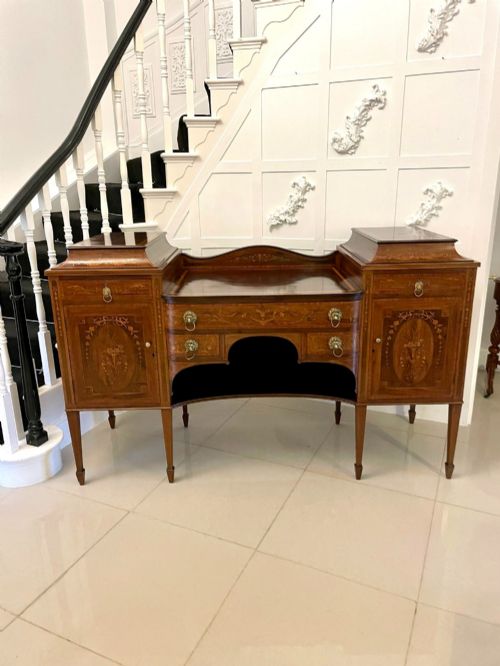
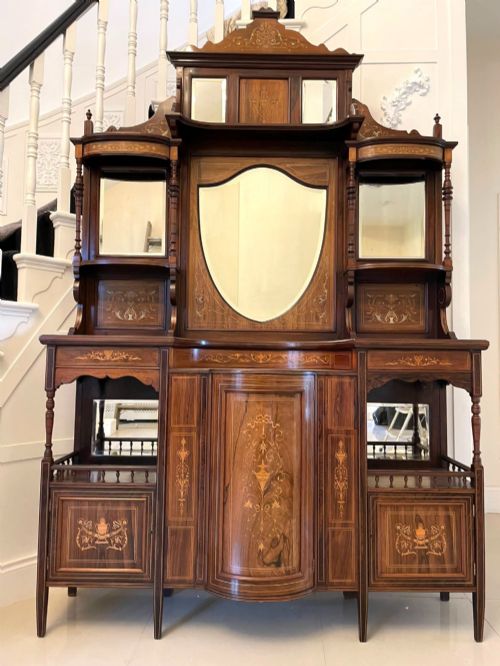
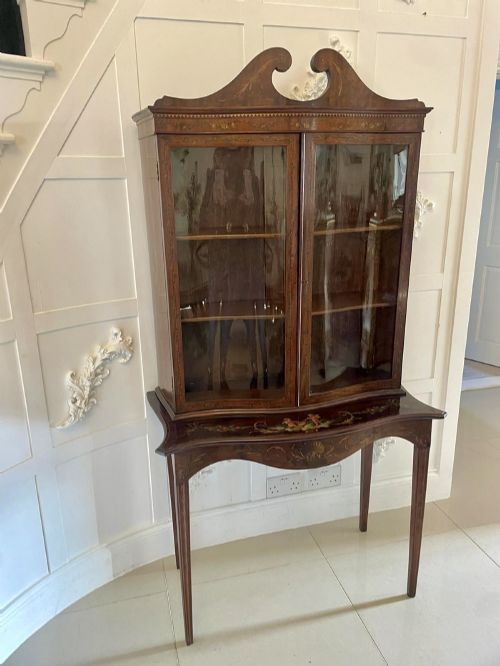
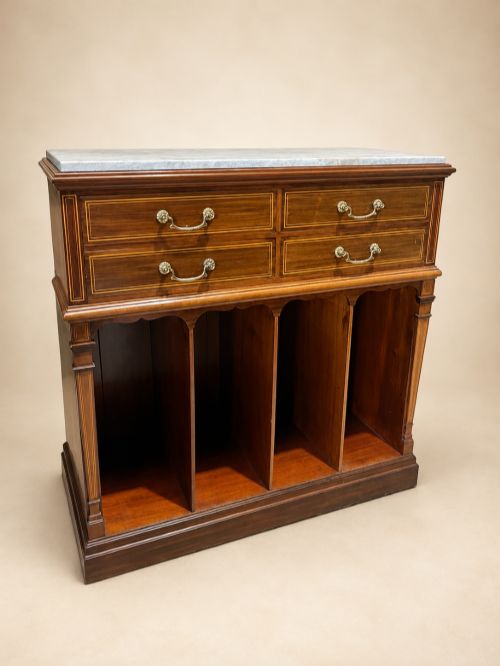
Victorian Sheraton Revival Cabinet
A victorian sheraton revival cabinet brings neoclassical lightness to nineteenth-century rooms through satinwood, mahogany, and delicate marquetry.
Victorian Sheraton Revival Cabinet
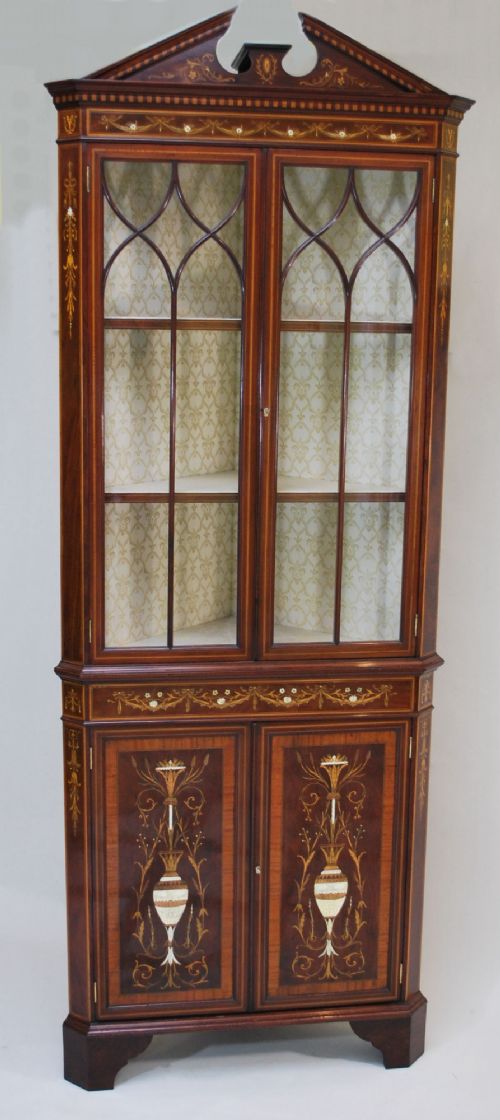
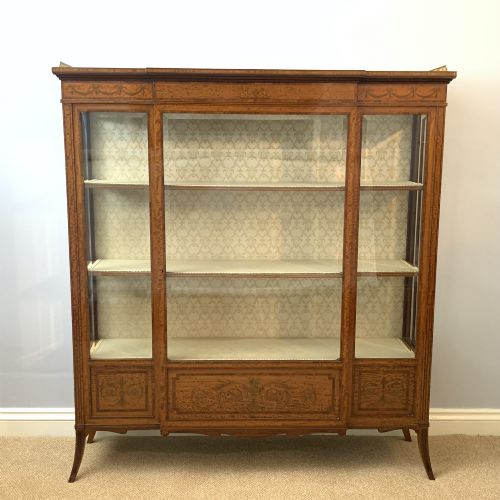
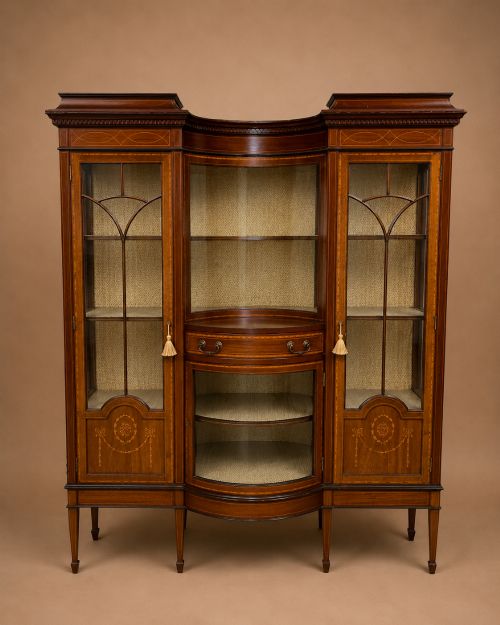
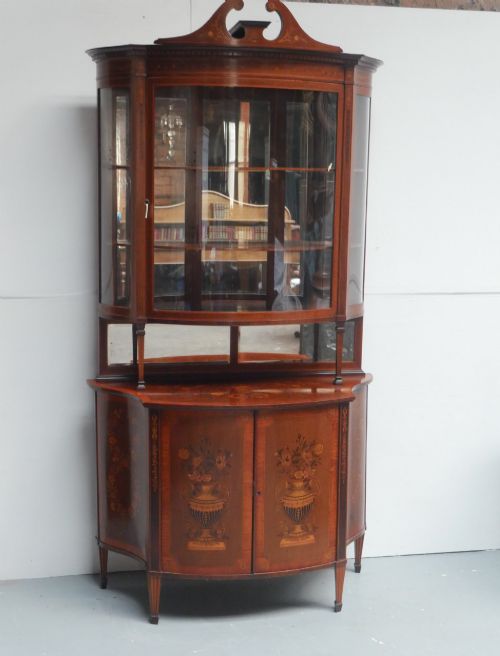
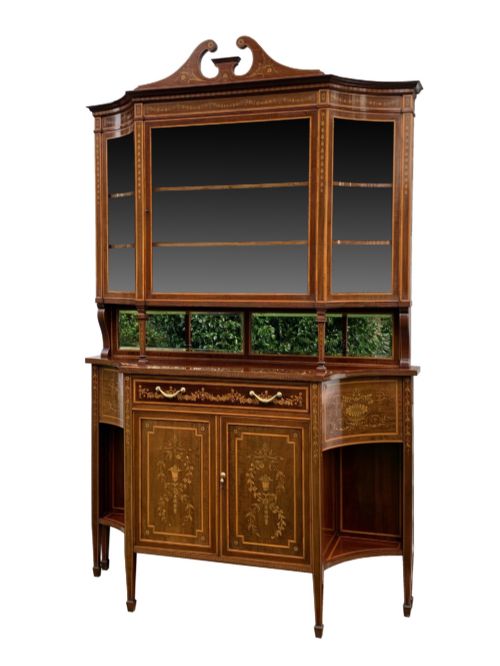
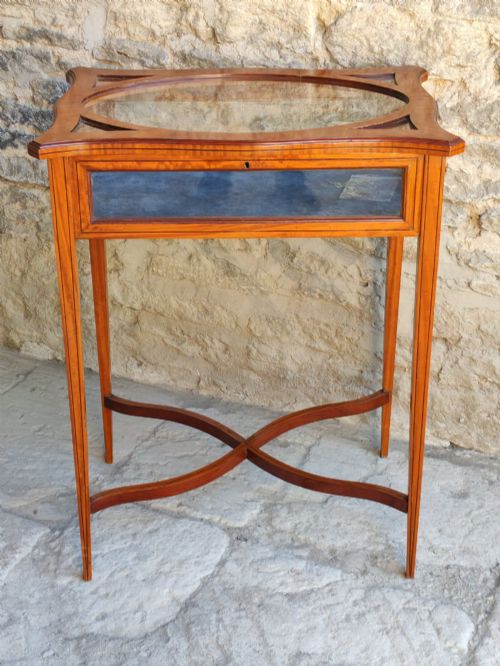
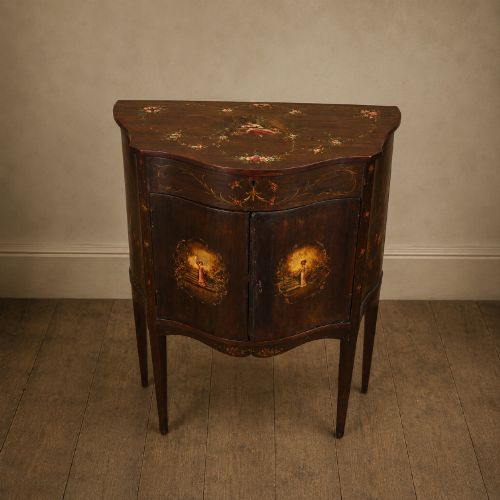
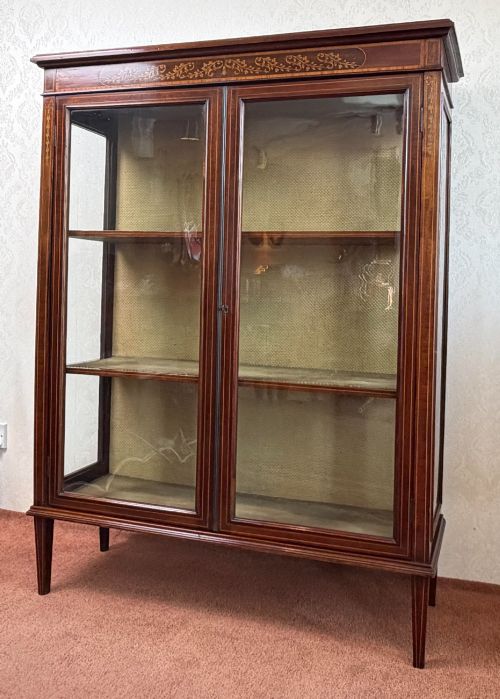
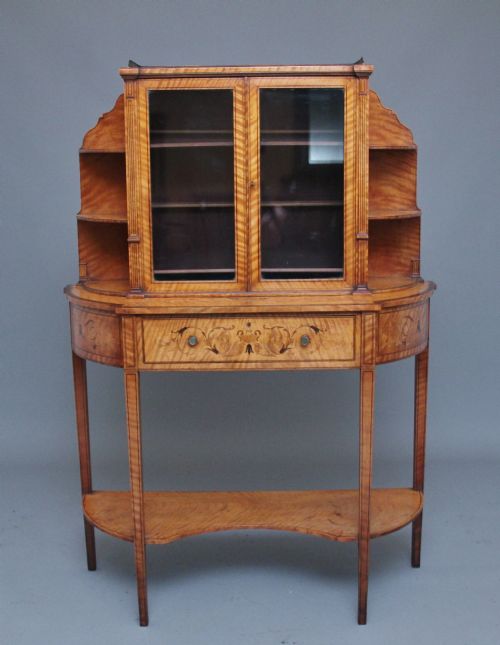
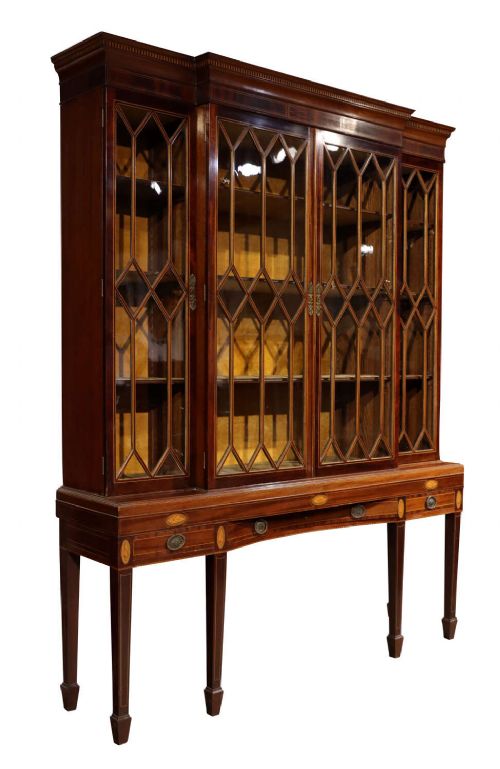
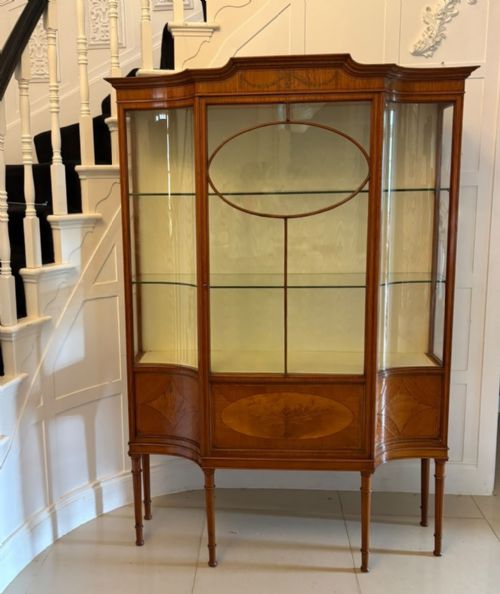
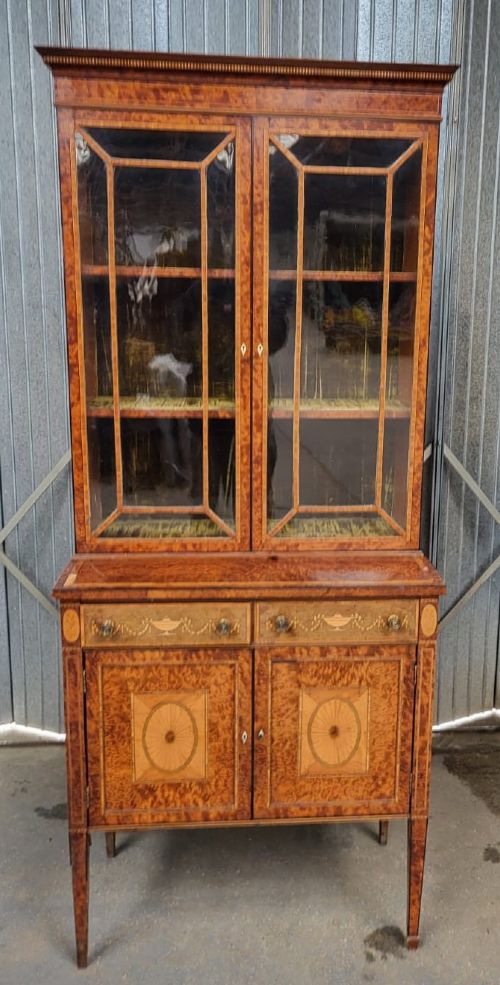
A victorian sheraton revival cabinet combines eighteenth-century neoclassical lightness with nineteenth-century manufacturing methods. These pieces include display cabinets, side cabinets, corner cabinets, and bookcases.
Most examples date from the late nineteenth century, spanning the Victorian and Edwardian periods. They serve primarily to display china or store books while introducing refined woodwork to domestic interiors.
How they were made
Cabinetmakers constructed carcases from mahogany, rosewood, or satinwood, often applying contrasting veneers and geometric or floral marquetry. Hand-painted decoration and fruitwood inlay frequently embellish the primary surfaces.
Glazing bars frame the glass doors of display pieces, whilst brass hardware secures doors and drawers. Internal shelving utilises matching timber or fabric-lined surfaces.
Makers occasionally tucked painted birds into floral marquetry panels, giving watchful creatures permanent residence behind glass.
What varies in quality
The precision of the marquetry and the choice of timber govern the distinction between standard production and workshop masterpieces. Finer pieces demonstrate meticulous hand-painted panels and select satinwood veneers.
Makers known for exceptional cabinet-making contribute significant pedigree to individual items, elevating the status of the furniture through established workshop standards.
Hewetsons·Edwards & Roberts
The Victorian Sheraton Revival Cabinet Glossary
- Marquetry
- Decorative woodwork forming pictures or patterns by inserting veneers into a solid ground. Cabinetmakers used various tinted woods to create floral designs.
- Satinwood
- A lustrous timber with a golden sheen frequently employed for veneers and inlay. It forms the primary visual surface on many lighter pieces.
- Serpentine
- A front profile curving outward in the centre and inward at the sides. This shape demands precise woodworking joinery.
- Breakfront
- A piece of furniture with a central section projecting forward from the flanking wings. It adds architectural depth to large cabinets.
- Bijouterie
- A glass-topped display table or cabinet designed for small valuables. These items showcase collections under protective glazing.
Victorian Sheraton Revival Cabinet: Frequently Asked Questions
Where should I place a display cabinet?
These cabinets suit drawing rooms or dining spaces where glazed doors protect books or porcelain from dust.
Position them away from direct sunlight to preserve delicate satinwood veneers and hand-painted panels.
How do I care for satinwood furniture?
Dust surfaces regularly with a soft, dry cloth and avoid chemical polishes that damage antique finishes.
Maintain stable room humidity to prevent timber movement or veneer lifting.
What is Sheraton Revival style?
Sheraton Revival furniture reinterprets the late eighteenth-century neoclassical designs associated with Thomas Sheraton.
Victorian makers adopted these lighter forms, utilising satinwood inlay and tapered legs.
How do I distinguish between periods?
Nineteenth-century examples often display denser mahogany carcases and hand-cut marquetry patterns.
Later pieces from the Edwardian era show shifts in timber selection and decorative motifs.