

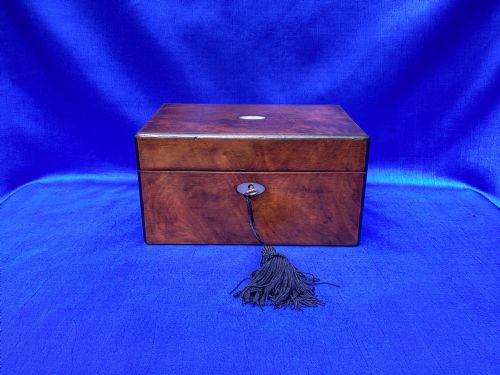


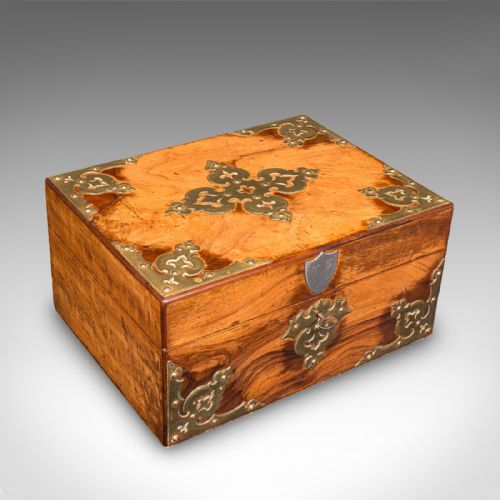


Victorian Sewing Workbox
A victorian sewing workbox provides a neat, dedicated container for needles and threads, bringing craftsmanship and period charm to a room.
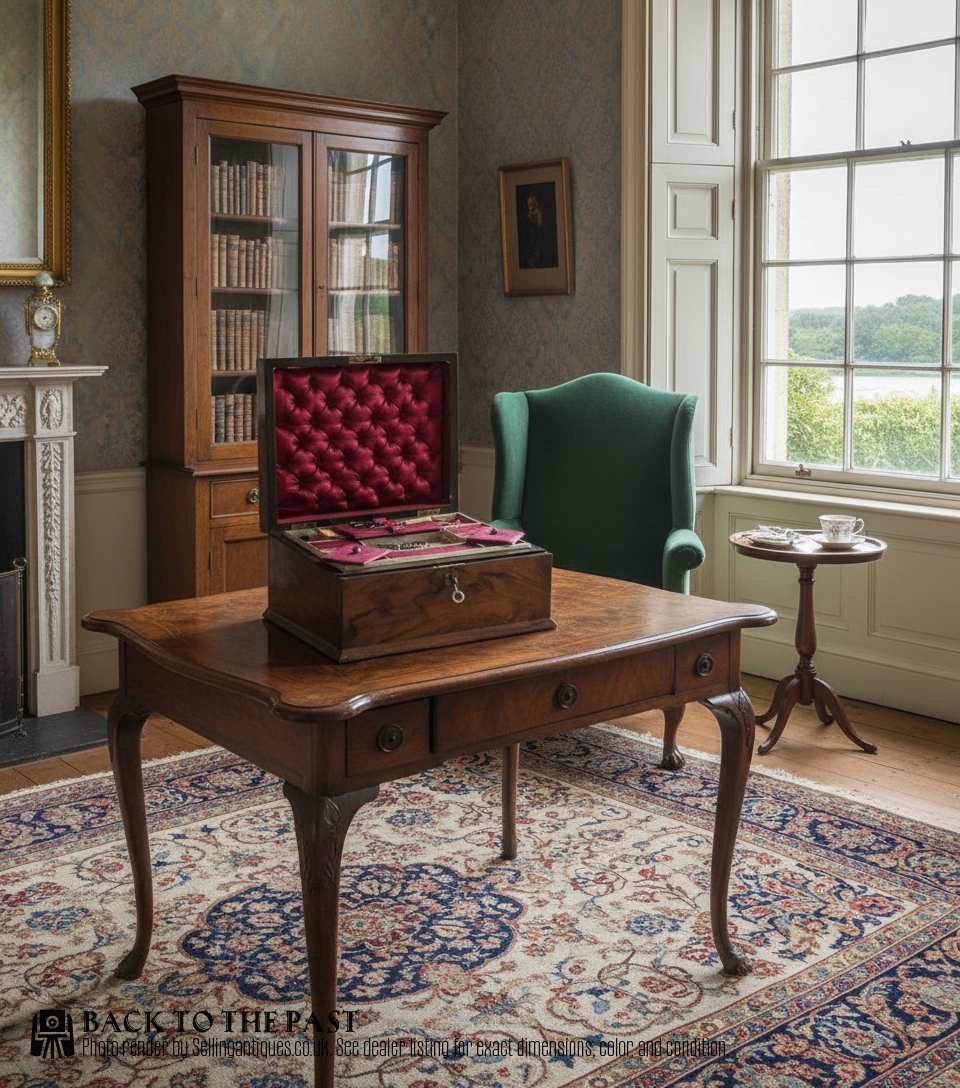
Victorian Sewing Workbox
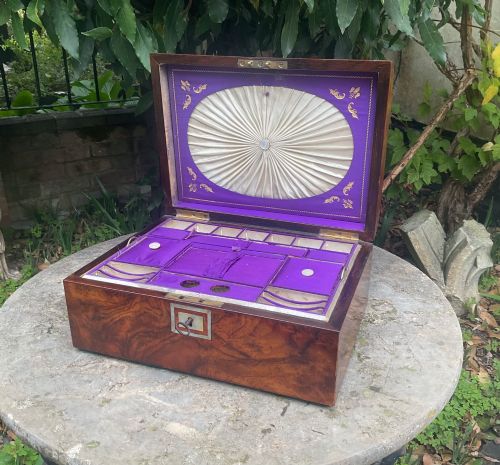
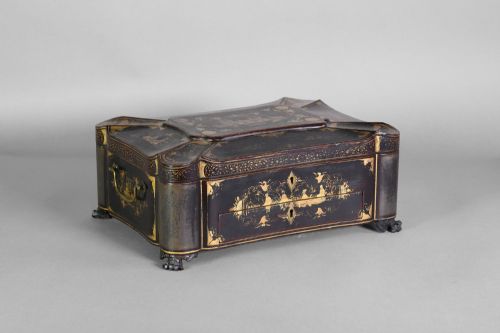
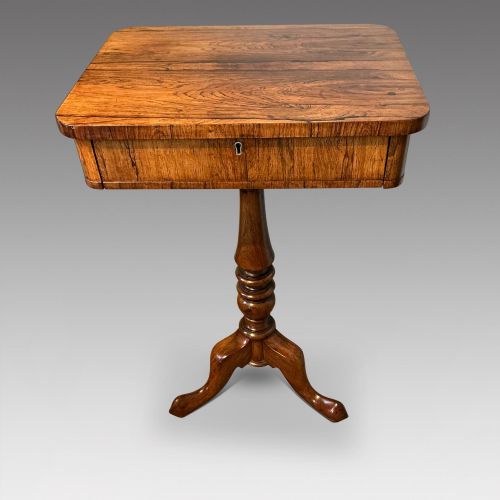
A victorian sewing workbox encompasses portable desktop caskets and larger freestanding tables designed to house needles, threads, and textile tools. Buyers meet both tabletop boxes intended for boudoir use and substantial pedestal or trumpet tables built for the nineteenth-century parlour.
The materials and construction reflect the domestic habits of the nineteenth century, ranging from compact wooden cases with fitted interior trays to multi-functional gaming and writing surfaces. Freestanding versions often incorporate fabric bags beneath the top to hold ongoing needlework.
Most examples originate from the Victorian period, though the broader category admits earlier Regency items and specialist regional variations. The selection includes polished woods and inlaid surfaces suited to surface display or freestanding placement.
What varies in quality
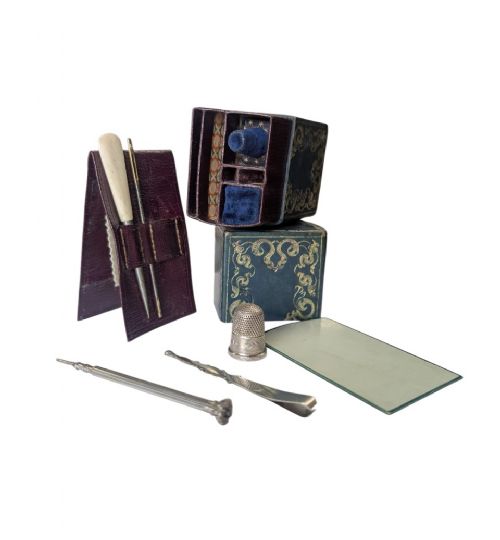
The sophistication of the internal fittings distinguishes standard utility boxes from superior salon pieces. Boxes featuring original velvet trays, bone winders, and segmented compartments demonstrate a higher grade of original commission.
Surface adornment marks the division between basic production and master craftsmanship. Complex geometric Tunbridge Ware mosaics or intricate mother-of-pearl inlay require skilled labour that elevates the status of the workbox.
Listings feature walnut, rosewood, and mahogany surfaces, alongside specialised Tunbridge Ware inlay and brass detailing.
The Victorian Sewing Workbox Glossary
- Burr walnut
- A figured wood veneer harvested from the burl growths of walnut trees. It creates swirling, organic patterns across the lid and sides of the box.
- Tunbridge Ware
- A form of decorative woodwork produced in Kent using small pieces of coloured wood assembled into mosaic pictures. These panels adorn the lids of finer boxes.
- Etui
- A small ornamental case designed to hold needles, scissors, and tweezers. These portable holders sit neatly within the main workbox compartments.
- Trumpet table
- A freestanding sewing table featuring an octagonal or flared body shaped like a musical instrument. It stands on a pillar and tripod base.
- Pedestal table
- A single-column support structure holding a tabletop or box. This design allows generous legroom while maintaining a compact footprint.
Victorian Sewing Workbox: Frequently Asked Questions
What is a victorian sewing workbox used for today?
These pieces serve as decorative storage containers for modern craft supplies, jewellery, or desktop stationery. Their compartmentalised interiors keep small items organised while adding period character to a room.
Placed on side tables or desks, they function as focal points that combine historical utility with tactile wooden warmth.
How do I distinguish a table from a box?
Desktop boxes are smaller portable caskets meant to sit on top of furniture without legs or a pedestal. Tables incorporate either a fixed pillar base or four legs, often featuring a fabric bag or solid compartment underneath.
Both categories share internal trays for sewing implements, but tables offer a broader surface area and freestanding presence.
What woods were used for these?
Cabinetmakers relied on dense tropical and European hardwoods, primarily mahogany, rosewood, and walnut. Figured burr walnut appears frequently on decorative lids and tabletops to add visual depth.
Secondary timbers line the interior compartments and provide structural stability beneath the polished exterior veneers.
Are games boards common on these tables?
Many nineteenth-century sewing tables feature reversible or lift-off tops incorporating chess or draughts boards. This dual purpose accommodated parlour entertainment alongside needlework.
Beneath the gaming surface, a drawer or fabric well stores the corresponding game pieces and sewing tools.