

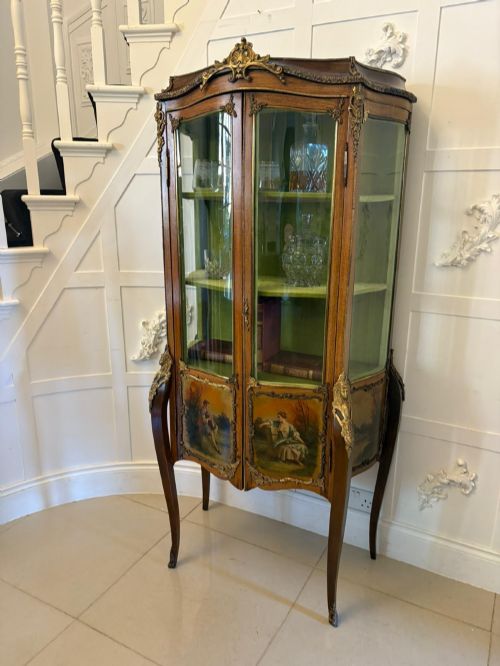
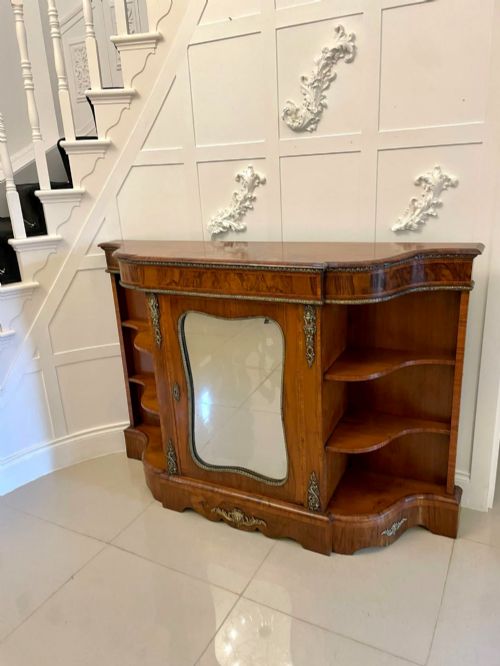
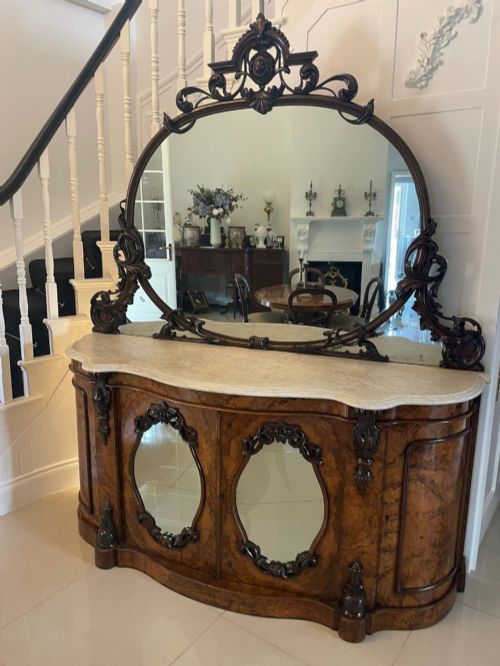
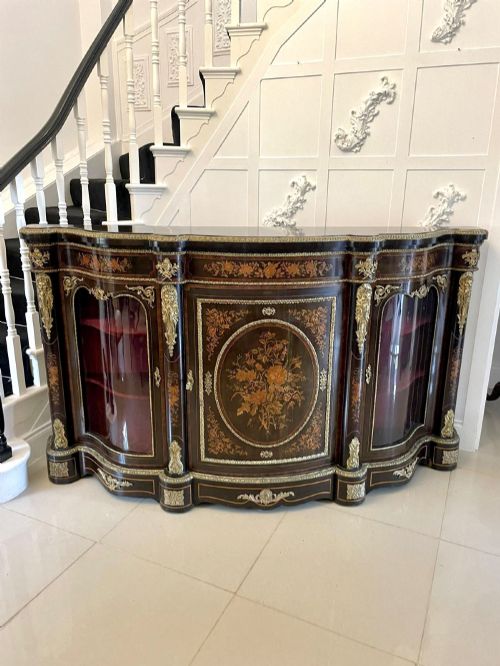



Victorian Serpentine Cabinet
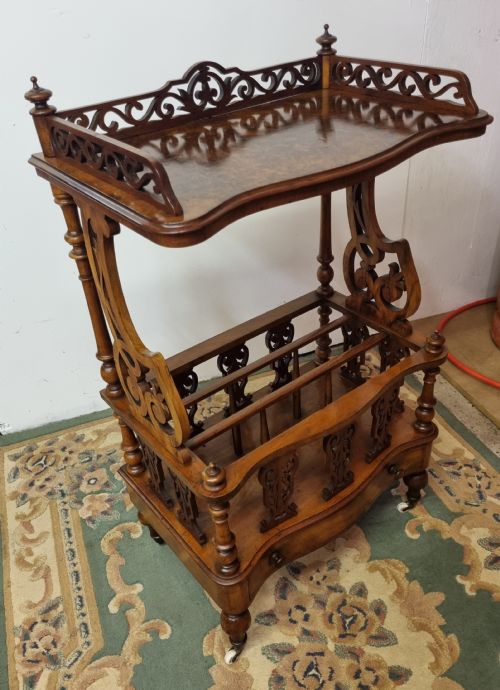
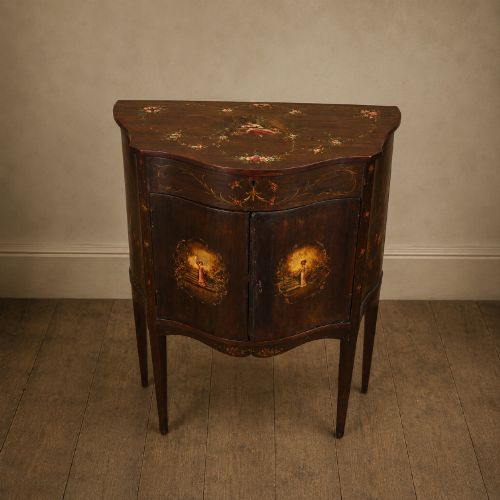
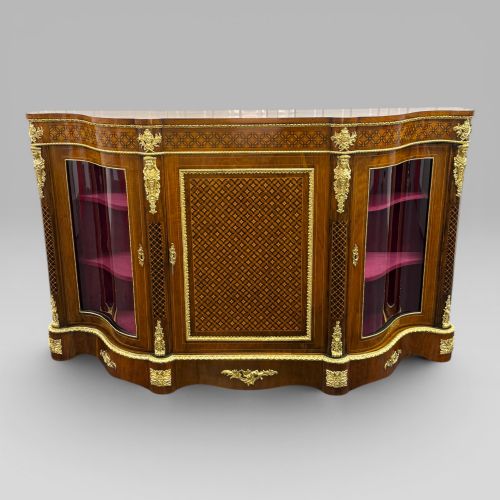
These Victorian serpentine cabinets combine fluid, curving fronts with rich marquetry and figured timbers.
Victorian Serpentine Cabinet
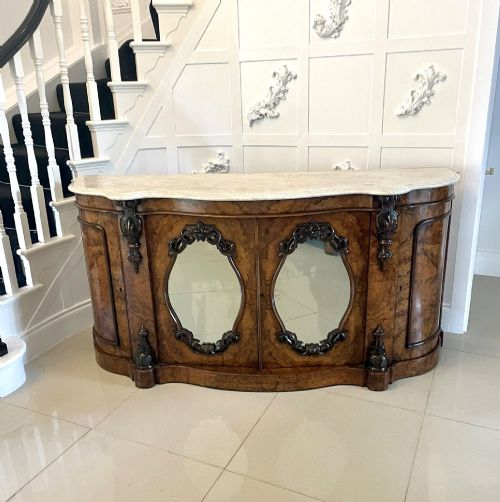
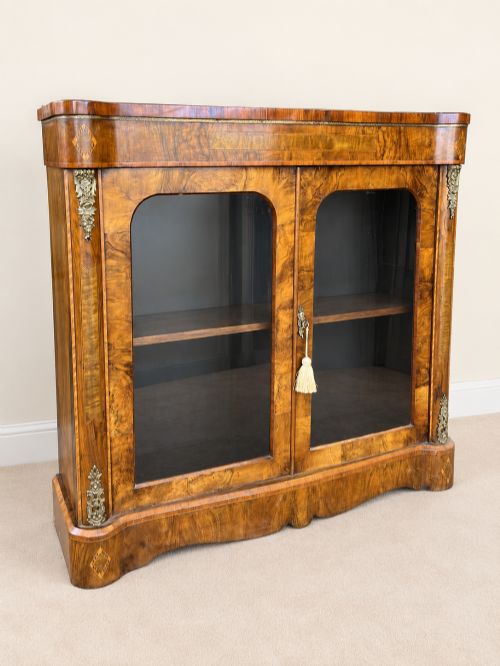
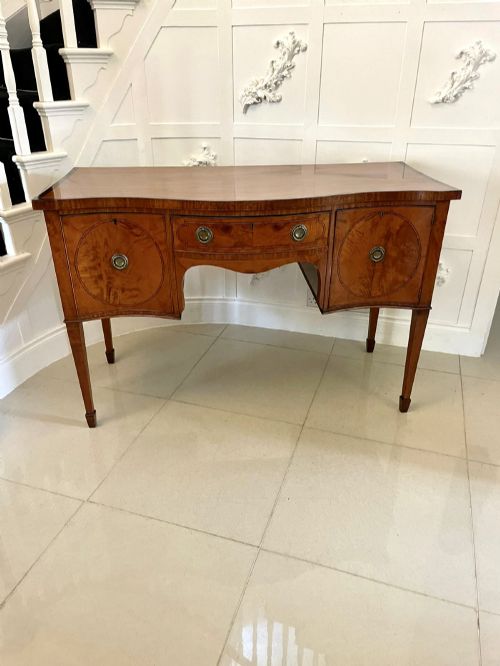
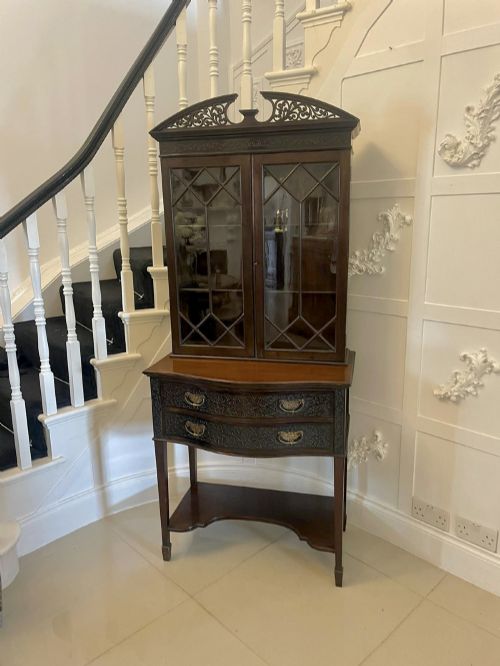
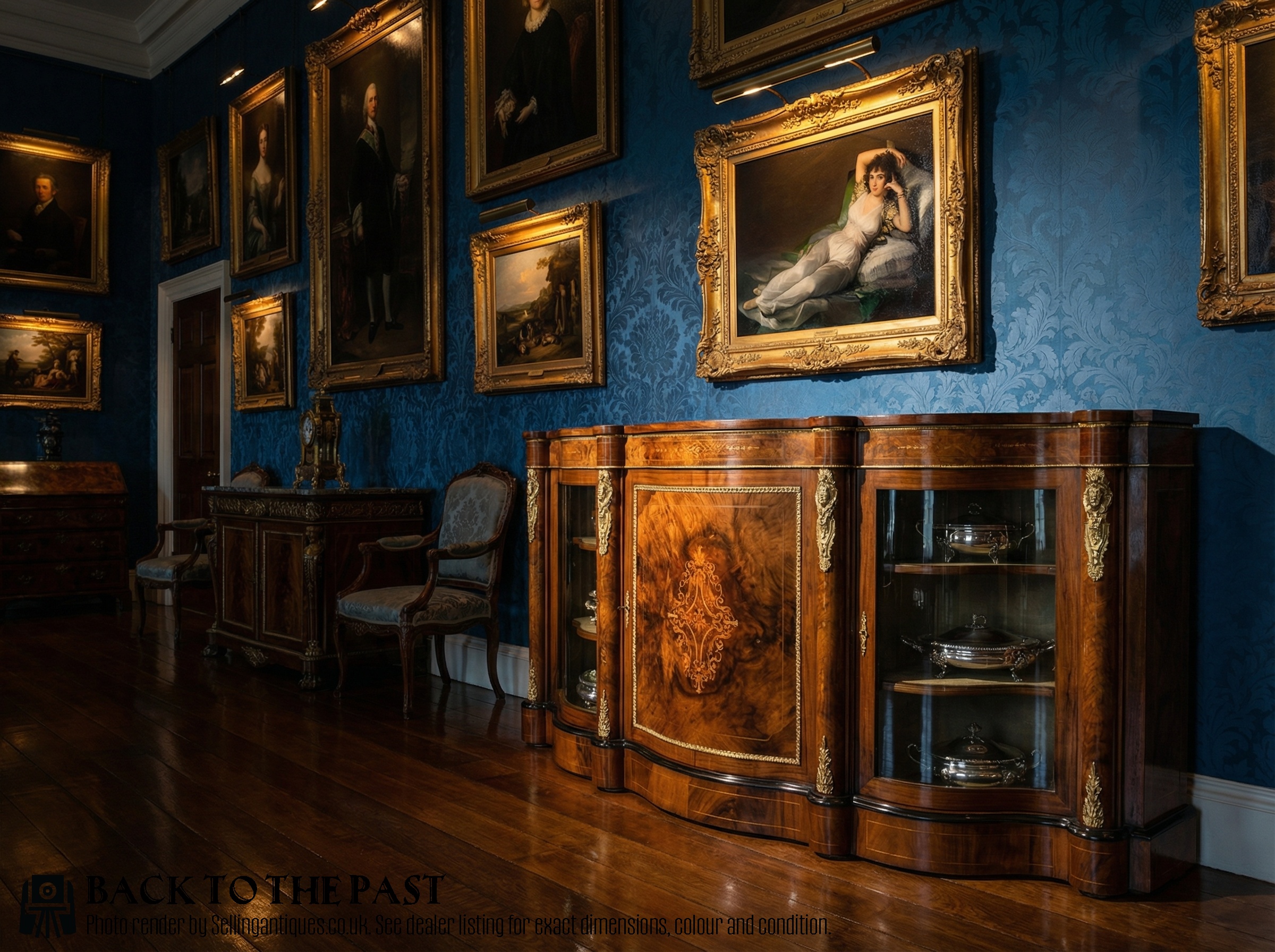
A victorian serpentine cabinet presents a distinctively undulating front profile that brings a sense of movement to heavy timber furniture. These pieces primarily manifest as credenzas, display cabinets, and sideboards originating across the nineteenth century, particularly from the eighteen-fifties onwards. Surviving examples frequently showcase elaborate marquetry, mirrored backs, or glass doors designed for formal display.
The aesthetic vocabulary draws heavily on revival styles, with French Louis XV and Sheraton influences appearing alongside indigenous Victorian forms. Buyers encounter varieties ranging from compact pier cabinets and bedside cupboards to large four-door exhibition quality credenzas. Burr walnut, mahogany, and satinwood dominate the forms, often augmented by contrasting fruitwood inlays.
Makers of the period utilised the serpentine curve to demonstrate sophisticated cabinetmaking skills, requiring precise shaping of solid timber frames and matching veneers. The silhouette creates dynamic light reflections across polished surfaces, distinguishing these items from flat-fronted counterparts.
Materials and construction techniques
Craftsmen built these cabinets around robust framing timbers such as mahogany or walnut, applying highly figured burr walnut, satinwood, or kingwood veneers to the visible exterior surfaces. The undulating serpentine front required meticulous cutting and bending of timber layers or shaping of solid stock to achieve the characteristic double-curved silhouette without warping.
Surface decoration frequently relied on intricate floral marquetry utilising diverse fruitwoods, brass stringing, and fire-gilt ormolu mounts cast in rococo or neoclassical motifs. Marble tops appear on selected credenzas, providing a heavy, cool contrasting counterpoint to the warm figured wood veneers below.
Some serpentine cabinets feature secret internal compartments designed to conceal private letters and small treasures from visiting guests.
Distinctions in construction and design
Quality separates through the ambition of the timber selection and the complexity of the internal and external joinery. Exemplary pieces display continuous, symmetrical burr walnut grain flowing seamlessly across undulating drawer fronts and curved doors, while simpler iterations utilise plain veneers.
The sculptural quality of cast ormolu mounts and the precision of multi-wood marquetry inlay delineate the upper tiers of manufacture. Workshops associated with notable retailers invested heavily in heavier architectural carcasses, mirrored backings with carved frames, and superior internal fittings.
Edwards & Roberts·Maison Gagneau·Maple & Co·Lamb of Manchester
The Victorian Serpentine Cabinet Glossary
- Serpentine
- A shape characterised by a undulating front profile that curves outward in the centre and inward toward the ends, or vice versa. This contour requires advanced woodworking skill to execute cleanly on cabinet doors and drawer fronts.
- Credenza
- A low dining or reception room cabinet, often featuring central doors flanked by curved glass display sections. During the nineteenth century, these evolved into highly decorative display furniture.
- Marquetry
- The art of applying decorative veneer pieces cut from different coloured woods to form pictorial or floral patterns. Master craftsmen combined multiple exotic timbers to create shaded botanical designs.
- Ormolu
- Gilt-bronze decorative mounts applied to furniture corners, friezes, and feet. The technique involves treating cast bronze with a mercury and gold amalgam before heating.
- Vitrine
- A glass-fronted display cabinet intended for the exhibition of porcelain and precious objects. The glazed doors and sides maximise light entry into the interior chamber.
- Burr Walnut
- Timber taken from the gnarled growths of walnut trees, prized for its swirling, highly figured grain patterns. Cabinetmakers sliced this wood into thin veneers for decorative surfaces.
Victorian Serpentine Cabinet: Frequently Asked Questions
What rooms suit a serpentine cabinet?
These cabinets function well in principal reception rooms or dining spaces where their reflective glass and polished burr walnut surfaces catch natural light. Their shallow curved profiles allow them to sit gracefully against walls without dominating the floor space.
In contemporary interiors, they serve as focal display points for ceramics or glassware, echoing the original nineteenth century domestic usage of exhibiting prized possessions.
How do I care for burr walnut?
Burr walnut veneers require stable indoor humidity levels and protection from direct sunlight to prevent timber drying and veneer lifting. Regular dusting with a dry, soft cloth preserves the polished surface without chemical buildup.
Avoid placing these pieces near active heat sources or damp exterior walls, as temperature fluctuations stress the historic wood and underlying joinery.
Were these cabinets used for storage?
While some larger credenzas provided substantial enclosed space behind solid or glazed doors for household items, many variations prioritised display over utility. Pier cabinets and vitrines were specifically engineered to showcase decorative arts rather than house everyday goods.
Interior configurations often include velvet-lined shelving or compartmentalised spaces designed for specific display purposes rather than heavy utilitarian storage.
How do I distinguish revival styles?
Revival pieces incorporate specific historical ornament, such as Louis XV rococo ormolu mounts, floral marquetry, and asymmetrical curves derived from eighteenth-century French models. Sheraton revival examples tend to feature lighter satinwood finishes, symmetrical painted motifs, and refined neoclassical geometry.
Examining the underlying secondary woods and construction methods helps verify whether a piece belongs to the mid-nineteenth century or later revival periods.