




Victorian Scientific Equipment
Victorian scientific equipment brings together precision brass, polished mahogany and clear glass to measure, map and test the physical world.
Victorian Scientific Equipment
Victorian scientific equipment encompasses precision instruments designed for surveying, navigation, meteorology and laboratory analysis across the nineteenth and early twentieth centuries. These pieces reflect an era of intense industrial and empirical advancement, where physical measurement demanded mechanical reliability. Buyers seek these items for their intricate engineering, tangible connection to historical discovery and striking aesthetic presence.
Materials and construction
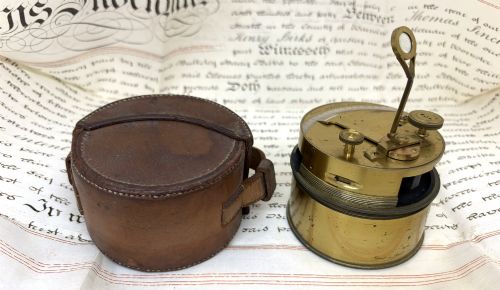
Makers relied on cast and turned brass for the structural bodies, dials and optical housings of these instruments, ensuring durability and resistance to wear. Mahogany and boxwood provided stable, dense housings and cases that protected delicate glass components during transport in the field. Leather linings, paper scales and steel fixings completed assemblies built for rigorous daily use by surveyors, doctors and engineers.
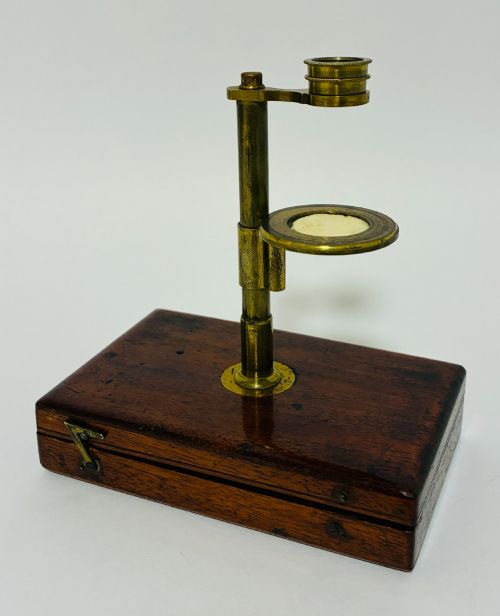
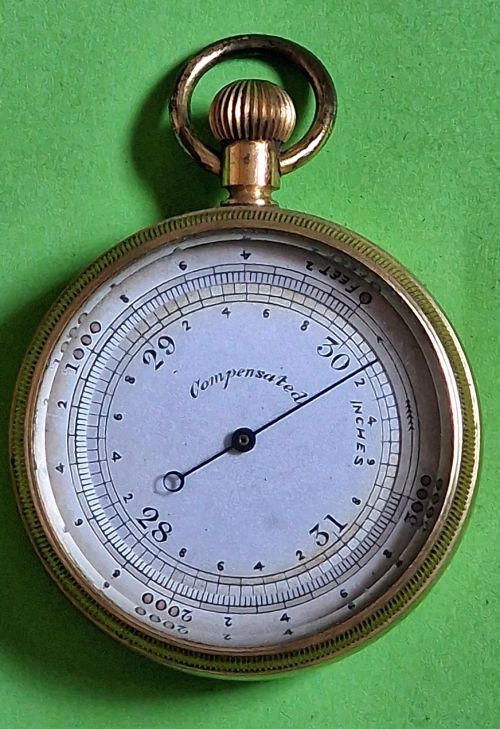
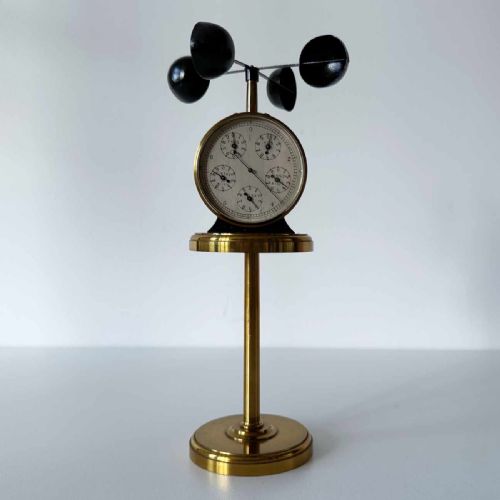
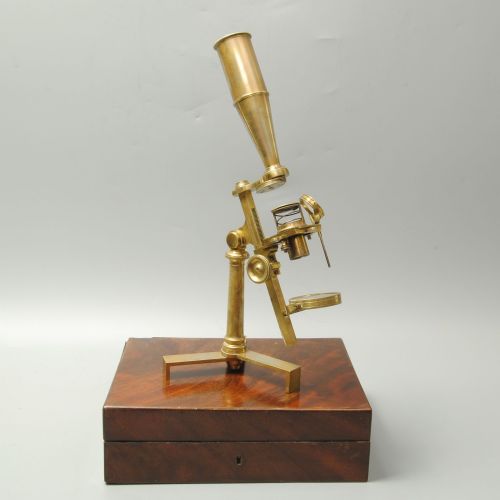
Object types include field microscopes, surveying theodolites, barometers, anemometers and specialised meteorological testing sets.
Assessing quality in scientific instruments
Superior quality in victorian scientific equipment reveals itself in the crispness of the division lines on scales, the smoothness of rack-and-pinion movements and the absence of play in rotating brass joints. Maker attribution plays a significant part, with recognised firms supplying superior optical clarity, heavier gauge metals and more robust cabinetry. The presence of a complete original fitted case with matching accessories elevates an instrument above incomplete or married examples.
The sophistication of the mechanism and the specialisation of the task separate standard utility pieces from advanced scientific apparatuses. Workshop finish, from hand-engraved maker signatures to fire-gilt or lacquered brass surfaces, distinguishes bespoke laboratory instruments from generic commercial production. Pieces retaining their original vernier adjustments, plumb lines and intact glass elements command greater attention from collectors.
Baker, London·L Casella & Co·Short & Mason London·J Hicks of London·H Hughes & Son London·Heinrich Daniel Ruhmkorff·Thomas Dunn·W. H. Harling·F. Robson Newcastle·John Lilley & Son London·Barker & Son
The Victorian Scientific Equipment Glossary
- Theodolite
- A precision surveying instrument for measuring horizontal and vertical angles, mounted on a rotating base with telescopic sights. These are typically constructed from heavy brass and often retain their original wooden tripod boxes.
- Barometer
- An instrument used for measuring atmospheric pressure to forecast weather changes, frequently housed in carved mahogany or brass cases. Pocket versions offer portability while mercurial wall or desk variants provide high-precision readings.
- Anemometer
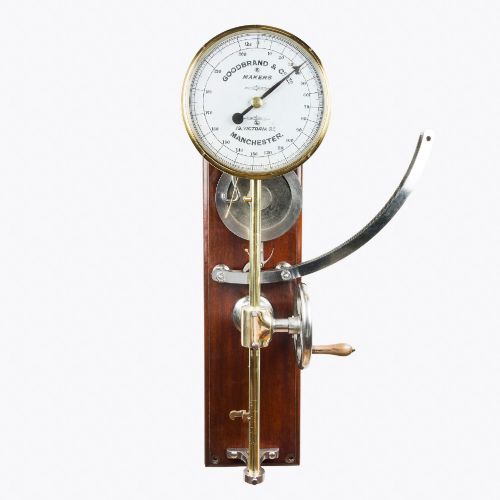
- A device designed for measuring wind speed and airflow, featuring rotating cups or vanes connected to internal dial counters. Cased examples were essential for meteorological stations and maritime navigation.
- Hydrometer
- A floating glass instrument used to measure the specific gravity of liquids, often found in fitted sets with brass weights and ivory thermometer scales. Sikes hydrometers were widely utilised by excise officers for testing spirits.
- Geissler Tube
- A sealed glass tube containing rarefied gas that glows when a high electrical voltage passes through it, demonstrating electrical discharges. These fragile educational and laboratory items survive with delicate internal glass crosses and vacuum scales.
Victorian Scientific Equipment: Frequently Asked Questions
How do I care for brass instruments?
Keep brass instruments in stable, dry environments away from direct sunlight to preserve the original lacquer and prevent active corrosion. Dust gently with a soft, dry brush and avoid chemical metal polishes that remove historic patination.
Store wooden cases with occasional applications of microcrystalline wax to nourish the timber and protect the original French polish. Ensure glass components and internal threads are supported properly when moving or displaying the piece.
Can these instruments still be used today?
Many mechanical surveying instruments, compasses and barometers remain functional and can provide accurate readings with careful handling. Optical instruments like field microscopes and levels work well for observation when lenses are cleaned properly.
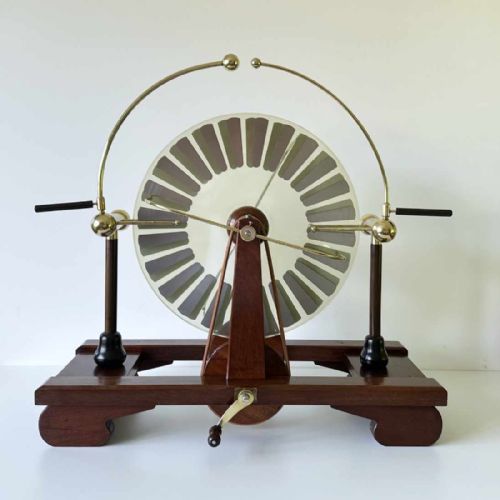
High-voltage electrical apparatuses such as induction coils and electrostatic machines require specialist electrical knowledge and are collected primarily for display. Consulting a specialist conservator is recommended before attempting to operate delicate nineteenth-century glass or vacuum components.
Why do some instruments have signed dials?
Signed dials indicate the retailer, maker or patent holder responsible for the assembly and retail distribution of the scientific apparatus. Prominent London and regional workshops engraved their names to guarantee quality and provide contact details for calibration.
Unsigned instruments were often produced for educational institutions, military contracts or by smaller provincial makers who relied on anonymous wholesale distribution. Signatures significantly aid dating and attribution for collectors researching specific scientific disciplines.
How are different periods identified?
Stylistic shifts in typography, cabinetmaking woods and metal finishing help date scientific equipment across the nineteenth century. Early Victorian pieces often feature heavy mahogany cases and hand-engraved script, while late Victorian and Edwardian examples incorporate finer machine engraving and industrial metals.
Patent dates and maker directories provide precise chronological markers when stamped onto the brass chassis or inscribed on paper scale labels inside the fitted boxes.