
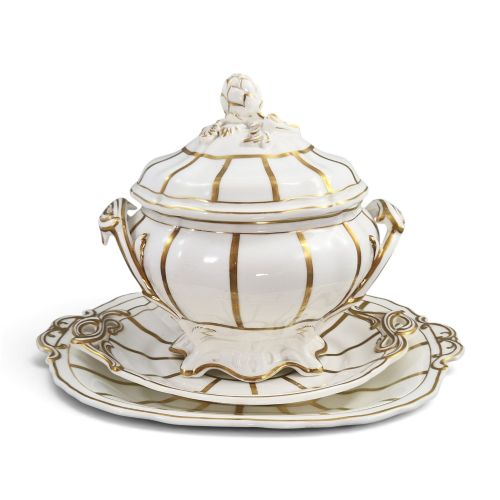
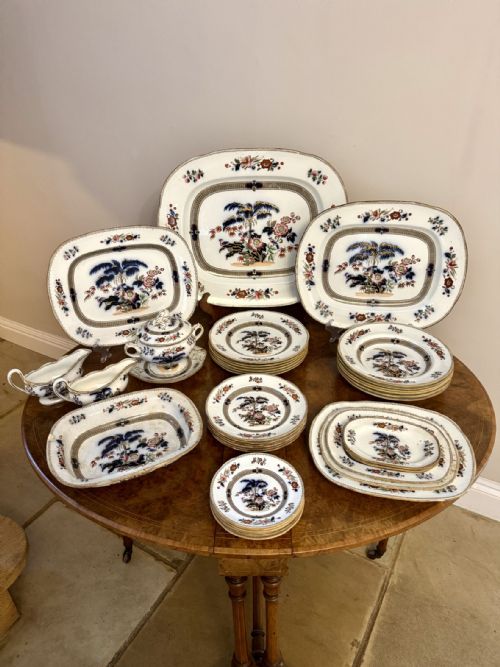


Victorian Sauce Tureen
A victorian sauce tureen brings nineteenth-century dining tables to life with sturdy ceramics, gleaming silver, and generous proportions.
Victorian Sauce Tureen
When you search for a victorian sauce tureen, you are looking at nineteenth-century table service vessels designed to keep sauces and gravies warm during formal meals. These pieces include individual tureens with stands, lidded vessels accompanied by ladles, and parts of larger dinner services.
The versions you are most likely to meet on this page date from the nineteenth century, spanning decades from eighteen-forty to eighteen-ninety. They appear in durable ironstone, refined bone china, porcelain, earthenware, and occasionally sterling silver or silver plate.
Makers and potteries from this era produced these serveware items in styles ranging from plain utility to elaborate rococo revival and Victorian neoclassicism. They serve today as both functional table accessories and decorative collectables for the dining room.
How They Were Made
Potters and silversmiths shaped these vessels using ironstone, bone china, porcelain, and silver, applying glazes and enamels to seal the surfaces. Many ceramic examples incorporate hand-painted details or gold leaf highlights around the handles and rims.
Makers such as Mason's utilised sturdy ironstone to create durable tureens that withstood daily dining use, while factories like Davenport and Mintons worked in finer bone china and porcelain for formal dessert and dinner services.
What Varies in Quality
The standard of a tureen rests on the crispness of the moulded relief work and the preservation of any hand-painted enamel or gold leaf decoration. Pieces that retain their original matching stands and ladles command greater interest.
Makers mark quality through the weight and resonance of the ceramic body, alongside the finesse of the glazing process. Simpler earthenware utility pieces differ significantly from the delicate bone china produced by leading nineteenth-century potteries.
Davenport Bone China·Wedgwood·Mintons·Tiffany and Co·Masons Ironstone·Doulton Burslem
The Victorian Sauce Tureen Glossary
- Ironstone
- A dense, heavy type of earthenware patented in the nineteenth century for its durability and resistance to chipping. It formed the body of many utilitarian and decorative kitchen vessels.
- Bone china
- A porcelain variety containing bone ash that produces a slightly translucent, milky body. It allowed nineteenth-century potteries to craft thinner, more refined tableware.
- Rococo revival
- A nineteenth-century design style marked by asymmetric scrollwork, floral motifs, and curved organic shapes. It frequently influenced the handles and feet of tureens.
- Tureen
- A deep, lidded ceramic or metal vessel designed for serving soups, sauces, or gravies at the dining table. They often sat upon a dedicated matching base or stand.
- Silver plate
- A base metal coated with a thin layer of silver through electroplating or older techniques. It provided the lustre of solid silver at a lower production cost.
Victorian Sauce Tureen: Frequently Asked Questions
How were sauce tureens used?
These vessels sat on dining tables to hold warm gravies, melted butter, or savoury sauces during multi-course meals. Servants used the attached ladles to spoon the contents onto individual plates.
They remained covered between servings to keep the liquids warm and to prevent spills on fine table linens.
Can I use these for dinner parties?
Many nineteenth-century ceramic and silver tureens remain structurally sound for serving food today. Hand washing protects the older glazes, enamels, and delicate gold leaf decorations.
Sudden temperature changes should be avoided to prevent thermal shock to the antique ceramic body.
How do I date a tureen?
Makers often stamped their names, pattern numbers, or registry marks onto the base of ceramic pieces. These factory marks correspond to specific nineteenth-century production periods.
Stylistic clues such as rococo revival scrolls or neoclassical borders also help narrow down the decade of manufacture.
What is ironstone?
Ironstone is a heavy, utilitarian ceramic material developed in the nineteenth century to imitate Chinese porcelain. It resists chipping and cracking much better than standard earthenware.
Many kitchen and dining pieces from this era utilised ironstone for daily durability.
Do tureens always have ladles?
Original ladles and matching stands occasionally survive alongside the tureen vessel. Many pieces, however, became separated from their ladles over decades of use.
Finding a complete set with both the base and ladle is a notable bonus for collectors.