

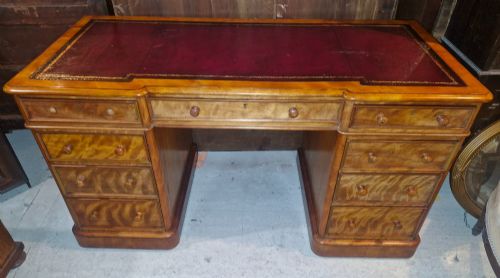
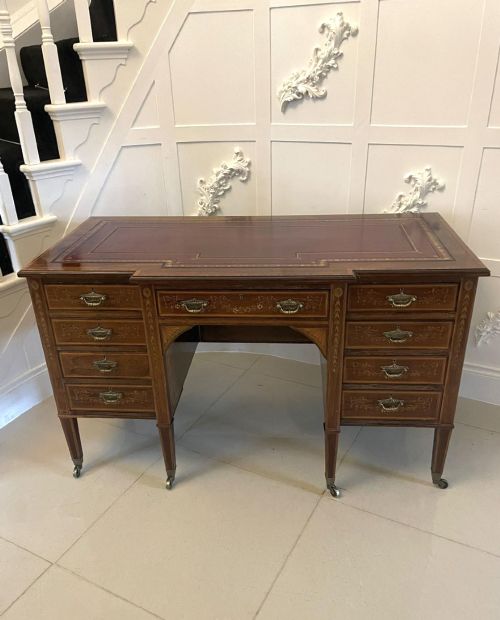
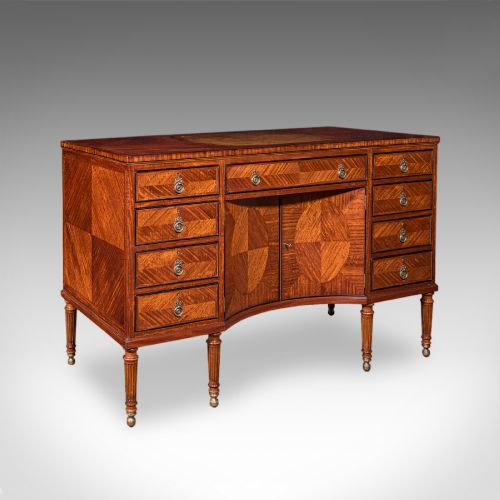
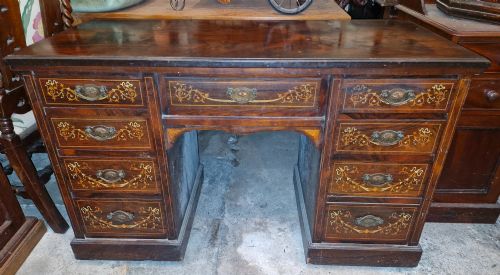




Victorian Satinwood Pedestal Desk
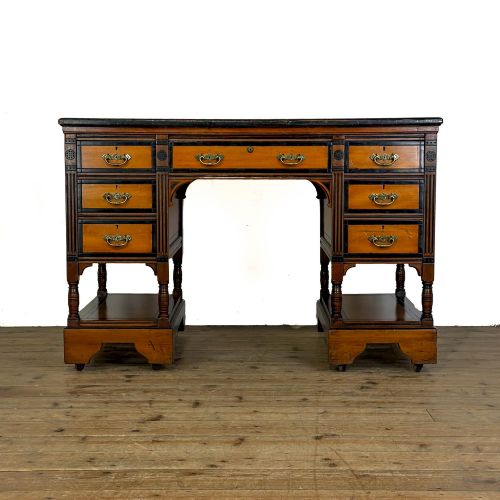
A victorian satinwood pedestal desk brings pale timber, fine marquetry and organised drawers into a study, offering a refined writing surface built for daily correspondence.
Victorian Satinwood Pedestal Desk
A victorian satinwood pedestal desk combines a spacious writing surface with two banks of drawers supporting the top. These pieces emerge primarily from the nineteenth century, spanning Victorian and Edwardian periods.
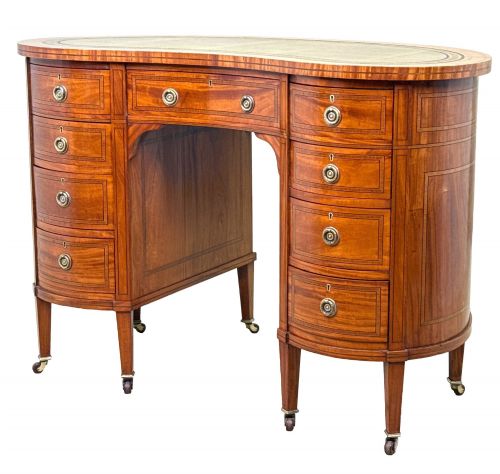
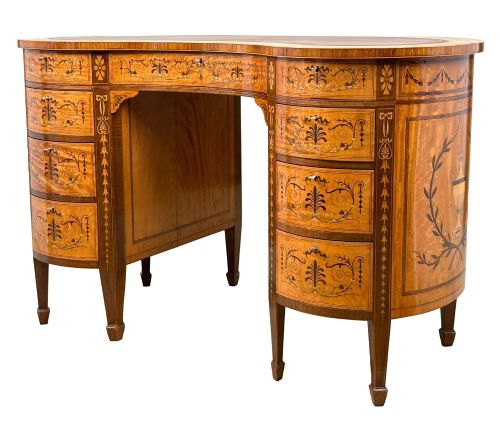
Makers utilised pale satinwood alongside related timbers like satin birch and mahogany, often incorporating intricate marquetry or bone inlay. The forms range from traditional kneehole writing desks to kidney-shaped tables and double-sided partners desks.
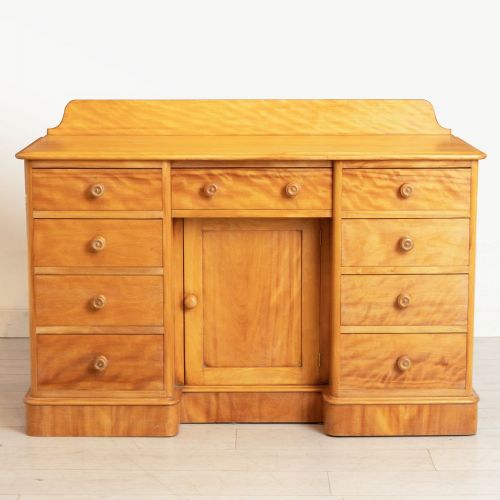
The version most commonly met on this page relies on a satinwood or satin birch primary surface, structured with multiple drawers and frequently influenced by Sheraton Revival or Aesthetic Movement design principles.
What varies in quality
The calibre of a victorian satinwood pedestal desk rests on the selection of timber figures and the precision of the inlay work. Finer examples display meticulous marquetry, hand-painted motifs and well-matched grain patterns across every drawer front.
Structural distinction appears in the crispness of the mouldings, the integrity of the secondary woods inside the drawers and the presence of maker stamps or signatures from established firms.
Victorian Satinwood Pedestal Desk Retail Price Guide 2026
Typical asking prices for victorian satinwood pedestal desk among the pieces listed under this phrase on Sellingantiques today, from the lower quarter to the upper quarter. They describe what is for sale here now, not the wider market.
Listings span the Victorian and Edwardian eras, incorporating materials such as satinwood, satin birch, mahogany, rosewood, walnut, brass and leather.
Heals·Edwards and Roberts·Waring and Sons·John Taylor of Edinburgh
The Victorian Satinwood Pedestal Desk Glossary
- Satinwood
- A dense, lustrous tropical timber with a natural golden sheen. Cabinet makers prized it for fine veneering and decorative banding throughout the nineteenth century.
- Pedestal desk
- A form comprising two freestanding drawer units supporting a central writing slab. It provides substantial storage space beneath the working surface.
- Marquetry
- The art of forming decorative patterns using fitted pieces of various coloured veneers. Craftsmen applied these intricate designs to top surfaces and drawer fronts.
- Kneehole
- A recessed space beneath the centre of a desk designed to accommodate the user's legs. Flanking pedestals enclose this central opening.
- Sheraton Revival
- A late nineteenth-century design movement inspired by the lighter furniture styles of the eighteenth-century designer Thomas Sheraton. Pieces typically feature delicate inlay and tapered legs.
Victorian Satinwood Pedestal Desk: Frequently Asked Questions
What is a pedestal desk?
A pedestal desk is a heavy freestanding writing table supported by two separate columns of drawers. The user sits in the central kneehole space between the two drawer banks.
This arrangement maximises workspace while keeping reference materials and stationery within arm's reach.
How do I care for satinwood?
Satinwood requires gentle dusting with a dry, soft cloth and protection from direct sunlight and excessive heat. Maintaining stable room humidity prevents the timber and fine veneers from drying out.
Avoid applying silicone-based polishes, opting instead for occasional applications of traditional furniture wax.
What is a partners desk?
A partners desk is a double-sided writing table designed for two people to work opposite one another. The drawers and cupboards extend around all sides of the pedestals.
These pieces typically occupied the centre of large libraries or estate offices rather than resting against a wall.
How do I identify a Sheraton Revival piece?
Sheraton Revival furniture dates primarily to the late nineteenth and early twentieth centuries, mimicking earlier eighteenth-century elegance. Look for lighter woods, satinwood veneers, painted floral details and geometric marquetry banding.
These pieces often display refined proportions and delicate stringing rather than heavy Victorian mass.