


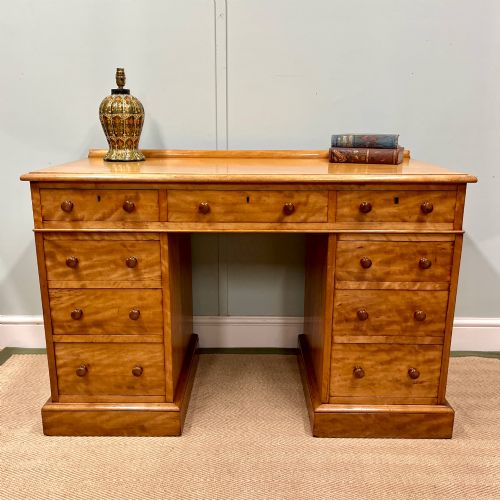


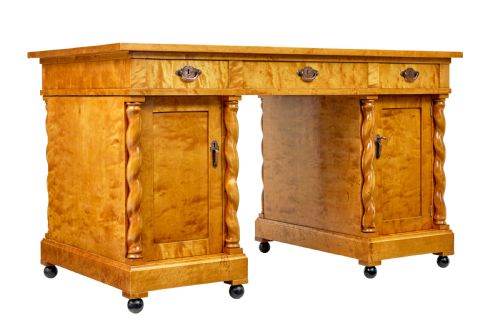
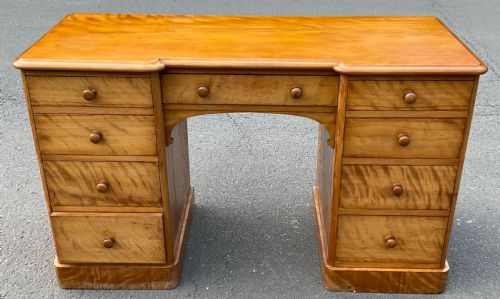


Satin Birch Study Desk
These satin birch study desk pieces offer striking grain and practical workspace, bringing warmth and clean lines to a room.
Satin Birch Study Desk
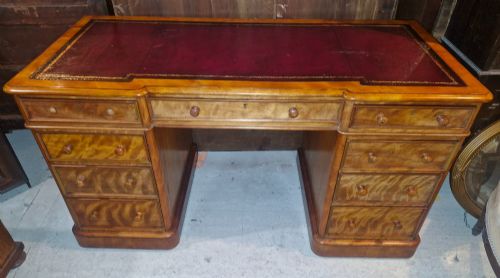
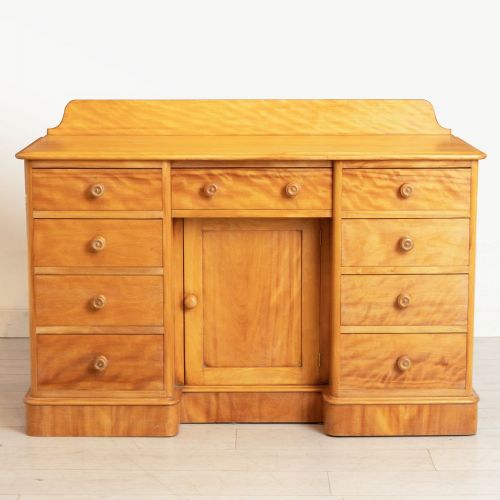
A satin birch study desk brings together pale timber and purposeful workspace, appearing across the Victorian, Late Victorian, and Edwardian eras. Buyers searching for a satin birch study desk will commonly encounter pedestal desks and writing tables built during the nineteenth century and the early twentieth century.
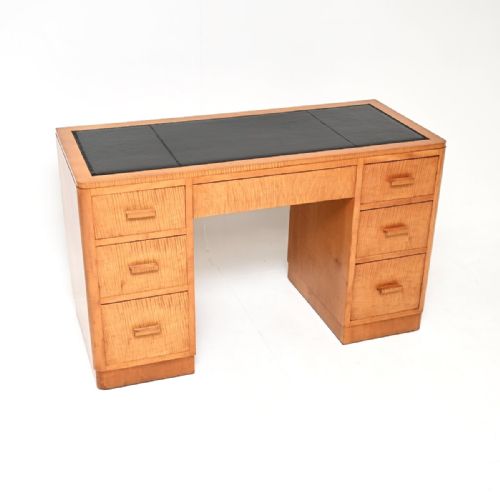
The surviving examples range from sturdy kneehole pedestal forms to simpler writing tables. Makers utilised distinctive light timbers, occasionally pairing the wood with contrasting inlay or leather tops.
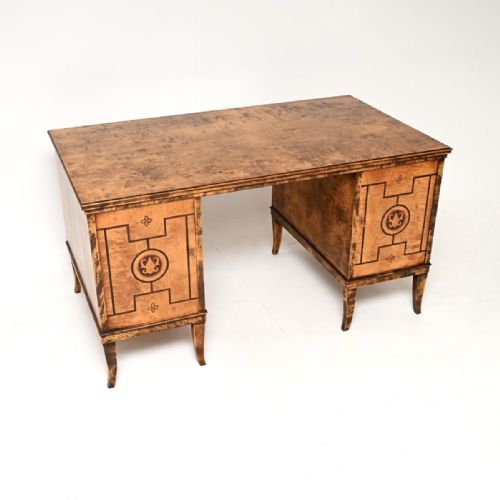
Originating from British workshops and Scandinavian makers, these pieces reflect both formal Victorian design and clean Biedermeier or Art Deco lines. The variety spans simple writing surfaces designed for home correspondence to heavy pedestals intended for library use.
How they were made
Constructed primarily from satin birch and birch, these desks rely on dense hardwoods selected for their luminous, figured grain. Workshops often incorporated secondary timbers such as pine for internal drawer framing and hidden structural components.
Surface decoration frequently includes ebony inlay and contrasting woods to define drawer borders and panel edges. Leather writing inserts appear on many pedestals, secured with tooled borders, while brass handles and escutcheons complete the drawer fronts.
Satin Birch Study Desk Retail Price Guide 2026
Typical asking prices for satin birch study desk among the pieces listed under this phrase on Sellingantiques today, from the lower quarter to the upper quarter. They describe what is for sale here now, not the wider market.
Some nineteenth century writers clearly lost their keys frequently, as replacement brass escutcheons outnumber the original working locks.
What varies in quality
The distinction between ordinary and exceptional pieces rests on the choice of timber and the precision of the cabinetwork. Desks featuring highly figured, book-matched satin birch veneers across the pedestals and writing surfaces demonstrate superior material selection.
Construction details such as dovetailed drawer boxes, integrated pedestals, and crisp inlay distinguish ambitious workshop production from utilitarian office furniture. Maker stamps from established firms also separate standard vernacular desks from documented examples of high craftsmanship.
Heals·Heal and son·J Shoolbred·Howard & Sons
The Satin Birch Study Desk Glossary
- Satin birch
- A light-coloured hardwood with a shimmering, chatoyant grain utilised for decorative cabinetwork and fine furniture. It was especially favoured during the Victorian and Edwardian periods for writing furniture.
- Pedestal desk
- A heavy freestanding writing desk comprising two supporting banks of drawers beneath the main surface. A central kneehole provides space for the user.
- Writing table
- A lighter form of table designed primarily for correspondence rather than storage. These typically feature slender legs rather than heavy pedestals.
- Kneehole
- The central recessed space beneath a desk top where the user sits. It is often flanked by drawers or cupboards.
- Escutcheon
- A protective plate surrounding a keyhole. On these desks they are commonly cast from brass.
- Biedermeier
- A Central European style emphasising utilitarian comfort and clean architectural lines without excessive ornamentation. Furniture in this style relies on the natural beauty of the timber.
Satin Birch Study Desk: Frequently Asked Questions
What is a satin birch study desk?
A satin birch study desk is a nineteenth or early twentieth century writing table or pedestal desk built from pale, figured birch timber.
These pieces range from compact Victorian writing tables to substantial pedestal desks featuring leather inserts and multiple drawers.
How do I date a satin birch desk?
Dating relies on construction methods, hardware styles, and the specific design period indicated by the piece. Victorian examples often display heavy pedestals and brass escutcheons, while later twentieth century pieces show simpler Art Deco or Scandinavian lines.
Cabinetmaking techniques such as hand-cut dovetails and timber selection also help establish the decade of manufacture.
Where were these desks made?
These desks originate primarily from British workshops as well as Scandinavian makers influenced by Biedermeier and classicist styles.
Maker stamps on drawers or cabinet carcases occasionally identify specific London firms and international cabinetmakers.
How do I care for satin birch furniture?
Maintenance requires keeping the timber away from direct sunlight and extreme temperature changes to protect the delicate grain and finish. Regular dusting with a soft, dry cloth preserves the polished surface.
Leather writing inserts benefit from occasional conditioning with neutral balms to prevent cracking.