

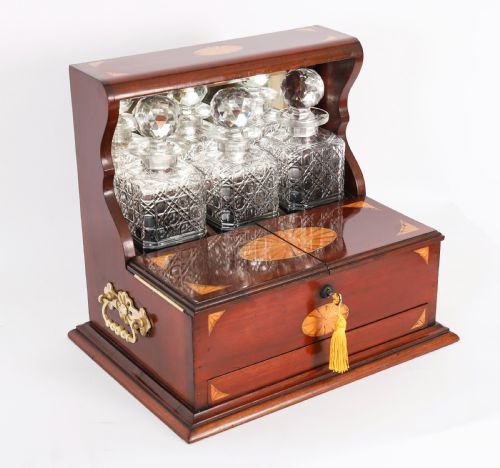


Victorian Satinwood Box
A victorian satinwood box brings a luminous, golden warmth into a room, offering both practical storage and fine nineteenth-century cabinet-making.
Victorian Satinwood Box
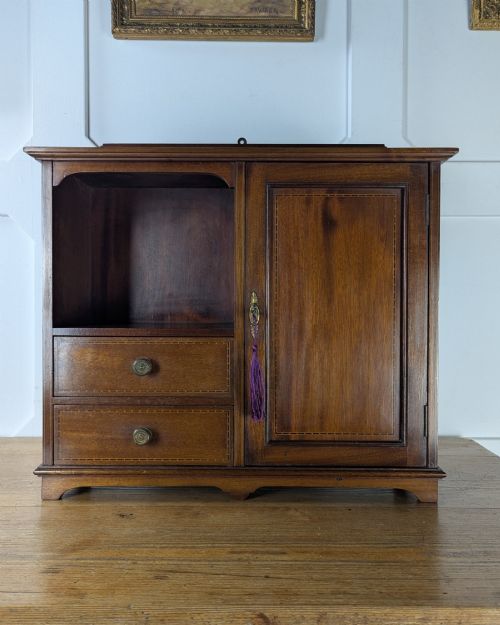
A victorian satinwood box encompasses a wide range of functional and display pieces, from small needlework and stationery containers to larger storage trunks and writing boxes. The grain of the wood provides a distinctive pale, reflective surface that cabinet-makers utilised to catch the light.
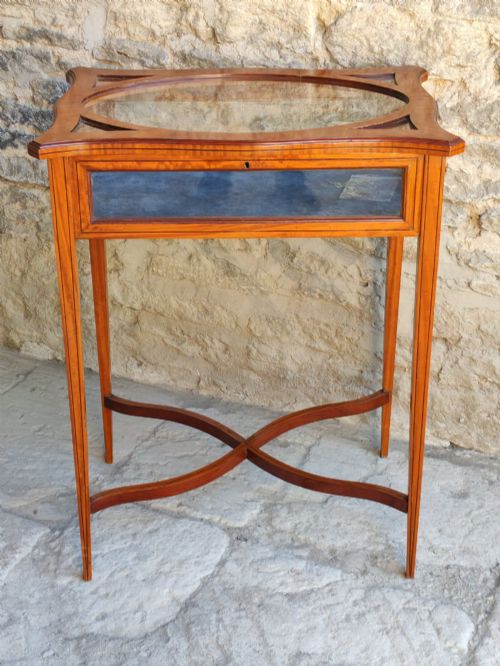
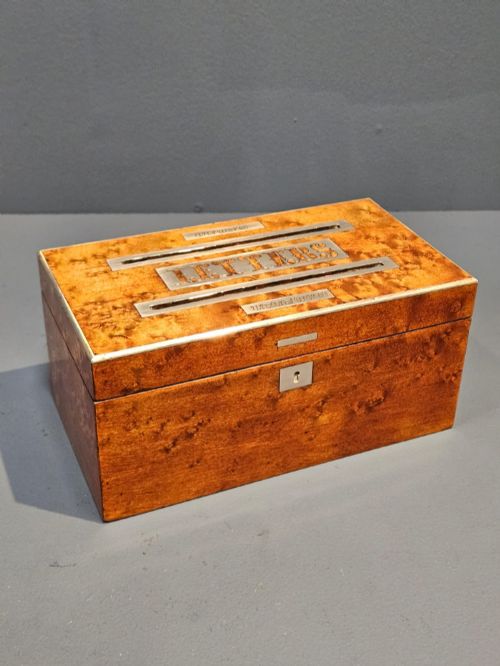
Most examples date across the nineteenth century, including the Victorian period proper, alongside related items from the Regency era and the later revival styles. You will encounter forms designed for specific domestic tasks, such as letter boxes, decanter tantaluses, and bijouterie tables.
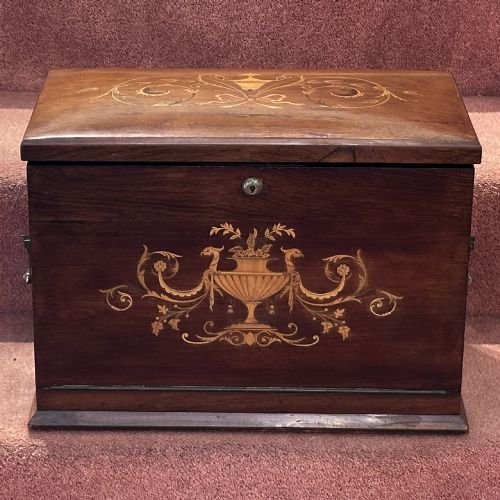
Makers often combined satinwood with contrasting timbers like mahogany, rosewood, and ebony to frame the primary golden panels. These pieces served practical purposes in the drawing room or study while displaying the owner's taste through careful timber selection and inlay.
How they were made
Makers constructed these boxes using solid timbers and carefully cut veneers applied to stable secondary woods, relying on the natural chatoyancy of satinwood to create depth. Grain direction was planned to highlight the natural figure, particularly in burr varieties.
Many items incorporate brass for mounts, handles, and locks, alongside delicate stringing and marquetry in contrasting dark woods such as ebony. Glass panels appear in display tables and decanter sets, while fabric linings cushion the interiors of writing and sewing boxes.
Listings feature items spanning the nineteenth century, incorporating periods from Regency to Late Victorian alongside Sheraton Revival and Gothic Revival styles.
What varies in quality
The distinction between standard items and finer examples lies in the selection of the timber and the precision of the joinery and inlay. Highly figured burr satinwood and meticulous multi-wood stringing signal superior workshop production.
Hardware and interior fittings also indicate quality, with substantial brass mounts, original locks, and well-thought-out internal compartments elevating a piece. The crispness of hand-painted details or carved elements separates ordinary utility boxes from high-status cabinet work.
The Victorian Satinwood Box Glossary
- Satinwood
- A dense tropical timber known for its pale yellow colour and high natural sheen. It takes a fine polish and was heavily used in high-end nineteenth-century cabinet work.
- Bijouterie table
- A glass-topped display table designed to showcase small decorative objects, medals, or jewellery. These tables often feature satinwood frames and internal fabric linings.
- Tantalus
- A locking drink cabinet that holds decanters securely while displaying them to view. The mechanism prevents the removal of the bottles until the frame is unlocked.
- Stringing
- Thin lines of contrasting wood inlaid into the surface of furniture to create geometric borders. This technique frequently frames panels of satinwood on boxes and tables.
- Lapdesk
- A portable writing surface that opens to reveal a slanted writing slope and internal compartments for ink and paper. They were built for travel or use in the lap.
Victorian Satinwood Box: Frequently Asked Questions
How do I care for satinwood?
Keep the wood away from direct sunlight and extreme temperature changes to prevent the timber from drying out or fading. A light application of appropriate wax maintains the natural sheen without building up a heavy residue.
Avoid using modern liquid polishes or silicone sprays, which can damage the historic finish and seep into the grain or inlay work.
Where were these boxes used?
These pieces belonged in the formal reception rooms, private studies, and bedrooms of nineteenth-century homes. Writing boxes sat on desks, while stationery and letter boxes kept correspondence orderly in public spaces.
Larger trunks and chests remained in bedrooms or dressing rooms for personal storage, and bijouterie tables stood in drawing rooms to entertain guests.
Are the interiors usually original?
Many surviving boxes retain their original fabric linings, paper compartments, and velvet or silk pads. Over the decades, some heavily used writing slopes and sewing boxes received replacement linings during routine maintenance.
Original internal fittings with matching wood dividers and intact glass inkwells add considerable interest for collectors seeking untouched examples.
What is Sheraton Revival style?
Sheraton Revival pieces draw inspiration from the late eighteenth-century designs of Thomas Sheraton, enjoying great popularity during the late Victorian era. They make heavy use of satinwood panels, delicate floral painting, and geometric inlay.
This later Victorian interpretation often exhibits lighter construction and different secondary woods compared to original eighteenth-century furniture.