






Victorian Ruby Flash Glass
Victorian ruby flash glass combines deep red colour with clear crystal beneath, offering striking visual contrast for collectors of nineteenth-century tableware.
Victorian Ruby Flash Glass
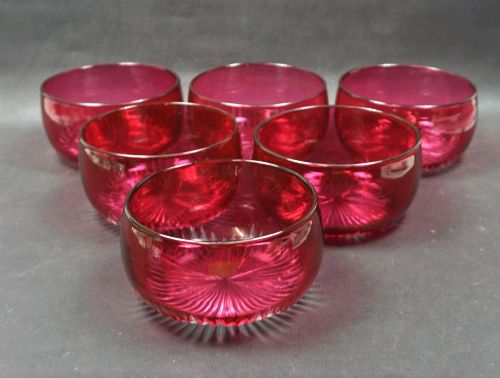
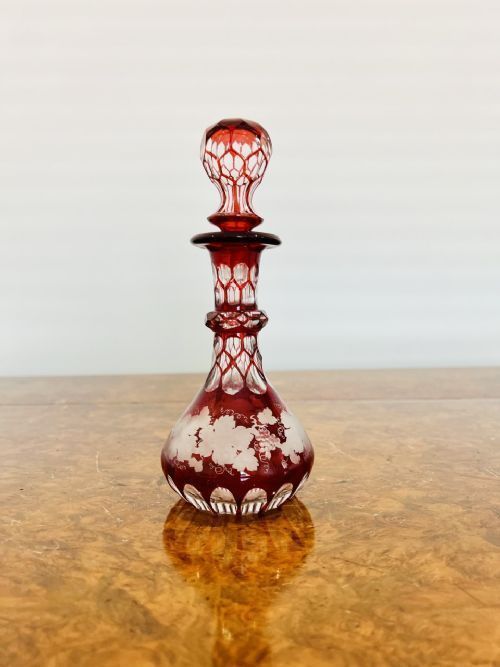
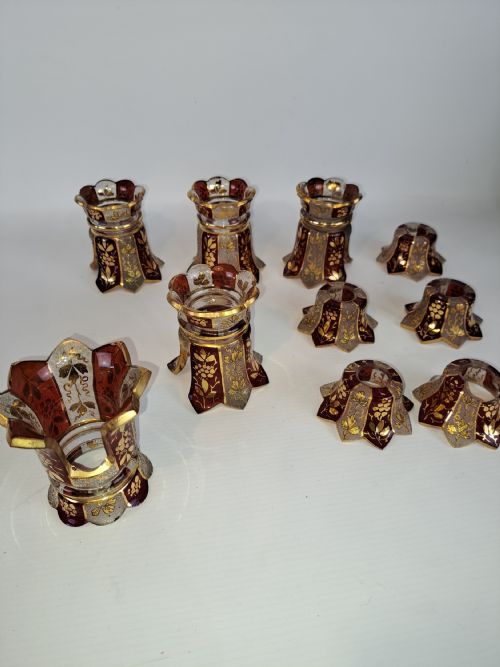
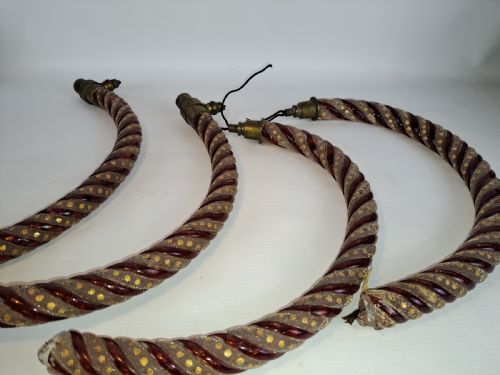
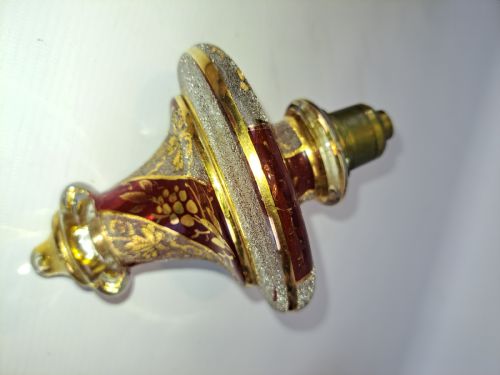
Victorian ruby flash glass comprises functional and decorative objects such as decanters, vases, scent bottles, and chandelier components originating from English and Bohemian workshops during the nineteenth century.
Buyers frequently encounter matching pairs of decanters, tumblers, and overlay vases alongside architectural lighting elements like chandelier bowls, stems, and hanging bells.
The selection ranges from mid-nineteenth-century English tablewares to Bohemian decorative pieces showcasing cut, etched, and gilded surfaces.
Materials and Techniques
Makers applied a thin layer of ruby glass over clear crystal or white glass before cutting away sections to reveal the contrasting base material underneath.
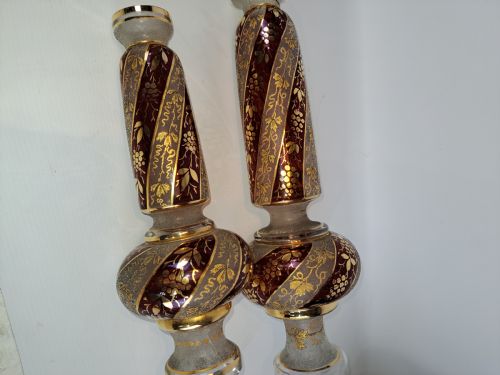
Craftsmen decorated the exposed surfaces using wheel-engraving, acid-etching, and gold leaf application to depict motifs such as birds, vines, and geometric patterns.
Victorian Ruby Flash Glass Retail Price Guide 2026
Typical asking prices for victorian ruby flash glass among the pieces listed under this phrase on Sellingantiques today, from the lower quarter to the upper quarter. They describe what is for sale here now, not the wider market.
Listings feature nineteenth-century items utilising ruby glass, cranberry glass, gold leaf, enamel, and brass across decanters, vases, and chandelier components.
Distinctions in Execution
The crispness of the cut-through flash layer and the precision of the engraved or gilded detailing determine the visual refinement of each piece.
Integration of precious metals like silver mounts or gold leaf accents distinguishes standard tableware from more elaborate decorative productions.
Charles May
The Victorian Ruby Flash Glass Glossary
- Flash glass
- A thin layer of coloured glass fused over a thicker body of clear or contrasting glass before being cut or etched. This technique allowed artisans to create deep colour without heavy material costs.
- Overlay
- A method where a full outer layer of coloured glass covers a clear crystal body, designed to be partially carved away. It differs from flashing by employing a thicker external coating.
- Lustre
- A mantel ornament featuring a central vase surrounded by hanging glass prisms that reflect candlelight. These pieces often incorporate gilt decoration and cut panels.
- Cranberry glass
- A transparent pinkish-red glass coloured with gold chloride during production. It appears frequently in nineteenth-century English decanters and tableware.
Victorian Ruby Flash Glass: Frequently Asked Questions
How do I clean ruby flash glass?
Wash these pieces gently by hand using lukewarm water and mild soap to protect the delicate gold leaf and etched surfaces. Avoid abrasive sponges or immersion in hot water, which can damage the coloured flash layer.
Dry each item immediately with a soft lint-free cloth to prevent water spots on the cut crystal and gilded details.
Are these decanters safe for modern use?
Many nineteenth-century decanters remain structurally sound for serving wine or spirits on the dining table. Inspect the interior beforehand to ensure the vessel is clean and free from old residue.
Keep in mind that pieces featuring exterior gilding require careful handling during pouring to preserve the decoration.
How can I distinguish English from Bohemian pieces?
English items from this period often lean towards refined botanical engraving on cranberry or overlay crystal bodies. Decanters and spirit bottles frequently follow domestic dining trends of the mid-nineteenth century.
Bohemian pieces tend to display bolder architectural forms, such as chandelier components, lustres, and heavy panelled vases enriched with extensive gilding.
What causes the different shades of red?
The colour variation stems from the specific metallic compounds and fusing techniques used in the glasshouse. Gold chloride created pinker cranberry tones, while other mineral recipes produced deep ruby hues.
The thickness of the flash layer also alters how the light passes through the red exterior into the clear crystal below.