





Antique Ruby Glass Carafe
An antique ruby glass carafe brings deep, rich colour and refined Victorian or Edwardian craft to a table setting.
Antique Ruby Glass Carafe
An antique ruby glass carafe encompasses deep red vessels made primarily during the Victorian and Edwardian eras. Buyers search this phrase to find serving bottles, claret jugs and wine decanters that combine functional service with striking visual depth.
The pieces on this page span the nineteenth and early twentieth centuries, including English examples from around eighteen sixty up to nineteen ten. Forms range from simple serving bottles to pairs of matched decanters mounted in silver plate or sterling silver.
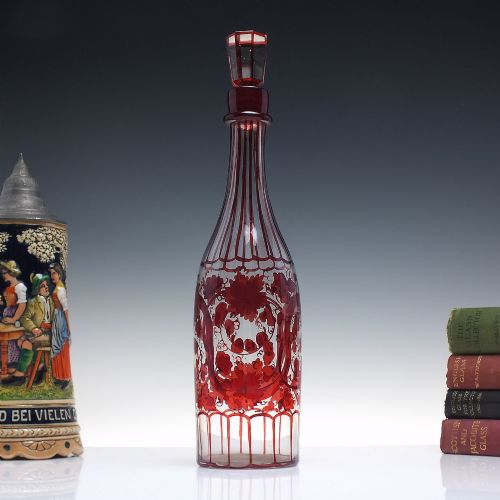
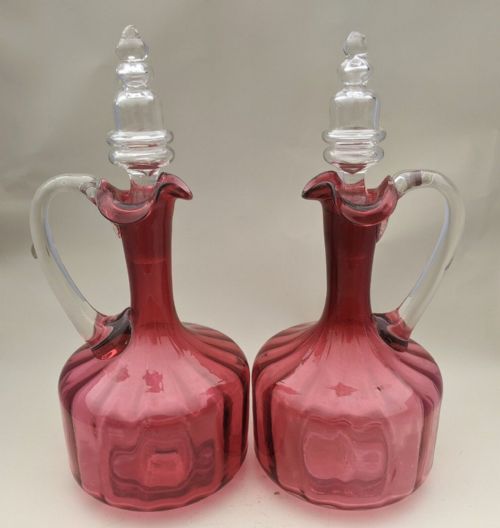
Visitors meet varied iterations, from overlay glass showing clear crystal beneath a ruby surface to hand painted or engraved pieces decorated with fruiting vines. Cranberry glass and ruby glass feature heavily among these listings, often shaped into traditional decanter forms.
How they were made
Maker techniques rely on glassblowing and layered manufacturing, specifically seen in cranberry over crystal glass and ruby overlay. Artisans fused coloured glass with clear glass blanks before cutting through the outer ruby layer to reveal the clear material beneath.
Surface ornamentation involved hand painting, wheel engraving with botanical motifs such as fruiting vines, and the addition of sterling silver or silver plate mounts. These metal collars and pourers were securely fitted to the glass necks during the Victorian and Edwardian periods.
Antique Ruby Glass Carafe Retail Price Guide 2026
Typical asking prices for ruby glass carafe among the pieces listed under this phrase on Sellingantiques today, from the lower quarter to the upper quarter. They describe what is for sale here now, not the wider market.
Listings feature items from the Victorian and Edwardian periods, utilising cranberry glass, clear glass, cut crystal, enamel, and sterling silver.
What varies in quality
Quality separates simple production items from superior pieces through the depth of the ruby hue and the precision of the glass cutting. Overlay work requires exact execution so that the exposed clear crystal beneath creates sharp contrast against the red body.
The refinement of surface decoration distinguishes better examples, observable in the crisp detail of wheel engraved fruiting vines or careful hand painting. Additionally, the presence of original sterling silver mounts adds weight to the evaluation of a piece.
The Antique Ruby Glass Carafe Glossary
- Ruby glass
- A deep red glass coloured by the addition of gold chloride during manufacture. This rich tint defines the primary visual characteristic of these carafes.
- Cranberry glass
- A transparent pinkish red glass produced using copper or gold, widely utilised for Victorian tableware. It shares close visual ties with ruby glass.
- Overlay glass
- A technique where a layer of coloured glass is fused over a clear or contrasting glass body. Artisans then cut through the top layer to create patterned designs.
- Claret jug
- A pouring vessel specifically designed for serving red wine at the dining table. Many examples feature handle and spout mounts made from silver plate or sterling silver.
- Decanter
- A stoppered glass bottle used for holding and serving wine or spirits. They appear frequently in Victorian and Edwardian dining contexts.
Antique Ruby Glass Carafe: Frequently Asked Questions
How do I clean an antique ruby glass carafe?
Wash the glass gently in warm, soapy water using a soft cloth, avoiding abrasive pads that might scratch the surface. Take particular care around silver mounts and hand painted or engraved sections.
Dry the vessel thoroughly with a lint free cloth to prevent water spots on the ruby surface or crystal elements.
Were these carafes used for wine?
These vessels served primarily as decanters and serving bottles for wine, particularly claret, during formal meals. Their deep red colour helped mask the appearance of sediment in older vintages.
They functioned both as functional tableware items and as decorative objects displayed on sideboards.
How can I tell Victorian from Edwardian pieces?
Victorian pieces generally date from eighteen thirty to nineteen o'clock, often displaying heavier forms, rich cranberry hues, and elaborate engraving. Edwardian examples tend to lean towards nineteen hundred to nineteen ten with refined proportions and sometimes crisp silver mounts.
Hallmarks on silver collars provide precise dating evidence for mounted specimens.
What is overlay glass?
Overlay glass involves fusing a thin layer of coloured glass, such as ruby, over a thicker base of clear crystal. The maker cuts geometric or botanical patterns through the top layer to reveal the clear glass underneath.
This method creates high contrast and tactile depth across the body of the vessel.