



Victorian Royal Portrait
A victorian royal portrait captures the public face of monarchy and military prestige through oils, ceramics, and sculpture.
Victorian Royal Portrait
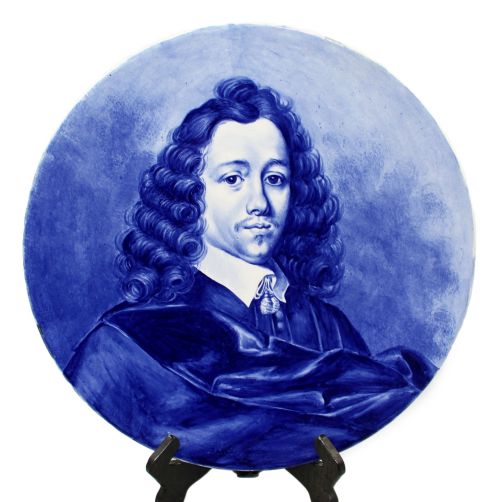
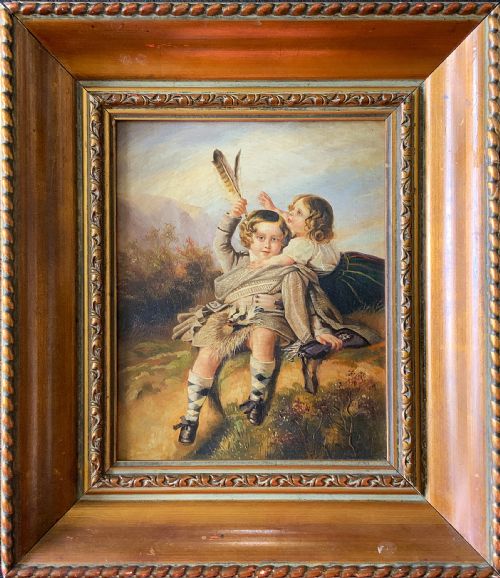
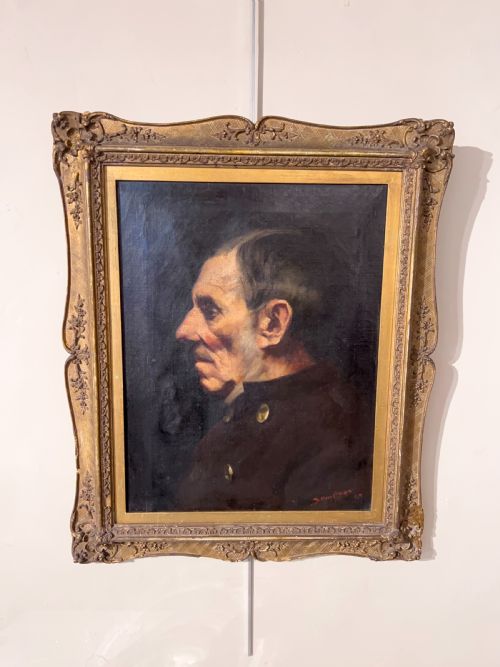
A victorian royal portrait encompasses framed canvas paintings, earthenware figurines, and porcelain plaques depicting monarchs, princes, and allied military figures. The most frequent iteration on this page is the Staffordshire pottery portrait figure, depicting rulers like Queen Victoria or Napoleon III in moulded clay.
Beyond earthenware figures, the material spans oil paintings on canvas and board, Parian busts, lithographs, and decorative chargers. These works record both British royalty and continental nobility through varied Victorian styles.
The form stretches from modest flatback Staffordshire groups meant for cottage mantels to exhibition-scale oil paintings and porcelain presentation pieces.
Materials and Construction
Pottery figures and jugs employ moulded earthenware finished with hand-painted glazes and sometimes gilt accents. Staffordshire potters cast these in sections, resulting in hollow figures with characteristic flat backs for mantel placement.
Fine art works rely on oil paint applied to stretched canvas or wooden board, frequently housed within heavy gilt frames. Lithographs and book plates utilise paper print methods, while commemorative plaques and vases utilise hard-paste porcelain from factories like KPM and Royal Vienna.
Several Staffordshire groups immortalise international diplomacy by placing Queen Victoria alongside foreign rulers on matching ceramic goats.
Assessing Quality and Execution
Quality in painted works rests upon the precision of the brushwork and the anatomical accuracy of the sitter, distinguishing academy artists from commercial studio output. In ceramics, the clarity of the mould impression and the neatness of the hand-applied enamel colours separate standard figures from superior examples.
The sophistication of the secondary materials, such as the depth of gilding on a porcelain plaque or the weight and carving of a gilt wood frame, directly reflects the original investment in the piece.
The Victorian Royal Portrait Glossary
- Flatback
- A Staffordshire ceramic figure designed with an unglazed or lightly finished flat rear side meant to sit flush against a wall.
- Parian
- A fine-grained unglazed white porcelain developed to imitate marble, often used for portrait busts.
- Charger
- A large decorative ceramic plate intended for display on a wall or dresser rather than for dining use.
- Lithograph
- A print made from a stone or metal plate using an oil-based image, common for 19th-century royal reproductions.
- Order of the Garter
- An ancient British order of chivalry frequently denoted in royal portraits by a blue ribbon or sash worn across the chest.
Victorian Royal Portrait: Frequently Asked Questions
What is a Staffordshire royal portrait figure?
These are earthenware ceramic sculptures produced in Staffordshire potteries during the 19th century. They depict reigning monarchs, political figures, and military alliances for the domestic market.
Potters cast the figures in moulds and painted them by hand with basic mineral colours, often adding metallic gilt highlights to uniforms and crowns.
How were royal portrait paintings displayed?
Original oil paintings and large canvas portraits hung in country houses, institutional halls, and royal residences. They reinforced political loyalty and documented the lineage of the ruling class.
Smaller prints, lithographs, and book plates allowed middle-class households to display the royal family within domestic parlours.
How do I identify a Victorian ceramic figure?
Look for the characteristic Staffordshire earthenware body, often showing crazing in the glaze and hollow construction underneath. Figures frequently feature title inscriptions painted in gold or black on the base.
Subjects commonly include Queen Victoria, Prince Albert, and European leaders associated with British diplomatic ties.
What subjects appear besides British royalty?
Makers frequently portrayed continental European rulers and military commanders, particularly during periods of alliance such as the Crimean War. Figures often group allied leaders together under titles referencing international treaties.
Naval officers, colonial figures, and sporting personalities linked to the royal household also appear across paintings and ceramics.