



19th Century Royal Portrait
These pieces capture sovereign likenesses across oils, ceramics, and bronze, offering a tangible connection to nineteenth-century history that collectors prize for its craftsmanship and lineage.
19th Century Royal Portrait
A 19th century royal portrait brings together oil paintings, earthenware Staffordshire figures, porcelain plaques, bronze busts, and prints depicting monarchs and family members. Sovereigns such as Queen Victoria, Napoleon III, and various princes appear frequently across these diverse material forms.
Makers utilised distinct mediums ranging from canvas and glass to enamel and bisque porcelain to immortalise royal subjects. Buyers encounter flatback pottery figures, framed canvas paintings, and detailed cabinet plates reflecting periods like the Victorian era and Late Georgian decades.
The objects span formal royal commissions to popular Staffordshire pottery group figures created for domestic mantelpieces. These representations vary from grand oil paintings exhibited at academies to intimate portrait miniatures and silhouettes.
Materials and construction methods
Painters applied oil paint and watercolour onto canvas and paper supports, occasionally incorporating gilt frames to house large canvases. Ceramic works combined earthenware and porcelain, frequently featuring hand-painted enamels and intricate gilding.
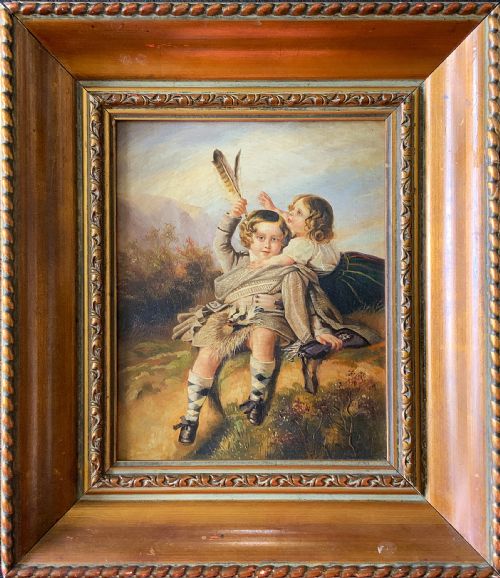
Princes Alfred and Helena hunt in Scottish dress.
Distinctions in craftsmanship and execution
Execution in painting relies upon the precision of brushwork and the anatomical accuracy of the royal subject. Finer canvases demonstrate sophisticated handling of light, fabric texture, and background detail by established artists.
Ceramic quality depends upon the crispness of the mould, the subtlety of hand-painted enamel details, and the preservation of the glaze. Superior porcelain plaques and figures display controlled firing and delicate facial expressions rather than crude stencilling.
Bertram Priestman RA·Frederick Goodall RA·Henry Pierce Bone·WF Mitchell·Samuel Lane·George Dawe·Alexander Melville·William Wissing
The 19th Century Royal Portrait Glossary
- Staffordshire flatback
- Earthenware figures designed with unpainted, flat backs to stand flush against a wall on a shelf. These pieces were moulded in sections and hand-painted.
- Bisque porcelain
- Unglazed, white ceramic fired to a matte finish that resembles marble, often utilised for portrait busts and decorative plaques. This material highlights fine sculptural detail without surface shine.
- Gilt gesso
- Plaster-based material applied to wooden frames and carved before receiving a layer of gold leaf. It provides an ornate border for paintings and mirrors.
- Cabinet plate
- Decorative ceramic plate intended for display in a cabinet rather than for dining. These items frequently feature hand-painted royal portraits and gilt borders.
- Order of the Garter
- Senior order of British knighthood depicted in portraits through specific insignia such as sashes and stars. Recipients wore these symbols of high rank during formal occasions.
19th Century Royal Portrait: Frequently Asked Questions
What is a 19th century royal portrait?
A 19th century royal portrait is a visual representation of a sovereign, prince, or royal family member created during the nineteenth century. These works appear in media ranging from oil paintings on canvas to earthenware figures and bronze busts.
Such pieces served to project political authority, commemorate marriages, or decorate the homes of loyal subjects. They capture the likenesses of figures like Queen Victoria, Napoleon III, and King George IV.
How were Staffordshire royal figures displayed?
Staffordshire royal figures were primarily designed as ornamental items for domestic mantelpieces and shelves. Their flat backs allowed them to sit securely against interior walls.
Makers produced these earthenware pieces in pairs or groups to commemorate significant royal events, such as weddings or political alliances, enabling ordinary households to display allegiance.
How do I identify the period of a portrait?
Identifying the period involves examining the style of dress, the materials used, and any inscribed dates or signatures. Regency and Late Georgian works display distinct neoclassical clothing styles, whereas Victorian pieces reflect later nineteenth-century aesthetics.
Signatures, stamps on porcelain, and canvas stretcher types provide additional clues. Comparing the artistic technique to known works of the era helps narrow down the decade of creation.
How do I care for antique porcelain and paintings?
Antique porcelain and paintings require stable environmental conditions away from direct sunlight and high humidity. Canvases benefit from being kept in rooms with regulated temperatures to prevent cracking in the oil paint.
Ceramics should be dusted gently with a soft, dry brush without using liquid cleaners. Avoiding abrasive materials preserves the delicate hand-painted enamels and gilt surfaces.