

Victorian Round Centre Table
A victorian round centre table commands the middle of a room, bringing circular symmetry and rich timber grain to domestic spaces.
Victorian Round Centre Table
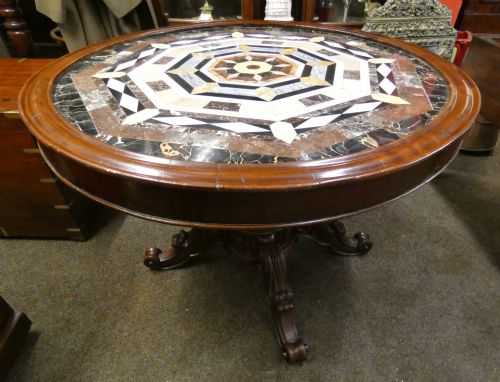
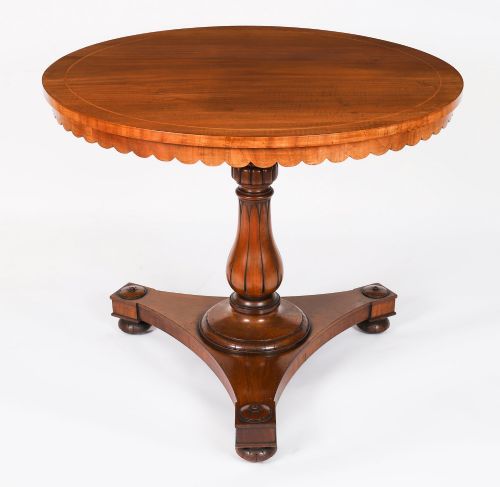
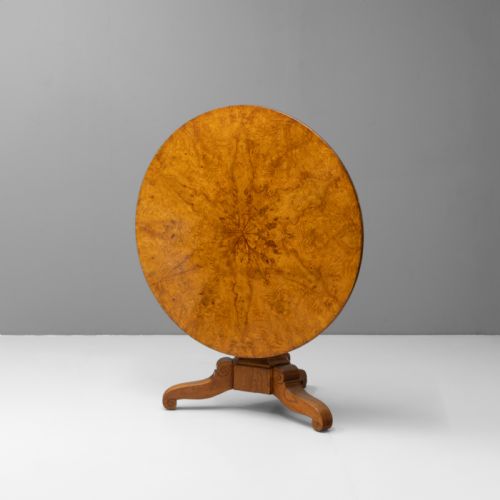
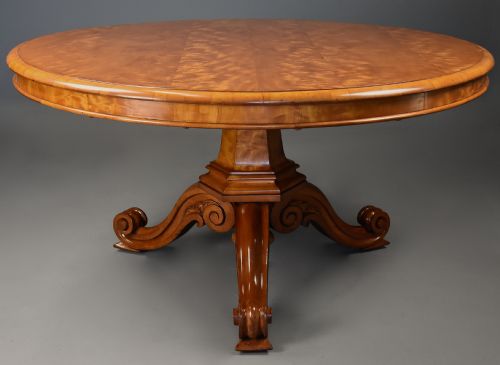
A victorian round centre table stands as a freestanding piece designed to occupy the middle of a room rather than sit against a wall. The selections span the nineteenth century, including Victorian, William IV, and Regency periods.
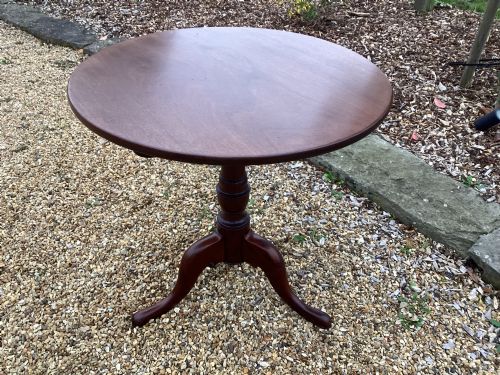
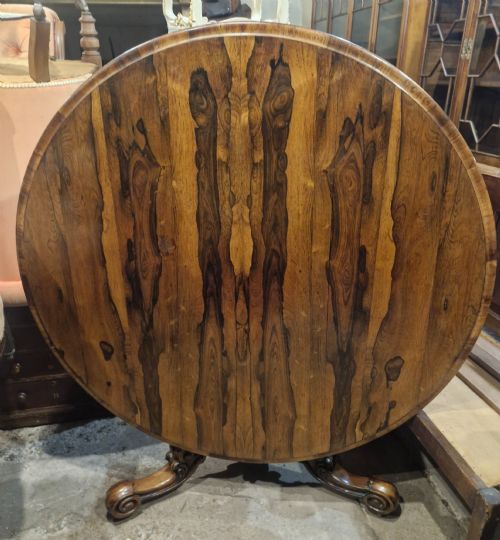
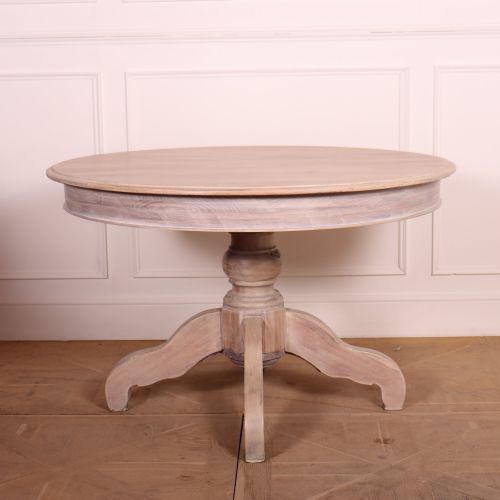
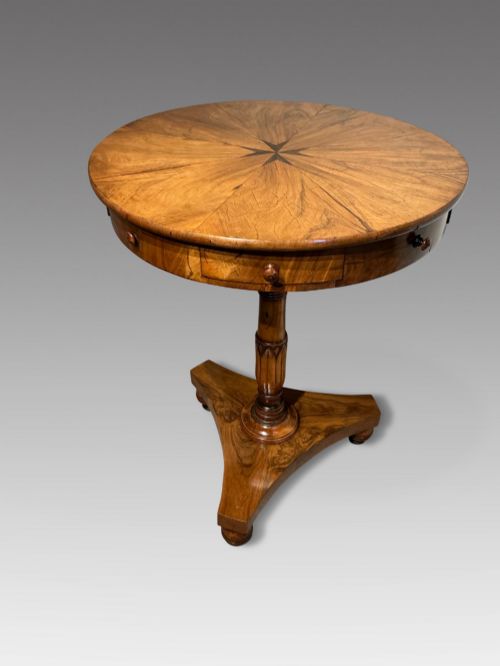
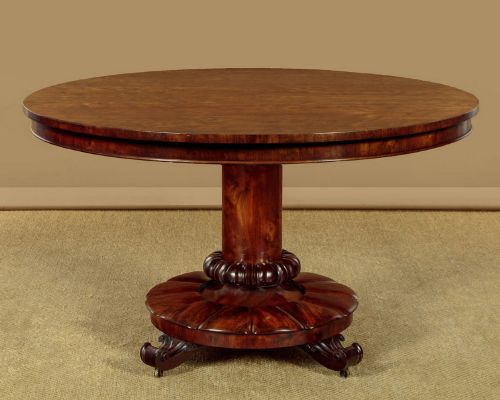
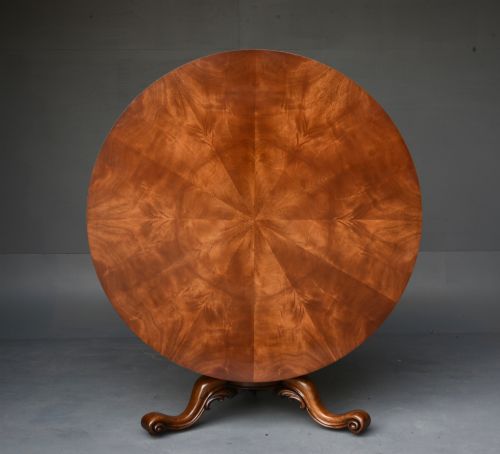
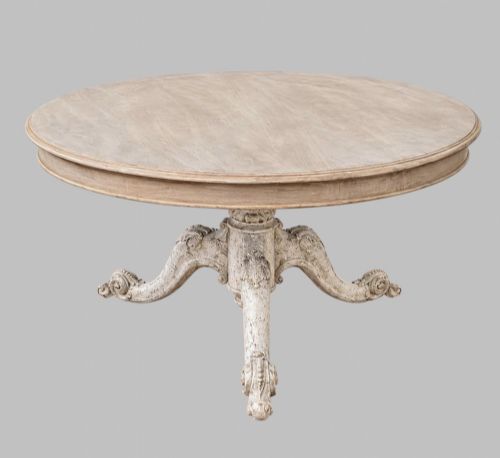
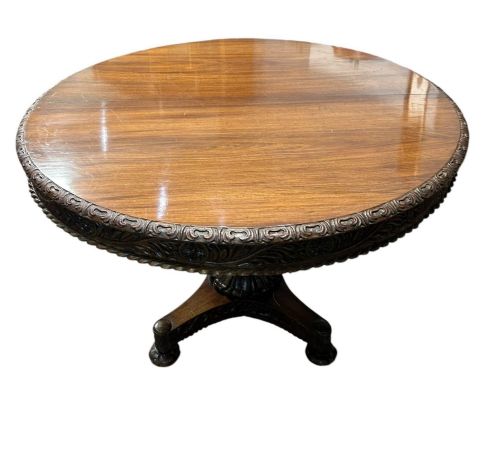
Most examples take the form of circular breakfast tables, dining tables, or tilt-top occasional pieces supported by a central pillar and tripod or platform base. Walnut, mahogany, and rosewood dominate the domestic English and French iterations.
Regional variations appear alongside standard British designs, including Anglo-Indian, Burmese, and New Zealand specimen pieces that utilise local timbers like padauk and yew wood.
Materials and Construction
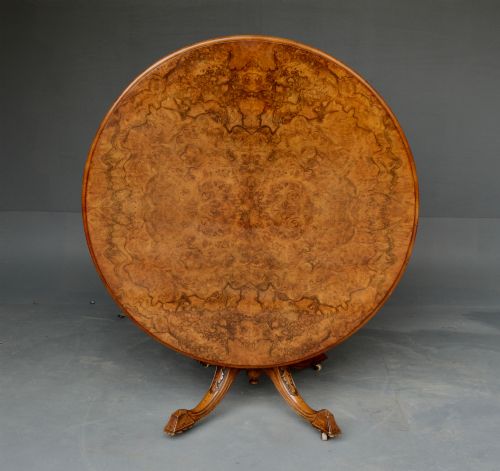
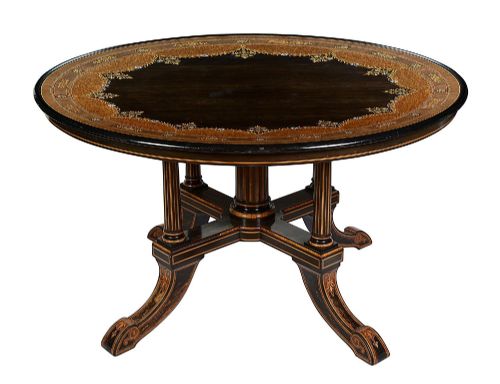
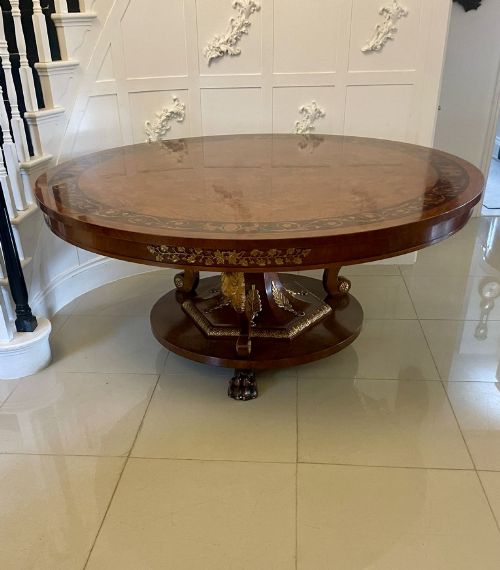
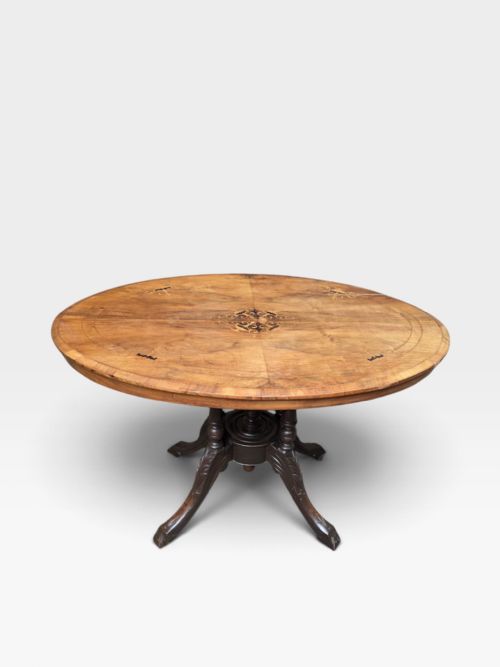
Cabinetmakers constructed these tables using solid hardwoods such as mahogany, walnut, and rosewood, frequently applying burr walnut or flame mahogany veneers to create striking surface patterns. Marquetry inlay utilising exotic woods, brass, and ebony decorates finer tops.
Tilt-top and snap-top mechanisms allowed tables to be folded vertically when not in use, requiring precise joinery and metal catches fitted beneath the circular top. Central pillars often rest on carved tripod legs or heavy platform bases fitted with castors.
Victorian Round Centre Table Retail Price Guide 2026
Typical asking prices for victorian round centre table among the pieces listed under this phrase on Sellingantiques today, from the lower quarter to the upper quarter. They describe what is for sale here now, not the wider market.
Period styles span William IV, Regency, Victorian, and French Second Empire.
Craftsmanship and Proportion
Quality rests in the selection of the timber figures, where symmetrical burr walnut, flame mahogany, or elaborate Killarney marquetry elevate a piece far above plain stock. The depth and crispness of hand-carving on the pillar and base show the artisan's skill.
Structural stability in the central pillar and tilting mechanism marks the difference between standard production and exhibition quality work. Well-balanced proportions ensure the heavy circular top remains steady upon its base.
Gillows·Anton Seuffert·Egan Workshop
The Victorian Round Centre Table Glossary
- Tilt-top
- A table mechanism allowing the circular surface to pivot vertically on its base for storage against a wall.
- Marquetry
- Decorative patterns formed by fitting together thin veneers of various coloured woods and materials onto a solid surface.
- Burr walnut
- Timber taken from a tree growth showing intricate swirling grain patterns highly prized for cabinet veneers.
- Centre table
- A freestanding table finished on all sides, designed to stand clear of walls in the middle of an interior space.
- Tripod base
- A three-legged support structure branching from the bottom of a central pedestal pillar.
Victorian Round Centre Table: Frequently Asked Questions
How do I use a centre table?
A centre table stands naturally in the middle of a room to hold lamps, books, or floral arrangements while remaining accessible from all sides.
They also function as informal breakfast or dining surfaces when paired with chairs in larger spaces.
How do I distinguish Victorian from William IV?
William IV pieces often display heavy scroll carving and robust pedestal bases dating from the 1830s.
Victorian examples span a broader range from mid-century rosewood to later walnut marquetry with lighter proportions.
Where should I place a round table?
Round tables suit entrance halls and principal rooms where foot traffic moves around the perimeter of the furniture.
The absence of sharp corners encourages natural flow in open interior layouts.