



Victorian Rosewood Writing Box
A victorian rosewood writing box offers a handsome desktop companion crafted to hold correspondence, papers, and ink with portable elegance.
Victorian Rosewood Writing Box
When you search for a victorian rosewood writing box, you encounter portable desk furniture designed for letter writing and document storage during the nineteenth century. These items typically open to reveal a sloping writing surface lined with leather, alongside compartments for pens, inkwells, and stamps.
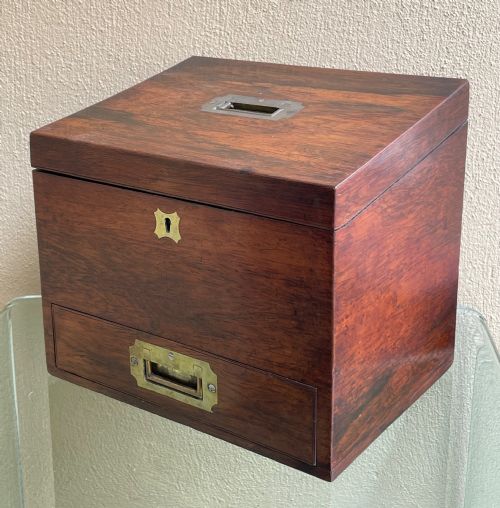
The versions most common on this page span the Victorian and Regency periods, often taking the form of traditional writing slopes or combined stationery and correspondence boxes. Some examples incorporate secret drawers or lower storage compartments intended for jewellery and sewing supplies.
Makers utilised rich timber alongside fitted interiors to create functional pieces for the home or for travel. These boxes reflect the writing habits of an era when personal correspondence required dedicated portable architecture.
How they were made
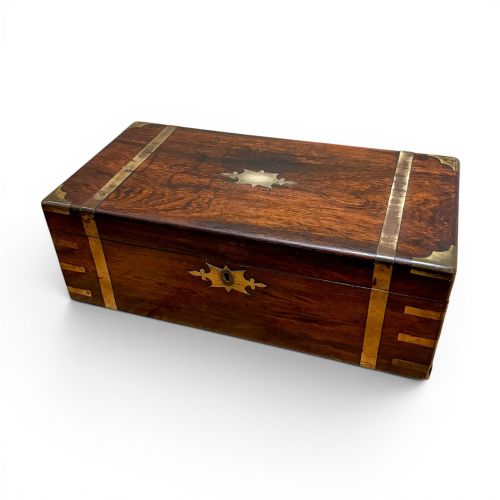
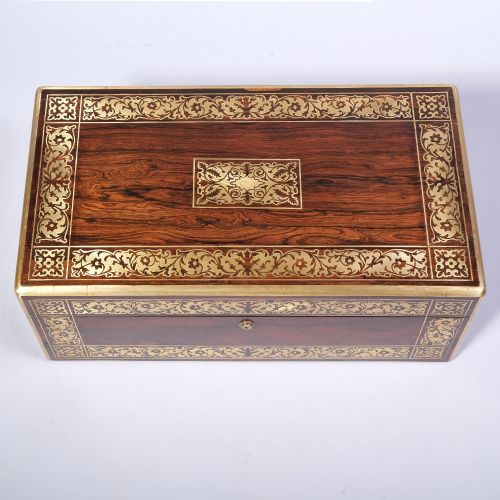
The primary construction relies upon dense rosewood veneers applied to solid carcases, frequently accented with contrasting satinwood or boxwood stringing. Artisans enhanced the structural corners and surfaces with heavy brass binding or flush brass inlay.
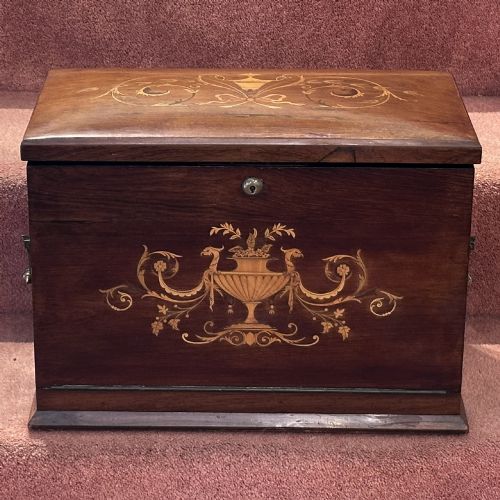
Lustrous decorative highlights appear through mother of pearl, abalone, and intricate Tunbridge Ware marquetry panels set directly into the wood. Interior components involve fitted compartments, velvet or leather writing surfaces, and concealed hidden drawers operated by clever mechanical releases.
Victorian Rosewood Writing Box Retail Price Guide 2026
Typical asking prices for victorian rosewood writing box among the pieces listed under this phrase on Sellingantiques today, from the lower quarter to the upper quarter. They describe what is for sale here now, not the wider market.
Certain correspondence boxes include dedicated slots labelled for answered and unanswered letters to keep Victorian desks remarkably tidy.
What varies in quality
The standard of a victorian rosewood writing box is determined by the crispness of its brass inlay and the precision of its mitred corner joints. Superior examples feature unbroken brass stringing and thick, figured rosewood veneers that wrap seamlessly around the entire body.
Interior execution further distinguishes fine pieces, notably the complexity of secret drawer mechanisms and the completeness of original glass inkwells and pen trays. Heavy brass bound campaign variations demonstrate robust structural framing designed specifically for colonial travel.
George Austin·F Waller
The Victorian Rosewood Writing Box Glossary
- Writing slope
- A portable desk box featuring a hinged slanted writing surface that folds down flat for use. Inside, compartments store pens and stationery.
- Campaign box
- A sturdy portable desk or correspondence chest reinforced with brass corners and flush handles for military or colonial travel. These items often include secure locking mechanisms.
- Tunbridge Ware
- Small wooden items decorated with precise mosaic patterns formed from thousands of tiny coloured wood blocks. This meticulous technique originated in Kent.
- Mother of pearl
- An iridescent inner shell layer utilised by makers to cut decorative inlay motifs for box lids and escutcheons. It catches the light with shimmering colour.
- Secret drawers
- Hidden compartments concealed behind false partitions or released by secret spring buttons within the writing box interior. They provide secure storage for valuables.
Victorian Rosewood Writing Box: Frequently Asked Questions
What is inside a writing slope?
A writing slope opens to reveal a sloping surface covered in leather or velvet, divided compartments for pens and stamps, and glass inkwells.
Many examples also contain removable trays, storage spaces for paper, and hidden secret drawers beneath the stationery partitions.
Were these boxes used for travel?
Campaign and brass bound boxes were built for colonial travel and military deployment. They utilised robust external brass mounts to protect the wood during long journeys.
Smaller ladies travelling boxes served similar portable functions for personal correspondence and light needlework while away from home.
How do you date a rosewood box?
Dating relies upon construction methods, brass inlay styles, and accompanying maker labels. Regency examples tend to feature linear brass stringing, while mid Victorian pieces frequently incorporate mother of pearl.
Documented maker stamps and working keys with original locks help establish precise manufacturing decades within the nineteenth century.