

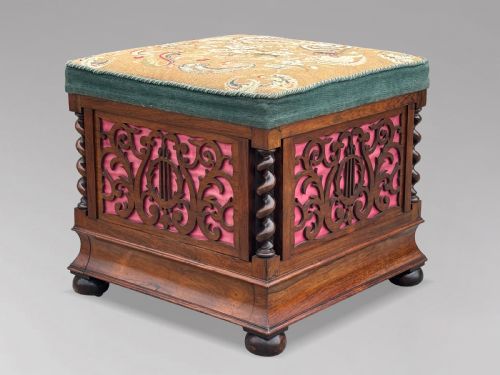


Victorian Rosewood Music Box
A victorian rosewood music box brings rich timber grain and mechanical melody into a room, offering both visual warmth and charming audio.
Victorian Rosewood Music Box
When you search for a victorian rosewood music box, you encounter timber-cased mechanical instruments designed for nineteenth-century parlours. These items include tabletop musical boxes featuring pinned cylinders and comb teeth, alongside related furnishings and accessories from the period.
The selections span mid to late nineteenth-century craftsmanship, predominantly showcasing rosewood veneers paired with marquetry inlay or brass detailing. Alongside standard tabletop boxes, the evidence includes larger cylinder formats with multiple airs and visible bells, as well as occasional cabinets and stools.
How they were made
Maker workshops built these casings using dense rosewood timbers, frequently applying marquetry and boxwood stringing to decorate the lids and sides. Brass hardware, glass covers, and interior velvet linings provided functional and aesthetic contrast to the dark timber.
Internal mechanisms relied on precision steel combs tuned to play specific musical airs via rotating cylinders. Key wound systems and complex gear trains transferred kinetic energy to produce automated melodies.
Victorian Rosewood Music Box Retail Price Guide 2026
Typical asking prices for victorian rosewood music box among the pieces listed under this phrase on Sellingantiques today, from the lower quarter to the upper quarter. They describe what is for sale here now, not the wider market.
A conductor's baton shares space with heavy brass-pinned cylinders in the lineage of nineteenth-century musical performance.
What varies in quality
Maker reputation heavily influences the standing of an item, with established workshops achieving greater precision in their pinned cylinder arrangements. The preservation of the original rosewood case and the clarity of the musical output define the overall standard.
Nicole Freres·LeCoultre
The Victorian Rosewood Music Box Glossary
- Cylinder
- The rotating brass barrel set with pins that pluck the teeth of the musical comb. This component dictates the specific tunes played by the mechanism.
- Airs
- The individual musical tunes or melodies programmed onto the rotating cylinder. Boxes often indicate the total count of these selections.
- Marquetry
- Decorative veneer work forming detailed patterns using contrasting woods like boxwood set into the rosewood ground. It defines the visual ornamentation on the lid.
- Comb
- The tuned steel plate with multiple teeth that vibrate when struck by cylinder pins to create notes. Its precision determines the purity of the sound.
Victorian Rosewood Music Box: Frequently Asked Questions
How do I operate the mechanism?
Wind the spring using the key or lever provided, then release the stop lever to let the cylinder rotate.
Ensure the mechanism plays through its designated airs without forcing any internal levers or stops.
Where should I place a music box?
Position the box on a stable, level surface away from direct sunlight and damp conditions to protect the rosewood veneer.
Keep the instrument in a stable room temperature to prevent warping of the timber case and internal components.
How are different periods identified?
Examine the timber selection, marquetry style, and mechanical complexity to gauge the manufacturing era.
Maker signatures on the brass bedplate provide definitive chronological markers for dating the piece.
What maintenance do the movements require?
Keep the interior clean and dust-free by occasionally inspecting the glass cover and movement compartment.
Consult a specialist horologist for professional servicing rather than attempting mechanical repairs yourself.