



Embroidered Upholstered Stool
These embroidered upholstered stool options bring tactile warmth and period character to a room, offering compact seating that grounds a traditional interior.
Embroidered Upholstered Stool
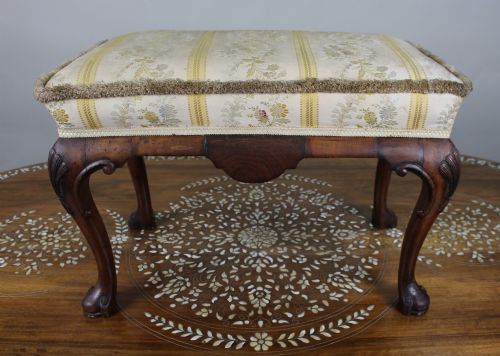
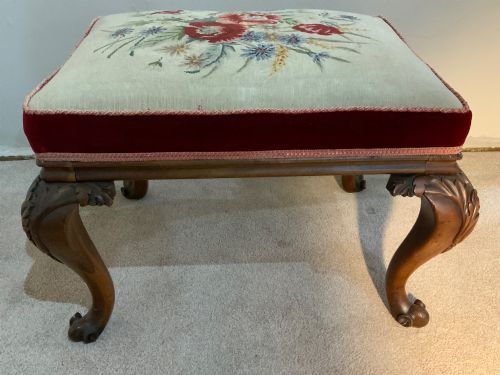
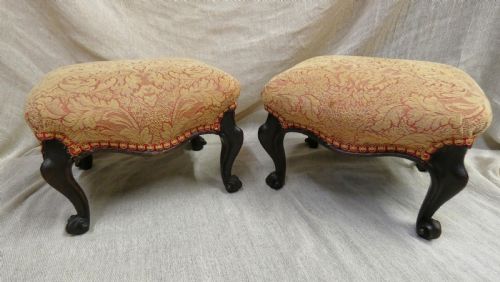
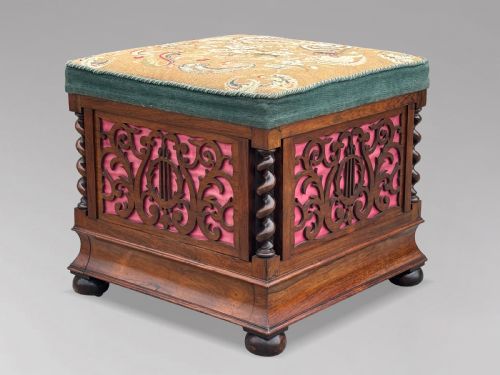
When you search for an embroidered upholstered stool, you are looking at small-scale seating designed for comfort and decorative presence. These pieces function as footstools, ottomans, piano stools, and dressing table seats, providing a low platform for resting feet or sitting before a mirror. The form ranges from simple four-legged frames to X-framed structural supports and elongated bench shapes.
You are most likely to meet Victorian examples on this page, as the nineteenth century dominates the available period evidence. These pieces frequently appear in mahogany, walnut, and rosewood, paired with textile surfaces including needlepoint, tapestry, and wool. Alongside Victorian items, Edwardian pieces and revival styles such as Queen Anne and Louis XV emerge across the listings.
The variety in these pieces spans distinct regional influences and design revivals, extending from English mahogany frames to Swedish birch Empire variants. Compact footstools and ottomans sit alongside dressing table stools and piano seats, demonstrating how domestic seating adapted to specific rooms and daily tasks. Each form relies on the combination of a sturdy wooden structure and a worked textile top.
Materials and construction
Makers built the structural frames of an embroidered upholstered stool from dense hardwoods like mahogany, walnut, rosewood, oak, and birch. These timbers provided the necessary strength for weight-bearing legs and seat rails, often shaped into curving cabriole legs or X-frame supports. Joinery techniques secured the wooden components before the application of the upper seat layers.
The seat tops feature worked textiles including needlepoint, tapestry, wool, fabric, and velvet, stretched over padded foundations. Brass elements sometimes appear as decorative tacks or structural fittings, securing the textile borders to the wooden frame. This union of cabinet-making and textile craft produced durable seating designed to withstand regular use.
Embroidered Upholstered Stool Retail Price Guide 2026
Typical asking prices for embroidered upholstered stool among the pieces listed under this phrase on Sellingantiques today, from the lower quarter to the upper quarter. They describe what is for sale here now, not the wider market.
Listings feature woods including mahogany, walnut, rosewood, oak, and birch, paired with needlepoint, tapestry, velvet, and wool upholstery.
Assessing quality
The refinement of the wooden frame separates standard examples from finer pieces, visible in the crispness of carved details on cabriole legs or the balance of an X-frame construction. Dense timbers like mahogany and walnut offer greater durability and sharper carving potential than softer woods. The structural integrity of the joints determines how well the frame supports weight over time.
The execution of the textile upholstery dictates much of the visual distinction across the range. Finely worked needlepoint and detailed tapestry demonstrate superior handwork and material density compared to simpler woven fabrics. The tightness of the upholstery stretch and the quality of the padding beneath the textile influence both the appearance and the firmness of the seat.
The Embroidered Upholstered Stool Glossary
- Needlepoint
- A type of embroidery stitched on canvas mesh, commonly found forming the decorative top of period footstools. It creates a dense, durable surface suitable for daily seating.
- Cabriole leg
- A furniture leg that curves outward at the knee and tapers inward toward the foot, frequently seen on revival styles. This form derives from classical furniture design and provides stable support.
- X-frame
- A structural base formed by two intersecting diagonal members supporting the seat above. This configuration distributes weight evenly and appears on distinct nineteenth-century forms.
Embroidered Upholstered Stool: Frequently Asked Questions
What is an embroidered upholstered stool used for?
These pieces serve primarily as footstools, piano seats, and dressing table stools in domestic spaces. They provide low, movable seating or a supportive surface for resting feet.
Their compact scale allows them to fit easily beside armchairs, dressing tables, or pianos without dominating the room.
How do I identify a Victorian footstool?
Victorian examples typically feature dense hardwoods such as mahogany, walnut, or rosewood, often paired with needlepoint or tapestry tops. The construction reflects mid-nineteenth-century cabinet-making standards.
Stylistic markers range from simple turned wooden legs to ornate revival forms influenced by rococo or classical tastes.
Can I use an antique stool every day?
Most period stools possess sturdy hardwood frames designed for functional domestic use. Regular weight-bearing is generally well-supported if the wooden joints remain tight.
Care should be taken with the textile top, as historical needlework or velvet may require gentle treatment to prevent wear.
What is the difference between an ottoman and a footstool?
Ottomans generally offer a larger surface area and sometimes incorporate interior storage beneath the upholstered top. Footstools are typically smaller and designed exclusively for supporting the feet or low seating.
Both forms utilise upholstered textile surfaces, but their proportions and internal functions vary according to their intended room.