





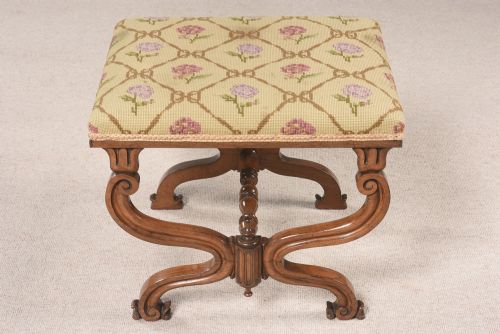
Rosewood Tapestry Stool
A rosewood tapestry stool brings rich timber and tactile needlework together, offering both period character and practical daily use.
Rosewood Tapestry Stool
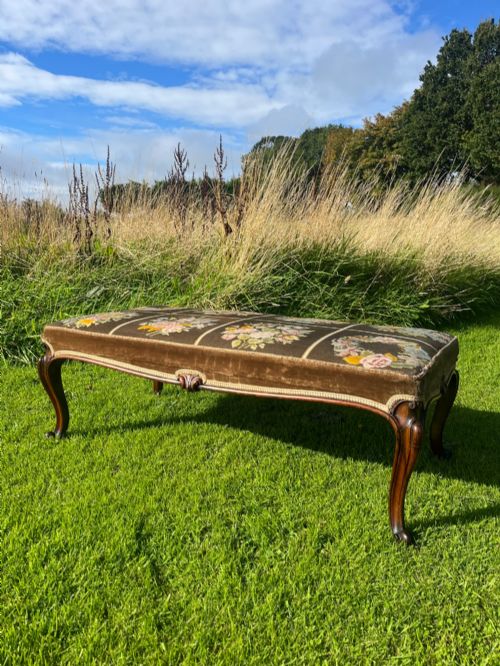
When you search for a rosewood tapestry stool, you encounter low seating designed for comfort and display, spanning footstools, dressing stools, and piano stools. The version you are most likely to meet on this page is Victorian in origin, often featuring carved woodwork and a needlepoint or floral textile top.
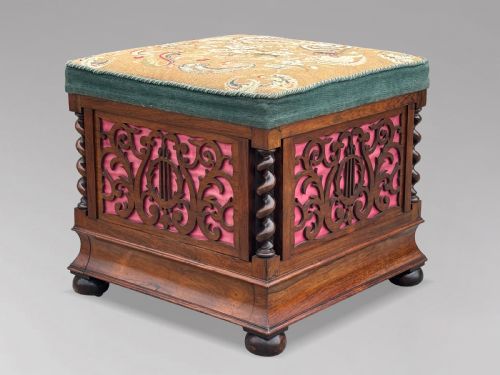
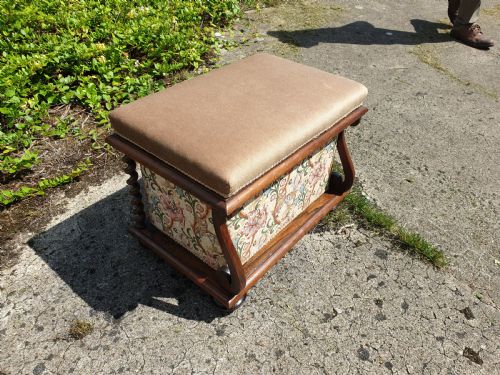
The evidence shows forms ranging from compact X-framed and revolving piano seats to large box-seat ottomans and oval footstools. Styles stretch from the clean lines of the Regency period through William IV and early Victorian designs, up to pieces dated around 1880.
Origins span standard English workshop production to more distinctive Anglo-Indian interpretations. Buyers select these items to anchor a period interior, utilising their compact scale beside firesides or dressing tables.
How they were made
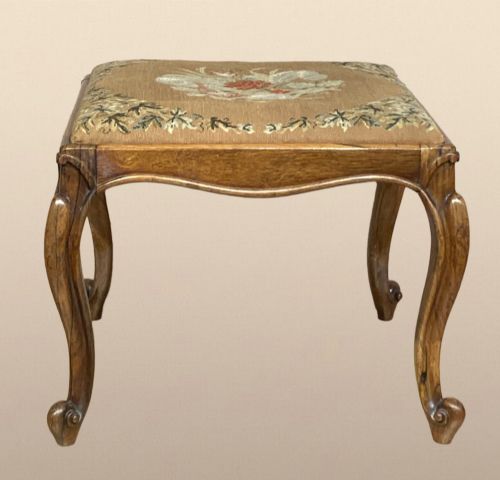
Cabinetmakers utilised dense rosewood for the frames, frequently shaping the timber into cabriole legs or carved supports. This heavy hardwood provided the structural integrity needed for daily seating while accepting intricate hand-carving.
The upper portions combine traditional upholstery techniques with textile arts, pairing hardwood foundations with wool tapestry, needlepoint, velvet, and various woven fabrics. Floral trellis and pictorial textile covers were secured over padding to complete each seat.
Rosewood Tapestry Stool Retail Price Guide 2026
Typical asking prices for rosewood tapestry stool among the pieces listed under this phrase on Sellingantiques today, from the lower quarter to the upper quarter. They describe what is for sale here now, not the wider market.
Some nineteenth-century pianists relied on revolving mechanisms that allowed them to spin gracefully into position before tackling a demanding sonata.
What varies in quality
Quality rests in the crispness of the rosewood carving and the fidelity of the period form, whether dealing with a simple footstool or an adjustable piano stool. Finer examples display balanced proportions, robust joinery, and well-figured grain within the timber itself.
The condition and execution of the tapestry textile also dictate the standing of the piece. Intricate needlework showing minimal wear commands greater attention than plain replacement fabrics, as original or period-appropriate textile covers preserve the intended visual harmony.
The Rosewood Tapestry Stool Glossary
- Rosewood
- A dense, heavily figured dark hardwood utilised extensively in nineteenth-century cabinetmaking for high-end seating and tables. It polishes to a deep lustre.
- Tapestry
- A form of textile art involving hand-stitched wool or silk threads, frequently employed on period stool seats in floral or geometric patterns. Needlepoint is a common related term.
- Cabriole leg
- A furniture leg that curves outward and then tapers inward, mimicking an animal limb. It appears frequently on Victorian examples in this category.
- X-frame
- A structural furniture base formed by intersecting members shaped like the letter X, offering stability and distinctive visual movement. It is often seen on dressing stools.
- William IV
- A transitional design period spanning the 1830s, characterised by robust proportions and classical revival motifs. Pieces from this era bridge Regency elegance and Victorian ornamentation.
Rosewood Tapestry Stool: Frequently Asked Questions
Where were these stools used?
These items served specific functions in nineteenth-century domestic interiors, frequently positioned near pianos, dressing tables, or hearths. Adjustable and revolving variants were designed specifically for musicians needing stable seating.
Smaller footstools provided comfort beside armchairs, while box-seat versions offered discreet storage for small household items within the drawing room or bedroom.
How do I care for the tapestry?
Needlework and wool textiles require gentle maintenance to preserve the integrity of the natural fibres. Keeping them away from direct sunlight prevents the dyes from fading over time.
Regular light brushing removes surface dust without stressing the delicate stitching. Avoid harsh chemical cleaners, as wool and antique textiles react poorly to moisture.
How do I identify a Regency piece?
Regency items generally display restrained classical influence, clean structural lines, and minimal ornamentation compared to later Victorian iterations. The woodwork often exhibits a refined simplicity that reflects earlier architectural styles.
Proportions tend to be balanced and linear, avoiding the heavier carving and more exuberant curves that emerged later in the nineteenth century.