

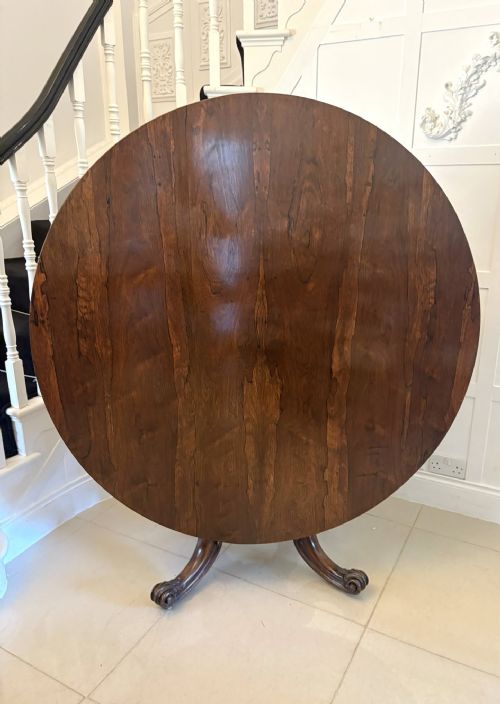
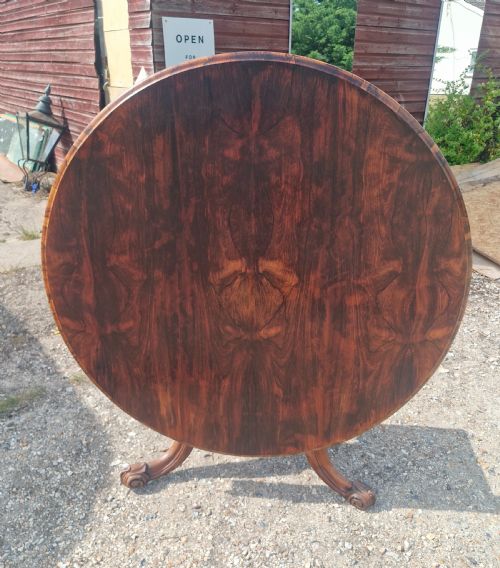


Victorian Rosewood Loo Table
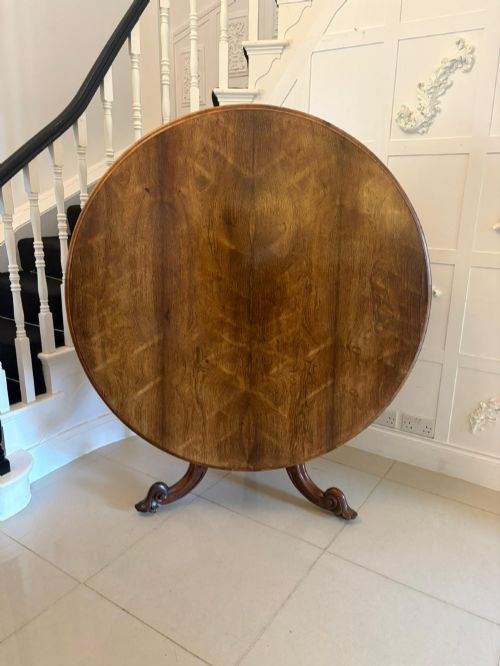
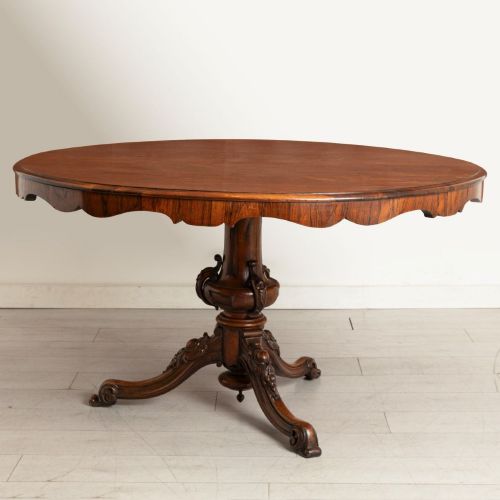
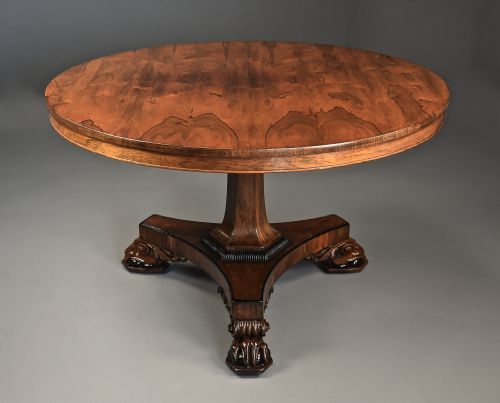
A victorian rosewood loo table is a grand circular or oval tilt-top piece designed for evening gatherings, offering rich grain and sturdy pillar bases.
Victorian Rosewood Loo Table
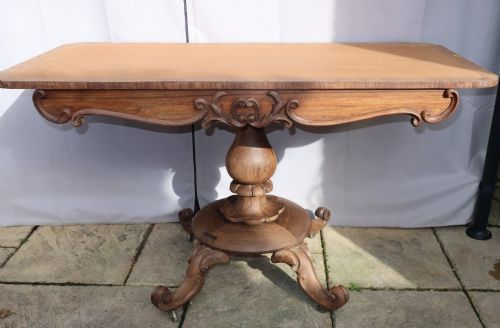
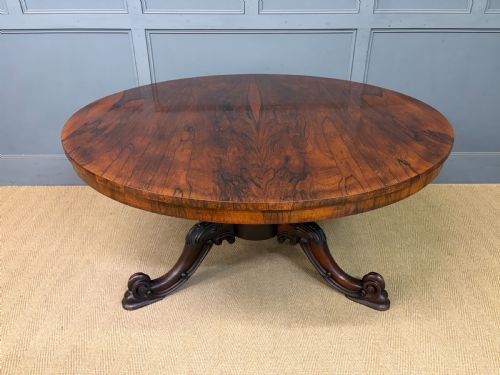
When you search for a victorian rosewood loo table, you encounter large circular, oval, and serpentine centre tables dating across the nineteenth century. These versatile pieces frequently function as breakfast tables, dining tables, or snap-top supper tables depending on their proportions and mechanisms.
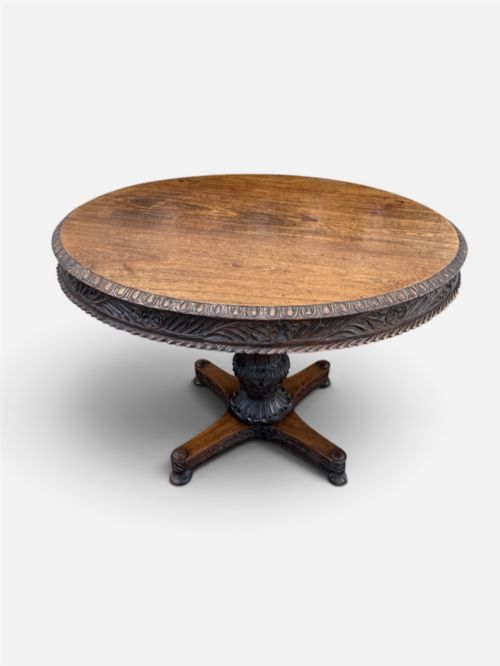
The versions most commonly met on this page span the early Victorian period through to eighteen seventy, encompassing William IV and Anglo-Indian influences alongside standard Victorian designs. Makers utilised heavy timber and intricate bases, creating substantial centrepieces intended for principal rooms in country houses and town residences.
How They Were Made
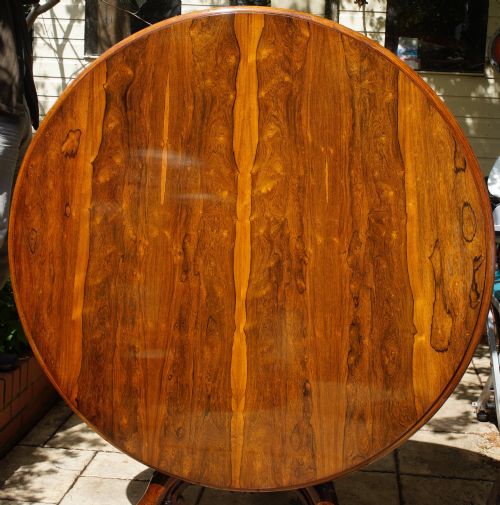
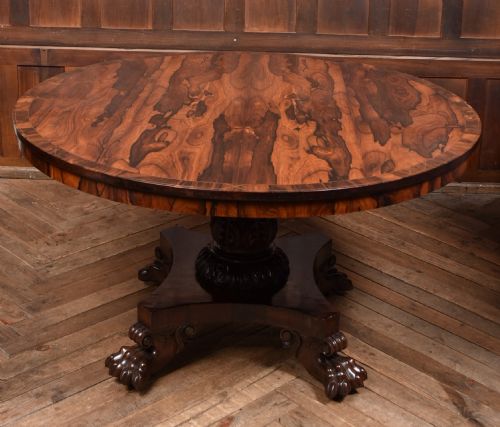
Craftsmen built these tables using solid rosewood and rosewood veneer laid over secondary timbers, frequently enhancing surfaces with satinwood inlay, brass details, and marquetry. Figured grain timber was selected for the top to create striking visual patterns across circular and shaped oval surfaces.
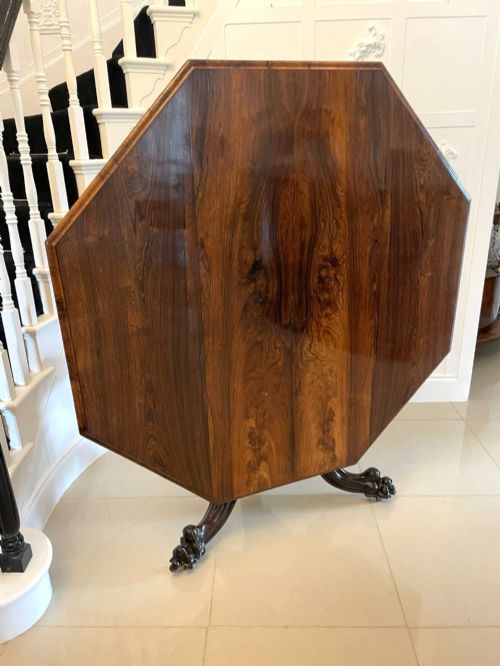
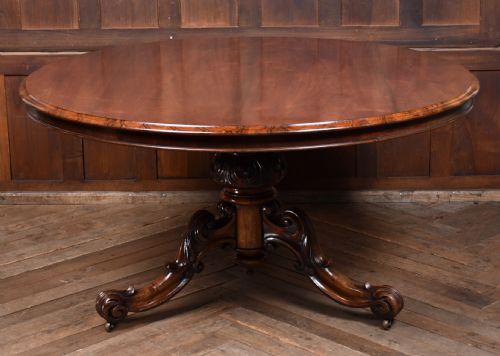
Structural support relied upon turned and carved solid rosewood pedestals, often rising from basket bases or tripod feet equipped with concealed castors. The tilt-top or snap-top mechanism allowed the heavy table top to pivot vertically for storage against a wall when not in use.
Victorian Rosewood Loo Table Retail Price Guide 2026
Typical asking prices for victorian rosewood loo table among the pieces listed under this phrase on Sellingantiques today, from the lower quarter to the upper quarter. They describe what is for sale here now, not the wider market.
Listings feature nineteenth-century pieces spanning the early Victorian era, eighteen fifty, eighteen sixty, and eighteen seventy, constructed primarily in rosewood and mahogany with brass details.
What Varies in Quality
The distinction between ordinary production and superior craftsmanship rests in the selection of figured rosewood veneer and the depth of carving on the central pillar and base. Tables attributed to notable makers exhibit crisper hand-carved details and more sophisticated timber selection across the entire pedestal.
Proportion and mechanism integrity also dictate the standing of a piece, with finer examples demonstrating seamless tilt-top action and robust structural joinery. The inclusion of delicate satinwood inlay or elaborate serpentine shaping separates exceptional pieces from simpler utilitarian models.
Gillows·James Winter
The Victorian Rosewood Loo Table Glossary
- Loo table
- A large Victorian card or general-purpose table designed for the popular nineteenth-century card game loo. These tables typically feature a tilting top mounted on a central pillar.
- Tilt-top table
- A table with a hinged top that pivots to a vertical position when not in use. This mechanism allowed large tables to be stored against room walls to save floor space.
- Snap-top table
- A variation of the tilt-top table featuring a catch or spring mechanism that locks the top firmly in the horizontal position during use.
- Marquetry
- Decorative veneer work forming geometric or pictorial patterns using various coloured woods such as satinwood on a rosewood ground.
- Basket base
- A sturdy, intricately carved pedestal base design supporting the central column of heavier nineteenth-century centre tables.
Victorian Rosewood Loo Table: Frequently Asked Questions
What is a loo table?
A loo table is a large nineteenth-century circular or oval table designed for dining, social gatherings, and the card game known as loo.
These pieces feature heavy central pedestals and tilting tops that made them versatile and easy to store against walls.
How do you use a tilt top?
The top releases via a catch underneath, allowing the heavy rosewood surface to pivot from a horizontal position to a vertical one.
This clever mechanism saved valuable floor space in nineteenth-century drawing rooms when the tables were not required for dining or games.
How do I date a rosewood table?
Dating relies on examining the stylistic clues, cabinet-making techniques, and wood types recorded across the nineteenth century. Early examples often display William IV influences, while later Victorian pieces incorporate specific pedestal carvings and marquetry.
Where should I place a centre table?
These large circular tables suit principal reception rooms, grand halls, and open dining spaces where they can be appreciated from all angles.
Because many feature finished timber and elaborate pedestals, they work best positioned centrally rather than pushed against a wall.