
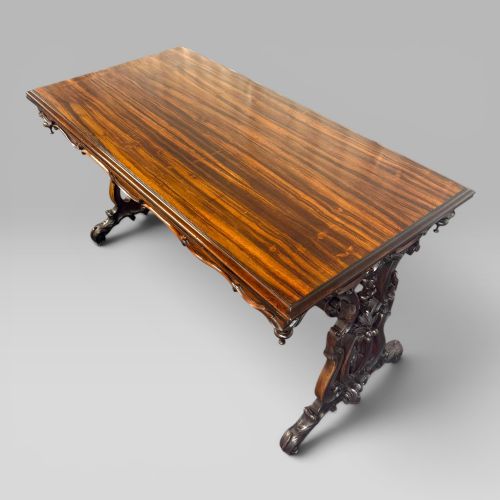
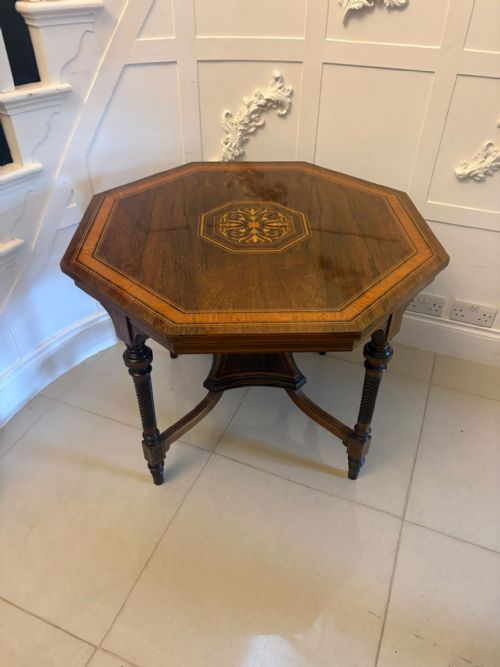
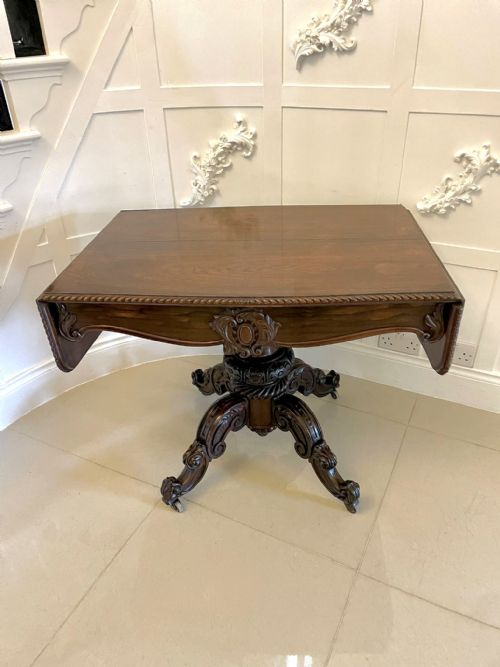
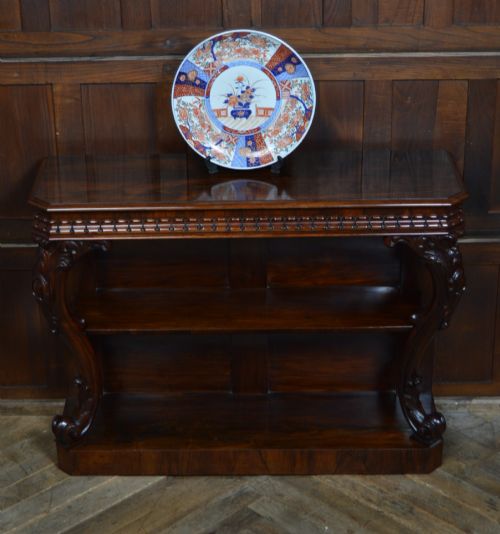
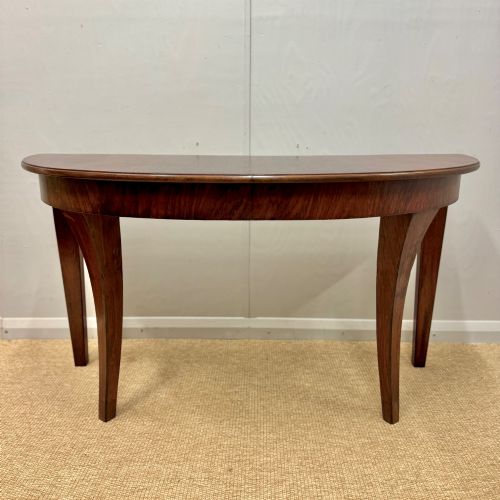

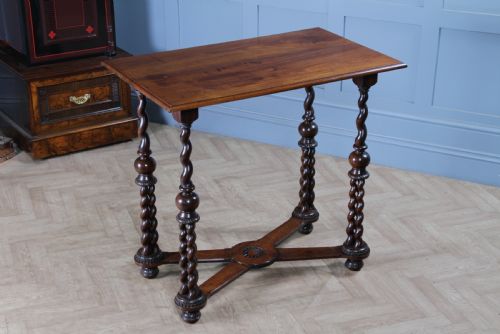


Victorian Rosewood Hall Table
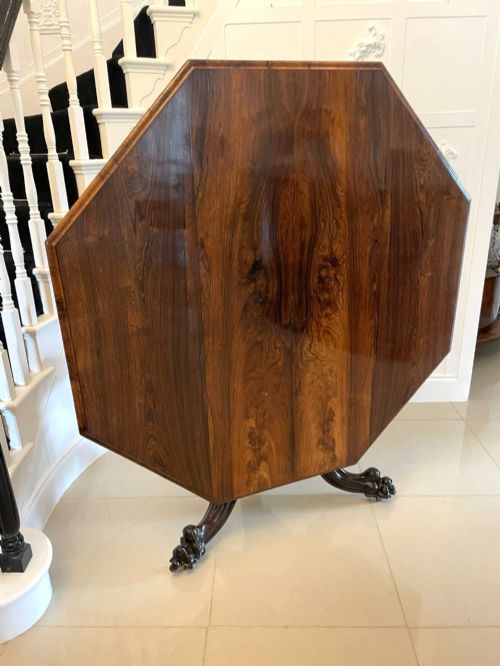
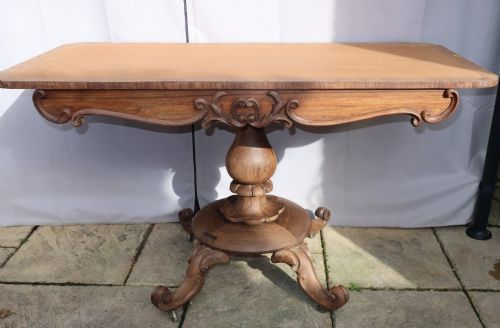
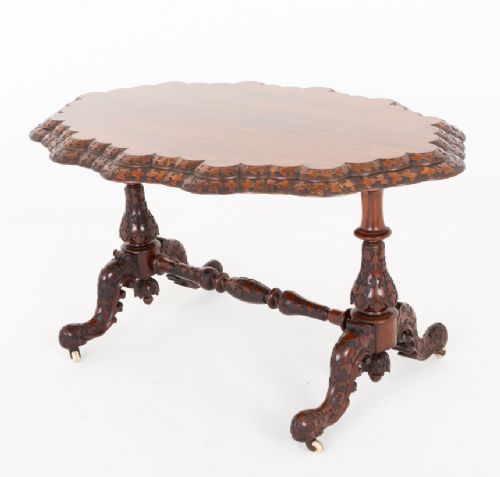
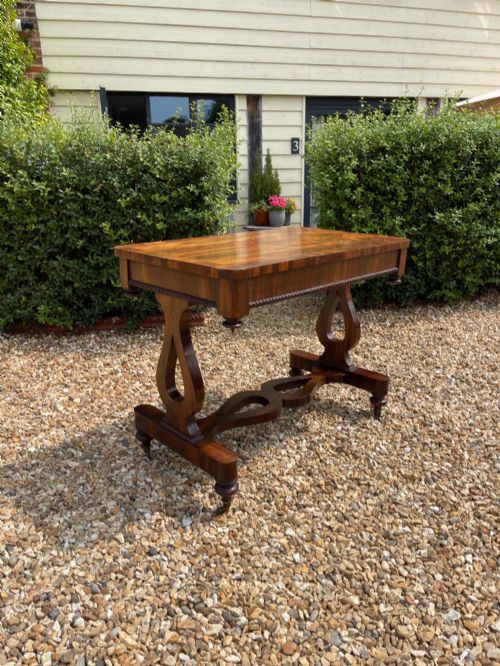
A victorian rosewood hall table brings rich grain, dense timber and architectural presence to an entrance, spanning console, side and centre forms.
Victorian Rosewood Hall Table
When searching for a victorian rosewood hall table, you encounter pieces that served grand entrances, narrow hallways and formal reception rooms during the nineteenth century. These forms encompass dedicated hall tables alongside console, side and centre tables adapted through the decades.
The material vocabulary spans solid rosewood and veneers matched across tops, often enhanced by boxwood inlay, marquetry or marble surfaces. Makers utilised robust mahogany or secondary timbers beneath the show woods to construct stable frames for everyday use.
Origins stretch from English workshops to Irish makers and Anglo-Indian carvers, yielding variations from plain stretcher bases to heavily carved triple barley twists. Pieces dated across the nineteenth century show shifts from Regency influences through Early Victorian proportion to later revival styles.
Construction and Materials
Cabinet makers selected dense rosewood for its deep colour and pronounced grain, frequently applying it as fine veneer over stable secondary timbers to create expansive table tops. Brass fittings, ceramic castors and marble tops added functional weight and contrasting texture to the dense dark wood.
Structural support relied on robust joinery, manifested in turned pedestals, concave legs, stretcher frames and pillar-and-claw bases designed to bear the weight of heavy timber tops. Inlaid pieces incorporated contrasting boxwood and satinwood elements set flush into the primary rosewood surface.
Carving techniques ranged from crisp foliate motifs on early Victorian pedestals to intricate openwork carving characteristic of Anglo-Indian production. Ormolu mounts and turned supports provided architectural rigidity while accentuating the linear qualities of the form.
Some nineteenth century tables feature tilt tops designed to fold flat against the wall, proving our ancestors had small-space living figured out long ago.
Assessing Quality and Execution
The distinction between average and exceptional pieces rests upon the precision of the timber selection and the ambition of the joinery. Superior examples display continuous, book-matched grain across wide table tops, whereas lesser pieces rely on simpler, fragmented veneer arrangements.
Carving depth and sharpness separate standard production from master workshops, particularly where acanthus leaves, barley twists or figural elements define the legs and pedestals. The integration of secondary woods and the tightness of structural joints dictate the long-term stability of the table.
Refined pieces incorporate thoughtful decorative details such as intricate marquetry inlay, Ormolu mounts or finely turned gallery rails. The coherence of the design, from the proportion of the base to the finish of the timber, marks the distinction between routine manufacture and high Victorian craftsmanship.
Gillows·Robert Strahan·Thonet·Walker and Hall
The Victorian Rosewood Hall Table Glossary
- Rosewood
- A dense, heavily grained dark timber prized for its rich reddish-brown colour and oily lustre. It forms the primary visual and structural medium for these tables.
- Console Table
- A decorative table designed to stand against a wall, frequently supported by wall brackets or front legs. These pieces often feature shaped marble or wood tops.
- Marquetry
- Decorative patterns formed by fitting together thin veneers of various coloured woods. This technique creates elaborate floral or geometric designs across table tops.
- Stretcher Table
- A table featuring horizontal wooden bracing connecting the legs for added stability. These stretchers often showcase central finials or turned architectural details.
- Tilt-Top
- A mechanism allowing the table top to pivot to a vertical position for storage or display when not in use. It relies on a robust catch and pedestal block.
Victorian Rosewood Hall Table: Frequently Asked Questions
Where should I place a hall table?
These tables suit entrance halls, narrow corridors and reception rooms where surface space is required without obstructing passage. Their narrow profiles allow them to sit flush against walls beneath mirrors or artwork.
Ensure the chosen location protects the polished rosewood surface from direct sunlight, which can fade the rich grain over time. Placing them away from direct heat sources prevents the timber and veneer from drying out.
How do I care for rosewood furniture?
Maintain the finish by dusting regularly with a soft, dry cloth and applying high-quality beeswax sparingly to nourish the timber. Avoid using silicone-based sprays or harsh chemical cleaners that can degrade the historic polish.
Protect the surface from moisture and heat by using coasters and placents beneath any decorative objects or lamps. Environmental stability in your room prevents the wood from expanding or contracting excessively.
How can I date a Victorian table?
Dating relies on observing changes in style, construction methods and secondary woods used within the frame. Earlier pieces often display Regency or William IV influences with heavy pedestals, while later examples incorporate revival motifs or complex marquetry.
Examine the construction underneath for hand-cut joints, screw types and the ageing of the secondary timbers. These technical details provide reliable clues to the decade of manufacture within the nineteenth century.
What is the difference between a console and a centre table?
A console table is specifically designed to stand flat against a wall, frequently lacking finished back details because it was intended to be viewed from the front only. These often include wall fixings for stability.
Centre tables are freestanding pieces finished on all sides to sit in the middle of a room or grand hallway. They typically feature central pedestals or four-sided leg arrangements that look balanced from any angle.