



Victorian Rosewood Caddy
A victorian rosewood caddy is a handsome wooden chest made to store precious tea leaves, prized for its deep grain and fine craftsmanship.
Victorian Rosewood Caddy
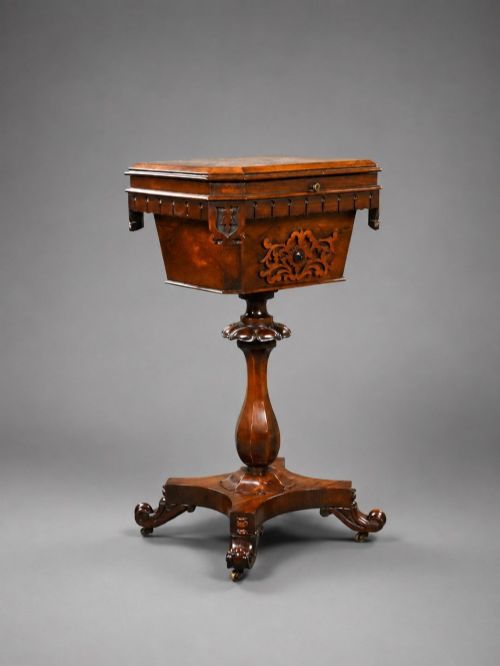
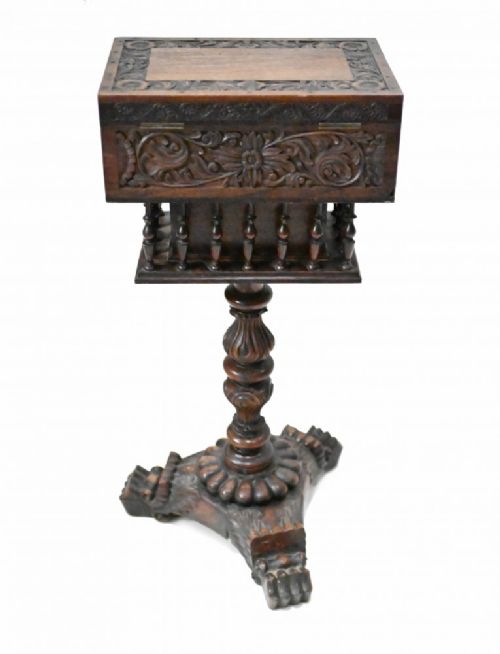
When you search for a victorian rosewood caddy, you find receptacles created during the nineteenth century to store and protect expensive dry tea leaves. Most examples on this page take the form of sarcophagus shapes, rectangular boxes, or tea poys resting on small feet.
Makers shaped these containers during the Regency, William IV, and Victorian periods, often adding compartments inside for sugar and loose leaf varieties. Alongside traditional tea caddies, the selection includes related work boxes, sewing boxes, and writing boxes fashioned from the same dark timber.
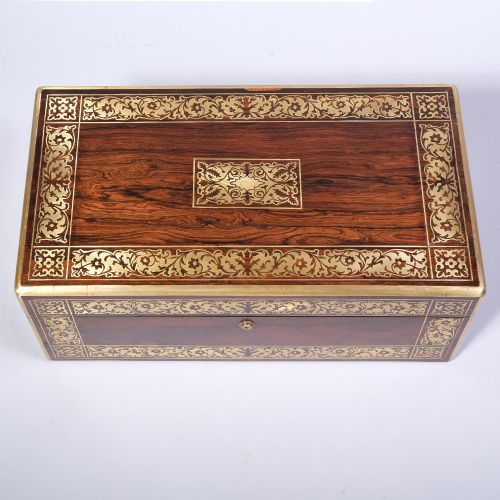
The origins span English workshops and specialised regional centres, including Tunbridge Wells and Anglo-Indian colonial makers. Buyers encounter pieces decorated with mosaic work, brass inlay, and contrasting woods like boxwood or maple.
Materials and construction
Craftsmen built these containers using dense rosewood timbers, frequently pairing the dark ground with boxwood, maple, or mother-of-pearl details. Many surfaces feature intricate marquetry, brass stringing, or Tunbridge Ware mosaic panels composed of tiny tinted wood blocks.
Interiors often retain fitted compartments lined with silk or velvet, alongside glass mixing bowls and veneered wooden lids. Carved feet, brass ring handles, and secure lock plates complete the construction of these substantial boxes.
The listings feature nineteenth-century pieces incorporating rosewood, brass, mother-of-pearl, and Tunbridge Ware mosaic decoration across various box forms.
Differences in quality
Superior examples distinguish themselves through the crispness of their mosaic work and the careful matching of rosewood grain across the lid and sides. Finer boxes display complex sarcophagus contours, substantial brass feet, and well-preserved interior fittings rather than plain rectangular panels.
The complexity of the inlay work marks the tier of a piece, with detailed Tunbridge Ware floral or architectural motifs sitting above simpler brass stringing. The integrity of the timber carcass and the original finish determine the overall standing of the box.
Henry Hollamby
The Victorian Rosewood Caddy Glossary
- Sarcophagus
- A box shape featuring a domed or sloping lid reminiscent of an ancient stone coffin. This profile is common among nineteenth-century tea caddies.
- Tunbridge Ware
- A type of woodworking originating from Kent that creates pictorial mosaics from thousands of tiny dyed wood squares. These geometric or floral scenes decorate the lids of fine boxes.
- Tea Poy
- A pedestal table fitted with a lidded storage box on top for holding tea. They often stand on a pillar and platform base.
- Marquetry
- Decorative veneer applied in patterns to furniture and box surfaces. Craftsmen use varied timbers to form pictures or geometric designs.
- Stringing
- Thin lines of contrasting wood or metal inlaid into channels cut into the primary timber. This technique outlines box lids and panel edges.
Victorian Rosewood Caddy: Frequently Asked Questions
What went inside a tea caddy?
These boxes held dried tea leaves within separate internal compartments to keep the expensive commodity fresh and secure under lock and key. Many also included a central glass mixing bowl for blending different leaves.
Servants or hosts prepared the brew using the leaf stored inside, while the master of the house retained the key to prevent pilfering by staff.
How do I date a rosewood caddy?
Dates rely on stylistic clues such as the sarcophagus shape popular in the Regency and early Victorian eras, alongside specific decorative techniques like Tunbridge Ware mosaics. Hardware such as escutcheons and feet also point to distinct decades.
Examining the construction methods and secondary interior woods helps narrow down the period of manufacture between the early and late nineteenth century.
How do I care for rosewood?
Keep the timber away from direct sunlight and sudden temperature shifts to prevent the rosewood veneer from drying and cracking. Gentle dusting with a dry cloth maintains the polish.
Avoid commercial polishes containing silicone, relying instead on traditional wax finishes sparingly applied if the wood appears dry.
What is Tunbridge Ware?
Tunbridge Ware refers to wooden items decorated with mosaic veneers made from numerous tiny blocks of naturally coloured timbers. These mosaics form detailed images of butterflies, flowers, or castles.
This meticulous craft flourished in Kent during the nineteenth century and appears frequently on the lids of quality boxes from the period.