

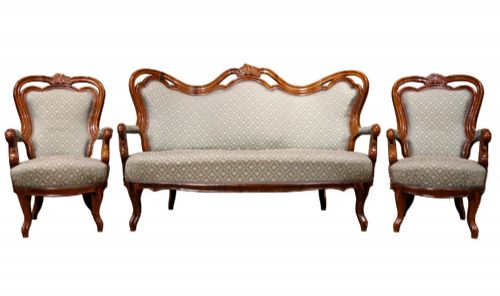


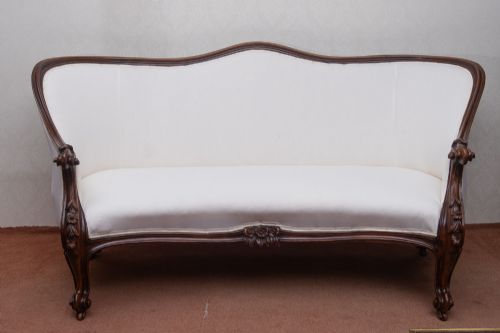
Victorian Rococo Settee
A victorian rococo settee brings opulent curves and carved timber into a formal room, offering both historic presence and deep-seated comfort.
Victorian Rococo Settee
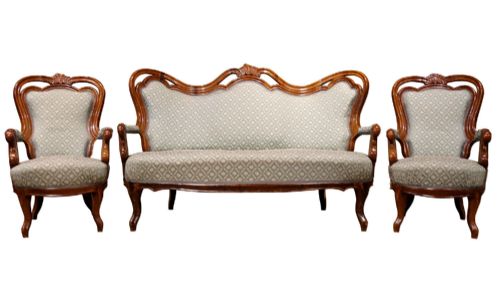
A victorian rococo settee represents the mid-nineteenth century revival of fluid, asymmetric eighteenth-century continental design. These seating pieces combine substantial proportions with elaborate, organic woodwork.
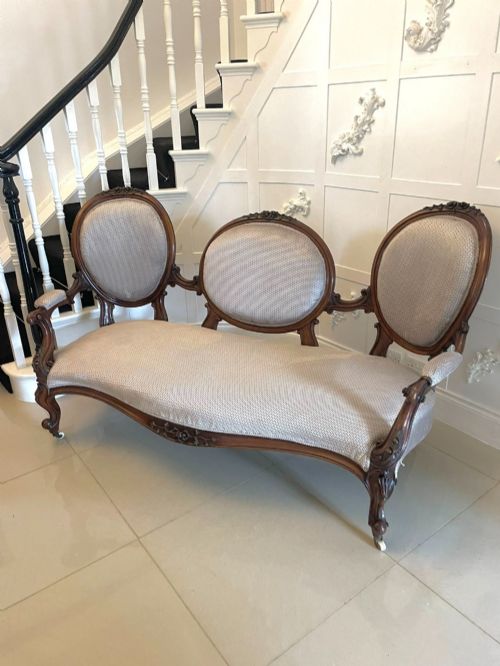
The versions most commonly found here are walnut or mahogany framed settees dating from the nineteenth century. They appear in forms ranging from double-end couches to larger three-piece salon suites.
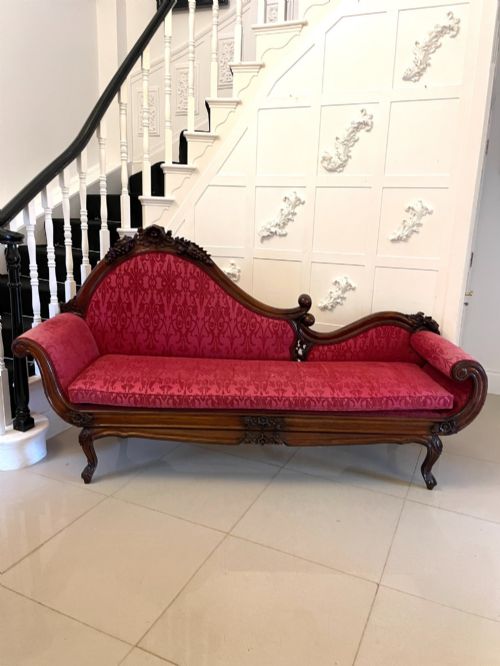
Makers utilised flowing lines, serpentine fronts and scrollwork to soften the rigidity of earlier periods. Upholstery varies from button-tufted textiles to patterned velvet, supporting varied domestic settings.
How they were made
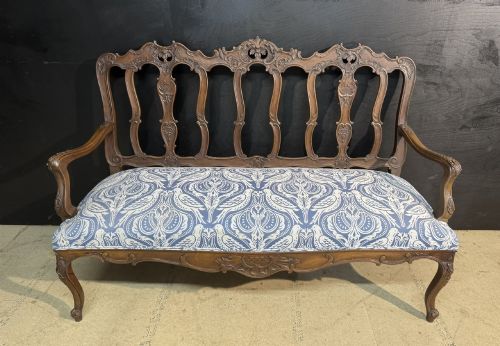
Timbers such as walnut, mahogany and rosewood form the structural frames, often shaped with hand-carved floral motifs and cabriole legs. Giltwood examples demonstrate more theatrical surface treatments.
Upholstery techniques rely on traditional springing and stuffing beneath fabrics like velvet and textured textiles. Brass details occasionally appear as castors or structural accents.
Makers carved asymmetrical flowers into walnut frames so guests could admire nature inside.
What varies in quality
Depth and crispness of the timber carving separate standard production from exceptional examples. Fluid, deeply undercut floral details require skilled hand labour rather than mechanical shaping.
Frame integrity and timber selection dictate structural longevity. Dense walnut or figured mahogany frames with robust joinery maintain their lines far better than lighter alternatives.
Morison & Co Edinburgh
The Victorian Rococo Settee Glossary
- Cameo back
- A framed upholstered backrest shaped to resemble a carved stone cameo, popular in mid-nineteenth-century seating.
- Double end
- A settee design featuring scrolls or raised ends at both sides, allowing a person to recline in either direction.
- Cabriole leg
- A furniture leg that bends outward in a convex curve and tapers inward in a concave curve, ending in an ornamental foot.
- Giltwood
- Timber treated with gold leaf or gold paint to create a brilliant, reflective surface finish.
- Serpentine
- A front rail or edge that curves inward in the centre and outward at the sides, echoing natural wave forms.
Victorian Rococo Settee: Frequently Asked Questions
How do I date a victorian rococo settee?
Dating relies on timber choice, carving style and structural construction. Mid-nineteenth-century pieces often display richer walnut or mahogany grains combined with heavy, fluid scrollwork.
Later nineteenth-century iterations may exhibit lighter proportions or stylistic crossovers. Examining the joinery and upholstery foundation provides further clues to the decade of manufacture.
Where should I place this settee?
These settees suit formal drawing rooms, large hallways or master bedrooms where their decorative backs remain visible. Their organic curves contrast effectively against plain walls and contemporary interiors.
Ensure adequate floor space allows the curved woodwork and cabriole legs to be seen from multiple angles.
Are these settees comfortable for daily use?
Original nineteenth-century padding and springing were designed for upright, formal posture rather than lounging. Many surviving pieces retain firmer internal structures.
Comfort depends heavily on whether the upholstery has been restored using modern supportive materials while retaining traditional profiles.
How do I care for the showwood frame?
Maintain timber frames by dusting regularly with a soft, dry cloth and avoiding direct sunlight. Periodic application of suitable wax preserves the polish on walnut and mahogany surfaces.
Keep upholstered sections away from moisture and heat sources to protect both the fabric and internal stuffing.