
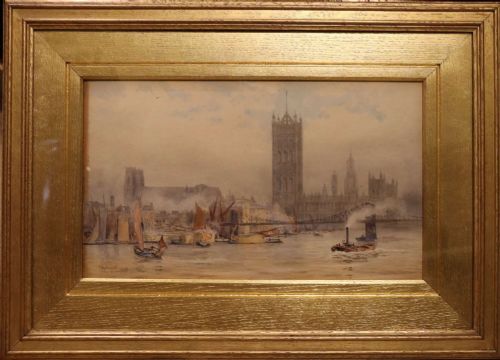

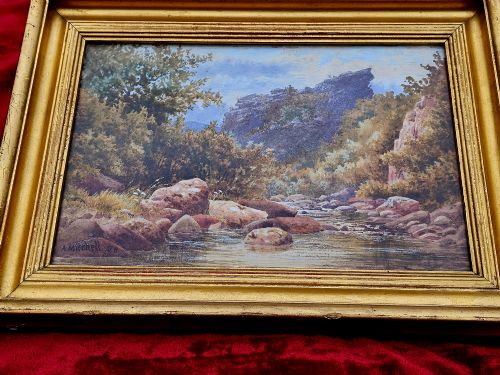
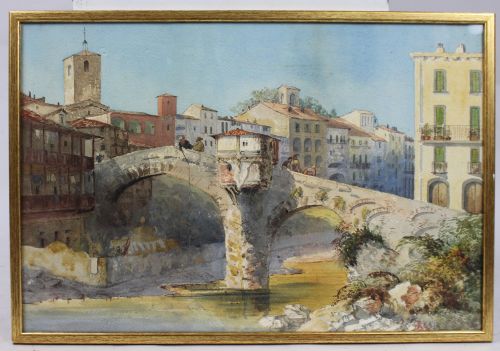
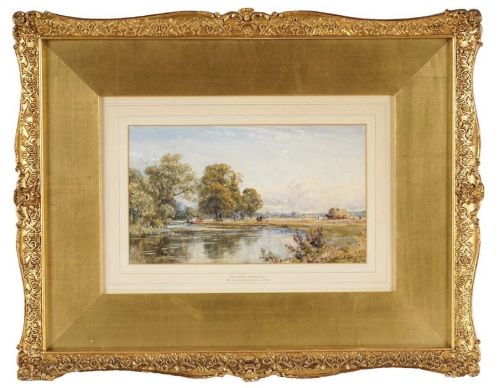


Victorian River Watercolour
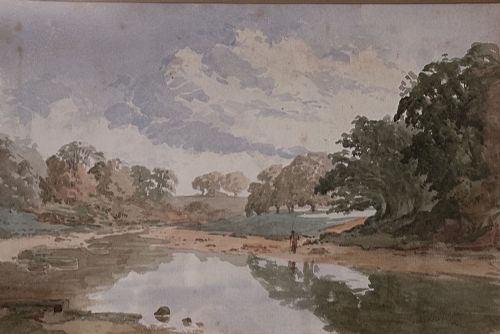
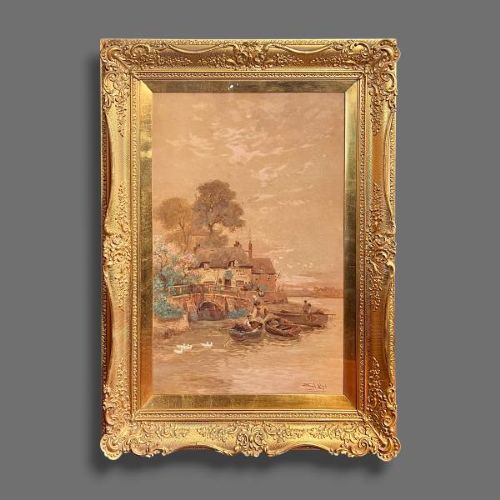
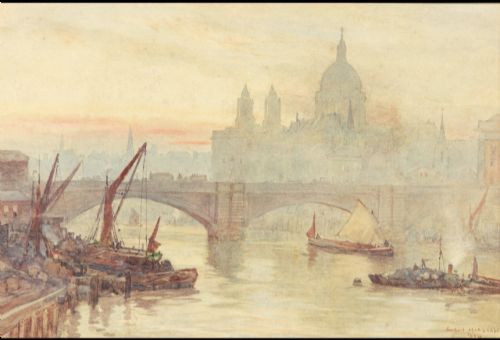
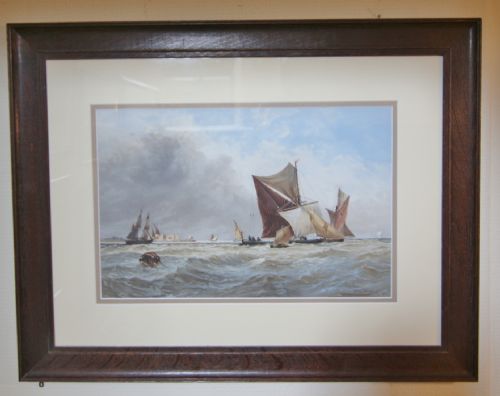
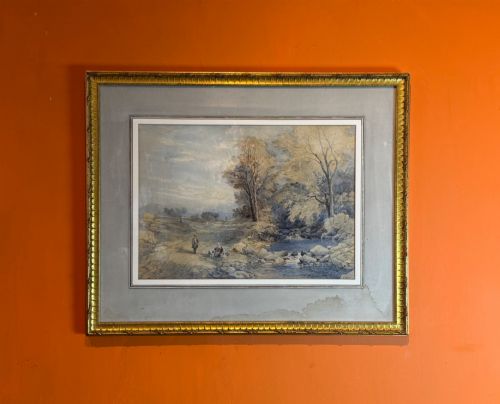
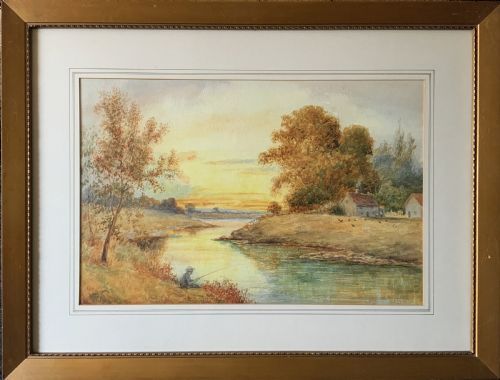
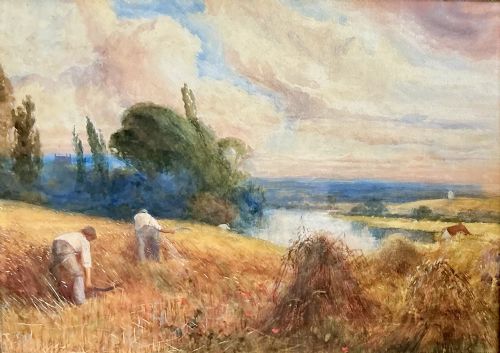
When you explore a victorian river watercolour, you examine hand-painted paper works depicting waterways, bridges, and pastoral banks.

Victorian River Watercolour
A victorian river watercolour captures natural waterways, estuaries, and pastoral scenes across Britain and Europe during the nineteenth century. These paintings range from intimate pastoral views to large-scale topographical compositions.
Most examples originate from the Victorian period and the late nineteenth century, reflecting the era's fascination with landscape art and naturalism. Common subjects include the Thames, Welsh valleys, and rural tributaries rendered by named artists and regional schools.
How they were made
Artists painted primarily with watercolour pigment onto paper supports, often mounted beneath glass and housed within wooden or giltwood frames. The medium allowed for transparent washes of colour that captured atmospheric light on the water.
Makers utilised skilled brushwork to delineate figures, boats, and foliage alongside the flowing currents of rivers. Many works incorporate pencil underdrawing beneath the pigment to establish perspective and architectural detail.
Listings feature paper supports, watercolour pigment, glass, and giltwood frames across nineteenth-century styles.
What varies in quality
The strength of a victorian river watercolour depends on the confidence of the brushwork and the artist's command of atmospheric perspective. Master practitioners captured the shifting light of dusk or open water with precise control over pigment density.
Condition also differentiates works, particularly the preservation of pigment vibrancy against fading from sunlight. Original frames in giltwood and the presence of contemporary signatures or documentation elevate individual examples.
H. Medlycott·Alfred Young Nutt·Robert Thorne Waite·T B Hardy·Frederick Hines·William Frederick Settle·Alfred George Morgan·Cornelius Pearson·Edwin Lord Weeks·Henry John Kinnaird·Stuart Lloyd·Thomas Hunn·David Cox Jnr·Colin H Greenwood·John Syer·Robert Winchester Fraser·Alfred Grey·George Arthur Fripp·Harold Lawes·Frederick G Coulridge·William Joseph Boyes·Walter Follen Bishop·Charles Harmony Harrison·William Wyld·Henry Barlow Carter
The Victorian River Watercolour Glossary
- Watercolour pigment
- Finely ground colour particles suspended in a water-soluble binder. This medium enables the luminous washes characteristic of nineteenth-century British landscape art.
- Giltwood
- Wood carved and covered with a thin layer of gold leaf or gold paint. Frames of this material frequently accompany nineteenth-century works on paper.
- Naturalism
- An artistic movement focused on the realistic depiction of the natural world. Many Victorian painters embraced this approach to record topographical river scenes accurately.
- Topography
- The detailed mapping or description of specific geographical locations. Artists recorded precise stretches of rivers such as the Thames, Medway, and Wye.
- Wash
- A thin, transparent layer of diluted watercolour pigment applied across paper. Painters utilised this technique to render skies and flowing river water.
Victorian River Watercolour: Frequently Asked Questions
What is a victorian river watercolour?
These works are original paintings executed on paper using water-based pigments during the nineteenth century. They depict various rivers, estuaries, and pastoral landscapes across Britain and Europe.
Most pieces feature traditional framing in wood or giltwood under glass. They serve as historical records of nineteenth-century topography and artistic style.
How should I hang a watercolour?
Watercolours require careful placement away from direct sunlight to prevent the pigments from fading over time. Environmental stability protects both the paper support and the giltwood frame.
Professional mounting with acid-free materials ensures the paper remains secure behind the glass. Regular inspection of the backing board keeps dust and moisture away from the painting.
Who painted these river scenes?
The works were produced by professional artists, Royal Academy exhibitors, and members of regional British schools. Many creators specialised in landscape art and naturalism.
Signatures or inscriptions on the front or reverse often identify the specific painter. Archival records link several pieces to recognised nineteenth-century watercolourists.
How do I identify the period?
Dating relies on stylistic markers, artist working dates, and framing materials typical of the nineteenth century. Paper characteristics and handwritten inscriptions on the reverse also provide chronological clues.
Subject matter often reflects Victorian interest in specific regional landscapes and industrial development along major waterways.