

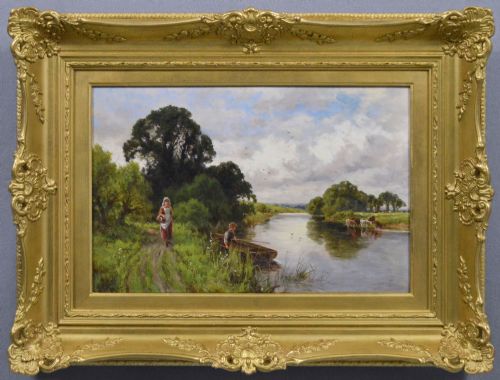


Thames Landscape Painting
A thames landscape painting captures the changing moods of London and its valley through historical periods on canvas and paper.
Thames Landscape Painting
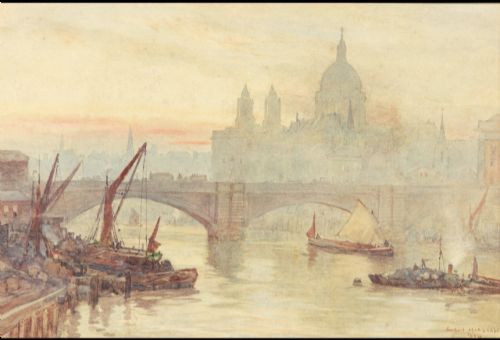
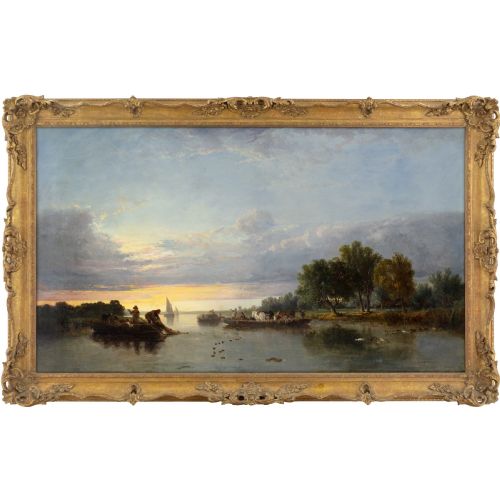
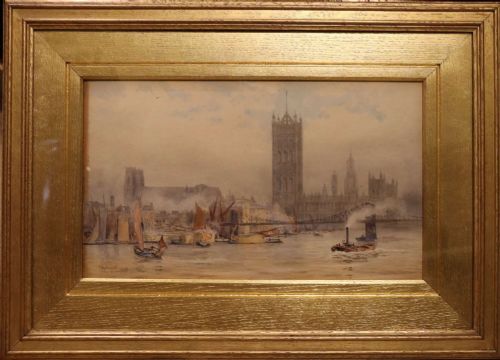
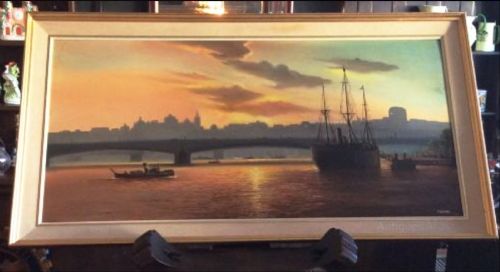
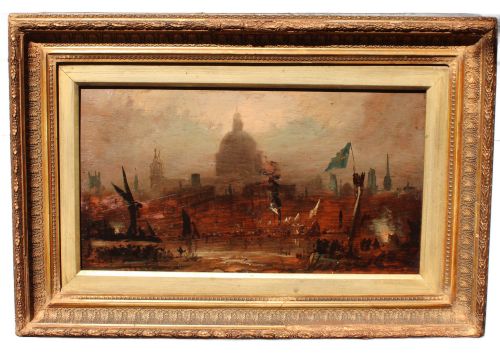
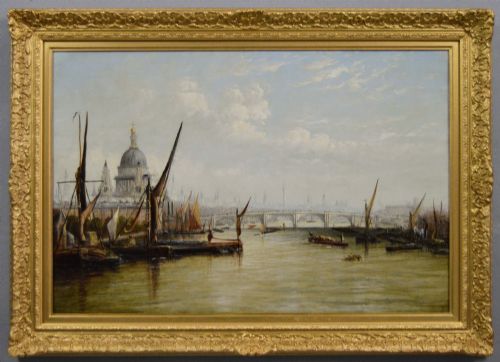
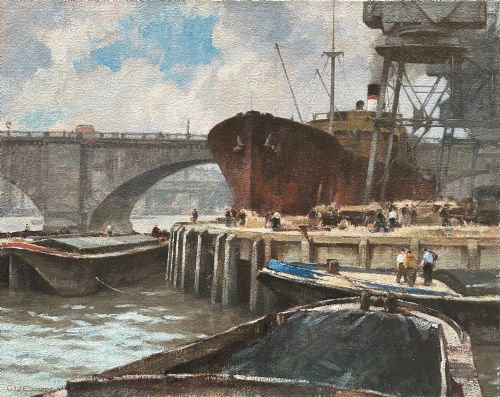
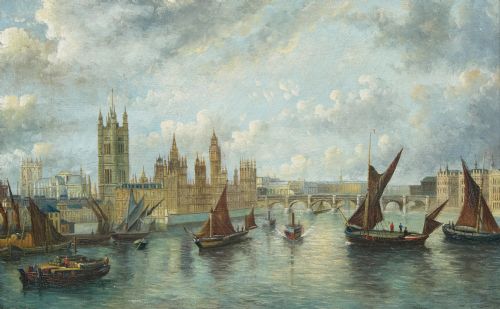
A thames landscape painting depicts scenes along the river, ranging from urban London reaches with bridges and cathedrals to rural Berkshire villages and Oxfordshire banks. The pieces on this page span the nineteenth and twentieth centuries, capturing the evolving character of the waterway.
Most examples originate from the Victorian, Edwardian, and mid-century periods. These works record commercial shipping, quiet locks, historic castles, and parliamentary landmarks under shifting skies.
Materials and Technique
Artists record these river views using oil paint on canvas, panel, or board, alongside delicate watercolour on paper. Some compositions incorporate impasto build-up to render water texture and atmospheric industrial haze.
Gold leaf frames and protective glass frequently accompany these works, preserving the delicate pigments of nineteenth and twentieth-century British topographical art.
The archive and current selection include works dated from the Georgian period through to the nineteen-sixties.
Quality and Execution
The standard of a thames landscape painting depends upon the artist's handling of atmospheric light and tonal depth across water and sky. Accomplished works convey accurate topographical detail alongside fluid movement in river traffic and clouds.
The distinction between standard topographical recording and superior marine art lies in the confidence of the brushwork and the stability of the support material over time.
Charles William Wyllie·Frank W Scarborough·Henry John Kinnaird·Francis Moltino·Edward Henry Eugene Fletcher
The Thames Landscape Painting Glossary
- Watercolour
- A paint consisting of soluble pigments suspended in a water-based solution, applied to paper to achieve translucent washes of light.
- Impasto
- The process of laying paint thickly on a canvas so that it stands out from the surface, creating visible brush or knife marks.
- Barge
- A flat-bottomed boat built for inland waterway transport, frequently depicted carrying cargo on the river.
- Provenance
- The chronological record of ownership and exhibition history that establishes the authenticity of an artwork.
Thames Landscape Painting: Frequently Asked Questions
What periods do these paintings cover?
The available works span from the early nineteenth century through the Victorian and Edwardian eras into the mid-twentieth century. This timeline records shifts in artistic styles from traditional topographical views to British impressionism.
Collectors find dated watercolours and oils that document specific decades along the riverbanks.
How were these river scenes displayed?
Period works are typically housed in decorative wooden frames, often highlighted with gold leaf. These surrounds protect the edges of the canvas or paper while complementing the aesthetic of the interior.
Original framing helps maintain the historical context of the piece.
Where are the locations depicted?
The artworks feature stretches of the river flowing from Oxfordshire and Berkshire villages down through Richmond, Westminster, and the Pool of London. Landmarks such as Windsor Castle, St Paul's Cathedral, and various bridges frequently anchor the compositions.
These settings provide a visual record of both rural and industrial history.
How do I care for a paper painting?
Waterworks on paper require protection from direct sunlight to prevent fading of the delicate pigments. Displaying them behind glass in stable indoor environments preserves the integrity of the paper support.
Humidity control prevents the growth of mould and deterioration of the medium.