
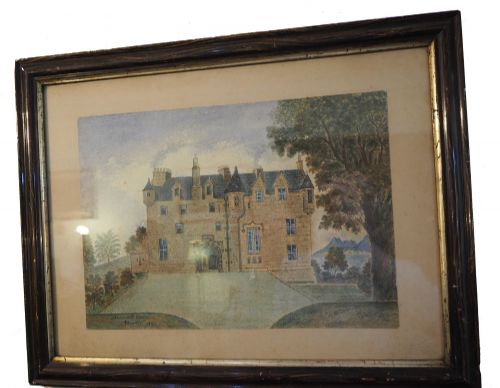


Nineteenth Century Watercolour Landscape
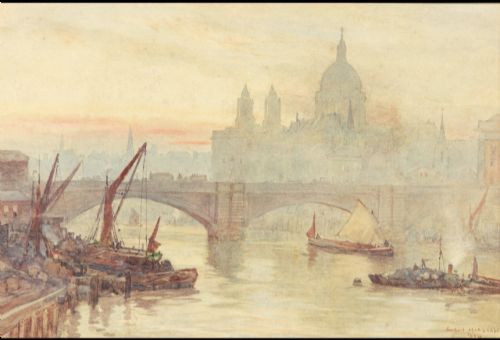
These pieces of nineteenth century watercolour landscape capture the shifting light of river valleys and country lanes on paper.

Nineteenth Century Watercolour Landscape
A nineteenth century watercolour landscape depicts rural scenes, rivers, and coastal views executed on paper during the Victorian era and adjacent decades. Buyers seek these works for their atmospheric depiction of British countryside and continental settings.
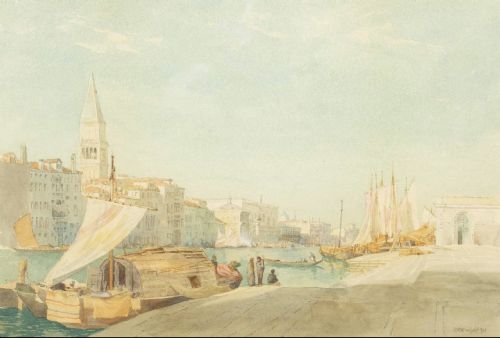
The selections encountered here range from depictions of Welsh estuaries and Scottish highlands to Italian architectural scenes and quiet English villages. Most items date from the middle years of the nineteenth century through to the early decades of the twentieth.
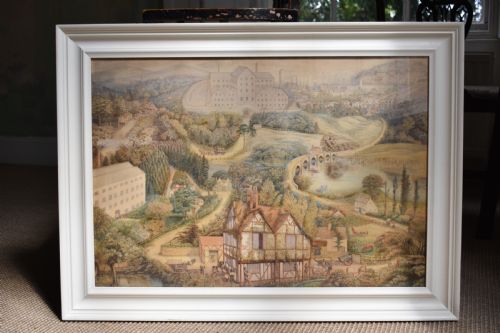
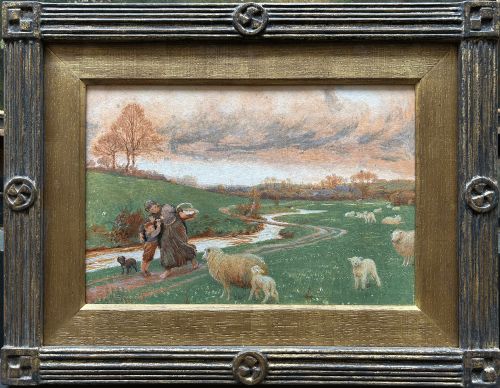
Works appear under descriptions of fine art, wall art, and framed paintings, reflecting their status as finished gallery pieces rather than mere sketches. Many retain their period framing of wood and gold leaf.
Materials and Technique
Artists applied watercolour pigments suspended in water to heavy paper substrates, exploiting the translucent qualities of the medium to build light and shadow. Watercolour pigment behaves fluidly, allowing painters to wash broad skies over more controlled brushwork in landscapes.
Finished works received protection behind glass and mounting within wood frames, frequently finished in gold leaf to complement the tones of the painting. This method preserves the delicate pigment from airborne dust and moisture over time.
Listings feature works spanning the nineteenth century through the 1920s, utilising watercolour on paper within wood and gilt frames.
Quality Variations
Mastery of pigment transparency and tonal control separates exceptional paintings from standard topographical records. The finest examples convey immediate atmospheric weather, such as coastal mists or the fading light of sunset over fields.
The integrity of the paper support and the preservation of original colour vibrancy dictate the standing of a piece. Works retaining their initial pigment saturation without fading demonstrate superior pigment selection and subsequent storage conditions.
Richard Henry Wright·Frederick Walker·Cornelius Pearson·Edwin Lord Weeks·Robert Winchester Fraser·Walter Follen Bishop·Frederick William Hattersley·George Kilburne·Alfred W. Parsons·William Manners·Harold Swanwick·Henry John Kinnaird·William Lucas·Linnie Watt·Henry Birtles·Arthur Claude Strachan·William Powell Frith·Ettore Ascenzi·Thomas Swift Hutton·Walter John Bayes·Arthur Willett·Edmund George Warren·Frank Saltfleet·Thomas Pritchard·Harold Lawes
The Nineteenth Century Watercolour Landscape Glossary
- Watercolour pigment
- Finely ground colour particles mixed with a water-soluble binder. This material creates transparent washes when diluted.
- Gilt wood
- Timber framing coated with a thin layer of gold leaf or metallic gilt. This finish provides traditional framing for Victorian works on paper.
- Provenance
- The documented history of a painting's ownership and origin. It confirms the attribution to a named artist.
- Topographical
- Depicting specific physical locations accurately rather than purely imaginative scenery. Many period works record recognizable British and European views.
- Wash
- A layer of diluted watercolour brushed broadly across the paper. It establishes unified background tones for skies and water.
Nineteenth Century Watercolour Landscape: Frequently Asked Questions
How should I hang these watercolours?
Keep them away from direct sunlight to prevent the watercolour pigments from fading over time. Position them on interior walls where room temperature and humidity remain stable.
Ensure the glass does not touch the paper surface directly during framing. Proper mounting preserves the paper and maintains the integrity of the painting.
Are these paintings signed by the artists?
Many examples bear the artist's signature or monogram within the composition, usually placed near a lower corner. Attribution often relies on these inscriptions alongside period documentation.
Unsigned works are frequently attributed through stylistic comparison and dealer records. Regional subjects and distinctive brush techniques help identify the hand behind the painting.
What framing is appropriate for them?
Original nineteenth century frames of wood and gold leaf suit these works best. They provide historical context and complement the palette of the painting.
When replacing damaged mounts, use acid-free materials to protect the paper from chemical degradation. Neutral backing boards prevent yellowing around the edges of the sheet.
How do I distinguish regional styles?
British views often feature pastoral river valleys, cottages, and livestock under changeable skies. Continental scenes from Italy or Egypt display brighter palettes and distinct architectural subjects.
Local topography recorded in the titles points directly to the artist's working locations. Stylistic conventions of the Victorian Pastoral and Orientalist schools further define the origin.