
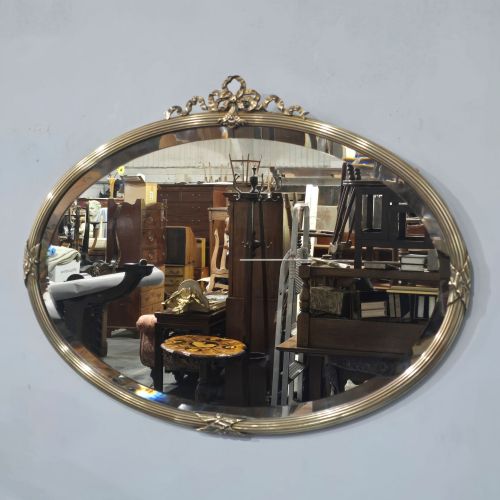


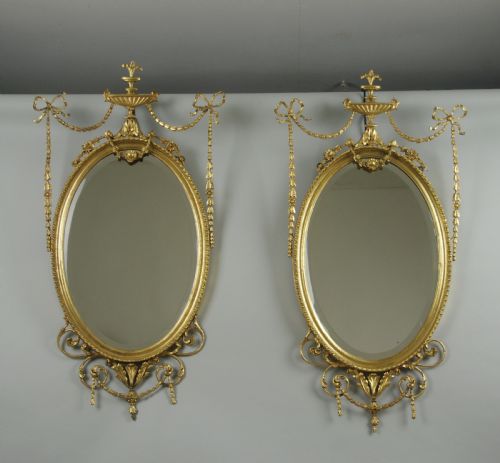


Victorian Ribbon Crest Mirror
A victorian ribbon crest mirror brings a delicate carved flourish to any room, offering period charm through its distinctive bow-topped frame.
Victorian Ribbon Crest Mirror
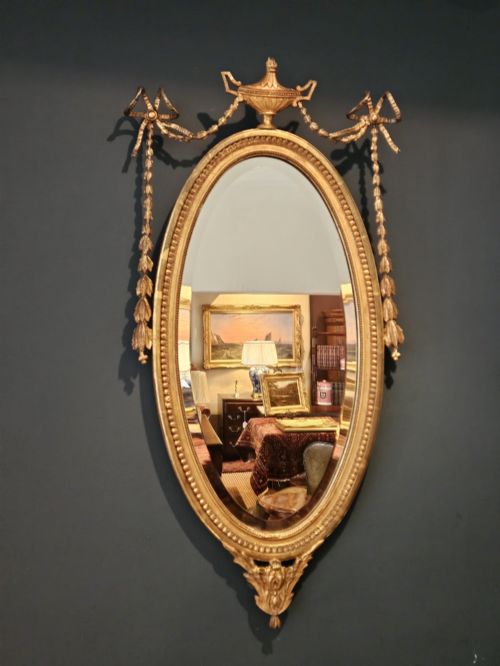
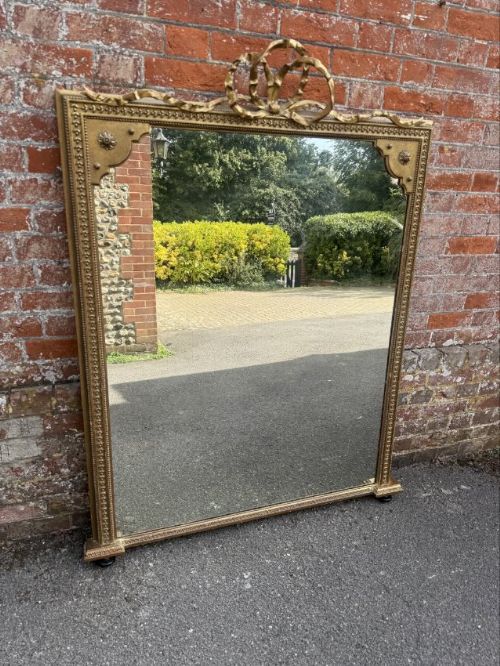
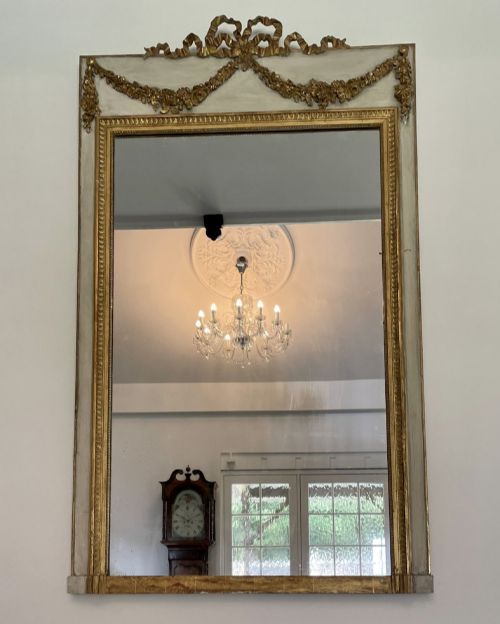
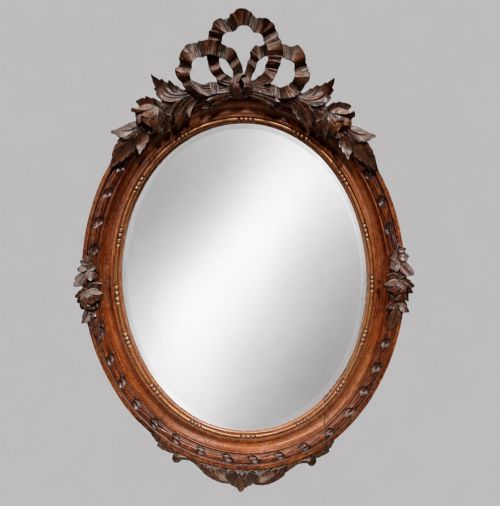
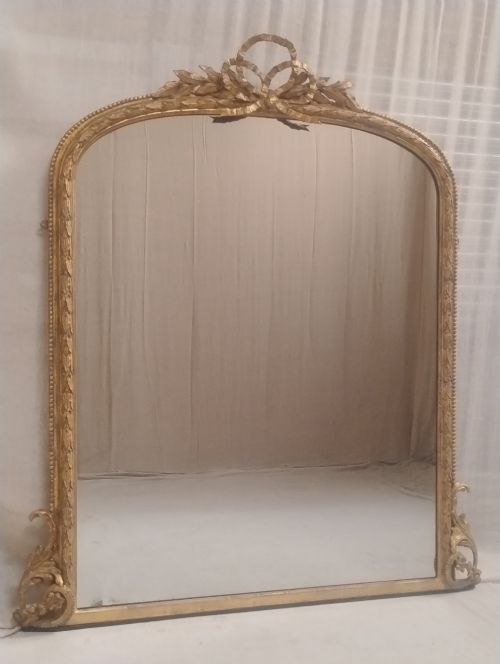
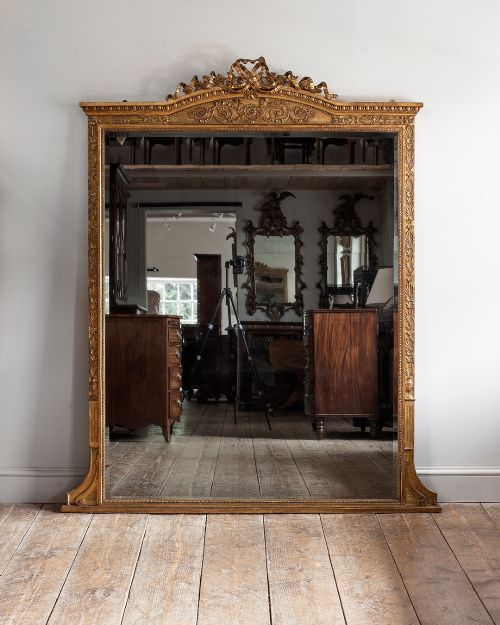
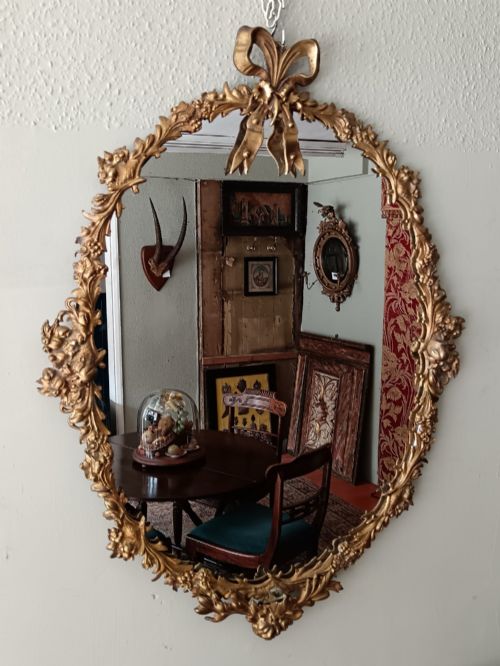
A victorian ribbon crest mirror typically takes the form of a wall-mounted or overmantel glass piece framed in giltwood or gesso, crowned by a carved bow motif. These mirrors emerge across the nineteenth century, from the eighteen-fifties through the eighteen-nineties, capturing revivalist tastes from Louis XVI to Adam styles.
Buyers encounter oval and rectangular wall mirrors alongside larger overmantel examples designed to sit above a fireplace. Many pieces rely on carved wood or moulded composition, often finished in gold leaf or white paint to suit period interiors.
How they were made
Craftsmen shaped these frames using carved wood, gesso, and composition applied over a wooden base to build up intricate relief details like the characteristic ribbon crest. Gilding with gold leaf provided a bright, reflective surface that enhanced the decorative impact of the mirror.
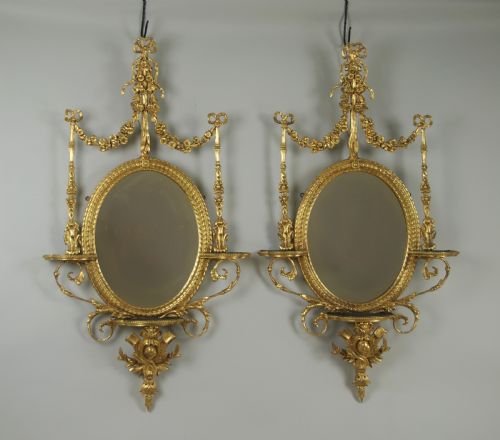
Glass panels were set within these ornate surrounds, sometimes supported by display brackets or accompanied by girandole candle arms. The combination of carved elements and moulded composition allowed makers to achieve elaborate neoclassical and French revival designs.
Every ribbon crest holds a carved bow that has spent over a century pretending to tie up a heavy sheet of glass.
What varies in quality
Quality rests in the crispness of the carved or moulded ribbon crest and the depth of the gilding applied to the frame. Finer examples show sharp detail in the foliage and bow work, whereas simpler pieces rely on softer moulded composition.
The choice of materials also divides the range, with solid carved wood and genuine gold leaf marking out superior craftsmanship compared to plain timber or heavy over-painting.
The Victorian Ribbon Crest Mirror Glossary
- Giltwood
- Wood that has been covered with a thin layer of gold leaf. This finish creates a bright, reflective surface characteristic of formal nineteenth-century frames.
- Gesso
- A plaster-like mixture applied to a wooden base and carved or moulded into decorative relief. It forms the foundation for gilt ornamentation on many period mirrors.
- Overmantel
- A large mirror designed to hang directly above a fireplace mantelpiece. These pieces often feature extended horizontal proportions and elaborate crests.
- Girandole
- A wall mirror fitted with attached candle sconces or arms. The candles reflect light back into the room from the glass surface.
- Composition
- A mouldable mixture of whiting, resin, and oil pressed into metal dies to create repeating ornaments. It allows for detailed decorative motifs on frames.
Victorian Ribbon Crest Mirror: Frequently Asked Questions
Where should I hang a ribbon crest mirror?
These mirrors suit placement above a drawing room fireplace, in an entrance hallway, or as a focal point on a plain wall.
Their vertical proportions and decorative crests make them effective above console tables or dressing units.
How do I identify a nineteenth-century frame?
Look at the construction methods behind the glass, including older timber backing boards and traditional fixings.
Period pieces display hand-applied gilding and natural wear consistent with nineteenth-century workshop practices.
Are these mirrors heavy to hang?
Larger overmantel examples and solid carved wood pieces carry substantial weight due to their dense timber and gesso frames.
Secure wall fixings into masonry or structural studs are essential for safe mounting.
What styles influence these designs?
Maker designs draw heavily from French Louis XVI revival aesthetics and English Adam neoclassical traditions.
These historic styles emphasise symmetry, delicate ribbon bows, and classical urn or floral motifs.