

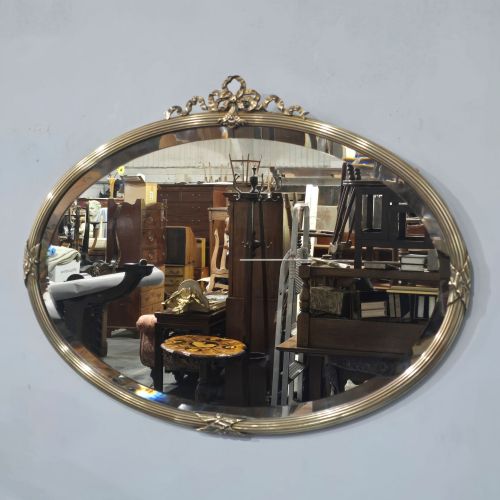


Gilt Bow Crested Mirror
A gilt bow crested mirror brings elegance to any room through classical ribbon motifs and burnished surfaces.
Gilt Bow Crested Mirror
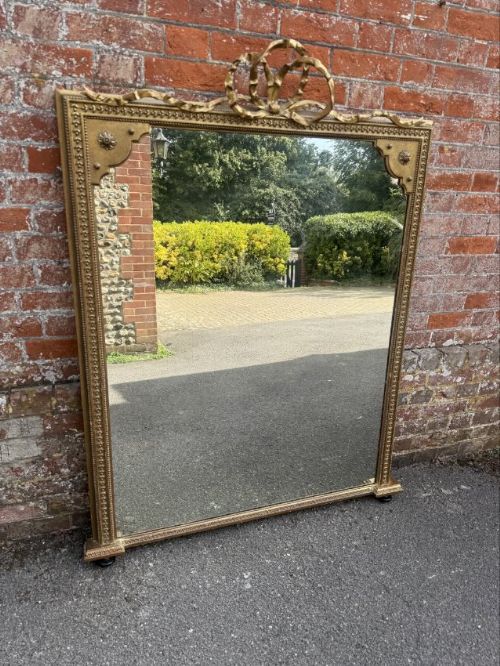
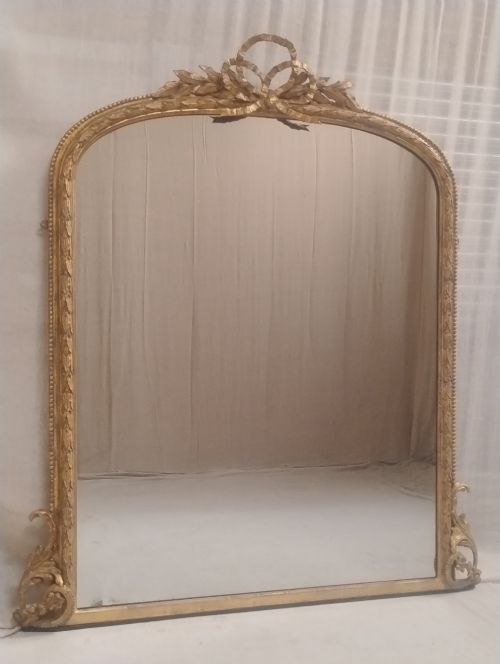
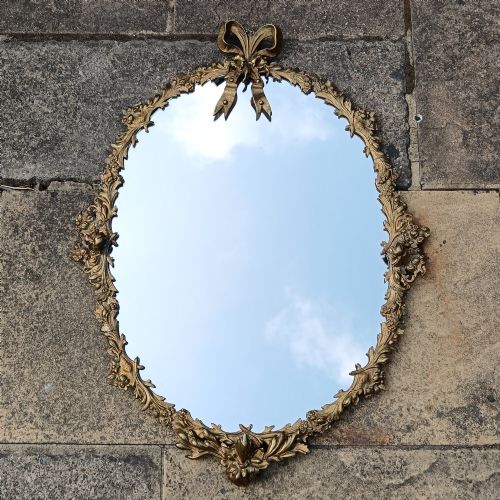
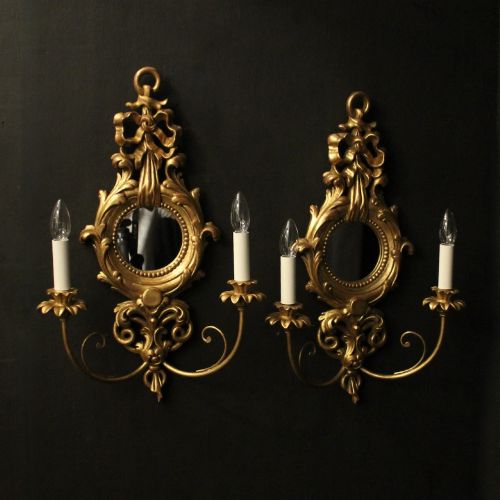
A gilt bow crested mirror combines decorative ribbon carving with reflective glass to create an arresting wall focal point. These decorative pieces appear in various configurations including overmantel mirrors, wall sconces, and hanging wall mirrors.
The selections span the nineteenth century into the twentieth century, taking influence from periods such as the Victorian era, the Edwardian period, and Regency style. French Louis XVI revival designs and Adam style pieces dominate the aesthetic landscape of these items.
Buyers frequently encounter oval formats alongside larger overmantel proportions designed to sit above a fireplace. The defining characteristic across the selection remains the ribbon or bow cresting positioned at the apex of the frame.
How they were made
Frames rely upon giltwood and gesso moulded over timber substrates to achieve ornate relief ornamentation. Artisans applied thin sheets of gold leaf or gilt bronze to create the luminous surface finish characteristic of the period.
Glass components include traditional mirror glass and bevelled glass plates secured within brass, metal, or wooden structures. Girandoles incorporate twin arms designed to hold candles alongside the central reflective plate.
What varies in quality
The crispness of the carving upon the bow and ribbon cresting dictates the visual success of the piece. Finer examples display deep, deliberate modelling rather than soft, indistinct contours in the gesso.
The integrity of the gilding and the preservation of the original mirror plate separate standard items from superior specimens. Substantial overmantel frames require robust underlying joinery to support the weight of heavy glass.
The Gilt Bow Crested Mirror Glossary
- Giltwood
- Timber that has been decorated with gold leaf or a gold-coloured metallic finish. This surface technique provides the bright appearance seen on classical frames.
- Gesso
- A plaster-like mixture applied to wooden frames and carved before gilding. It allows artisans to create intricate relief decoration like bows and swags.
- Overmantel mirror
- A large mirror specifically proportioned to hang above a fireplace mantel. These pieces often feature wide horizontal formats or tall vertical designs.
- Girandole
- A decorative wall mirror fitted with one or more candle branches attached to the frame. The polished glass reflects the candlelight to brighten surrounding spaces.
- Beveled glass
- Glass featuring an angled edge cut around the perimeter of the plate. This detail adds depth and catches the light distinctively.
Gilt Bow Crested Mirror: Frequently Asked Questions
Where should I hang a gilt bow crested mirror?
These mirrors suit principal reception rooms, hallways, or above bedroom mantelpieces where their decorative cresting can be fully appreciated. Their reflective qualities also help to bounce natural light into darker corners of a room.
Ensure the wall construction can support the weight of the frame, particularly with larger overmantel variants. Secure fixings suited to the specific wall type are essential for safe installation.
How do I clean a gesso and giltwood frame?
Dust the frame gently using a soft, dry brush to prevent damage to the delicate relief work. Avoid liquid cleaners or chemical agents which can strip or discolour the historical surface.
Glass plates can be wiped with a mild glass cleaner applied to a cloth rather than sprayed directly onto the surface. This prevents moisture from seeping behind the frame and damaging the backing.
What is the difference between Adam style and Louis XVI style?
Adam style pieces draw inspiration from neoclassical architecture, often featuring symmetrical urns, husks, and refined ribbon motifs. The lines tend to be crisp and architectural with restrained ornamentation.
Louis XVI style emphasises French rococo and neoclassical crossover elements, displaying elaborate bows, floral swags, and organic curves. Both styles frequently utilise giltwood and gesso construction.
Are these mirrors heavy?
The weight varies considerably depending on the materials used and the overall dimensions of the piece. Smaller oval mirrors are relatively light, while large nineteenth-century overmantel mirrors contain substantial timber and glass.
Professional hanging hardware is recommended for heavier items to ensure secure wall mounting. Checking the original wooden backing helps determine the structural integrity before hanging.